Mobile App Development –2025-26 Guide by Tatvatech Digital
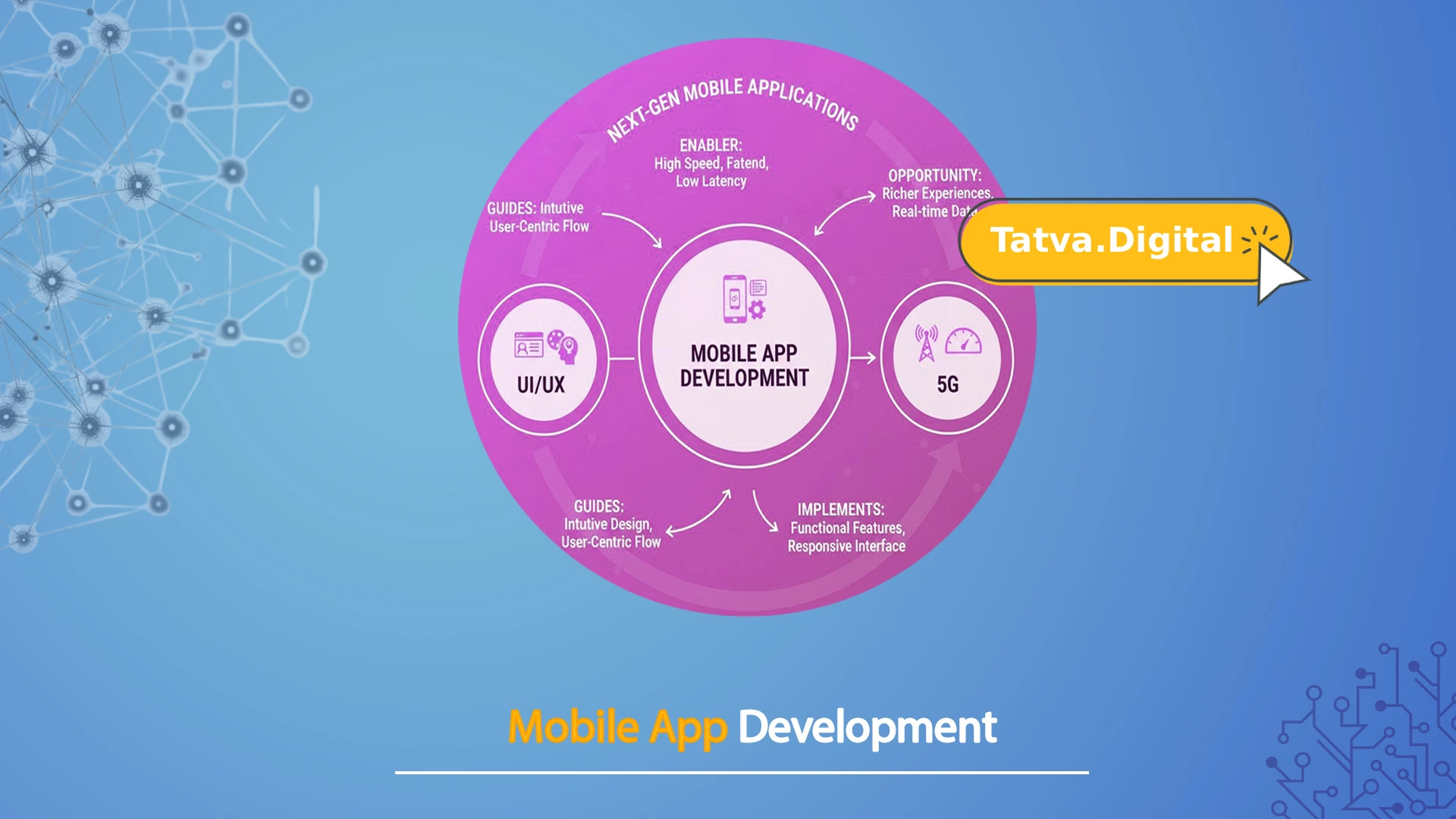
Mobile app development has become an important part of today’s businesses in the fast-changing digital ecosystem. From small businesses to Fortune 500 corporations, all are trying to build innovative, secure, intuitive, and scalable apps for ever-increasing user expectations. At Tatvatech Digital, we help build great apps to deliver outstanding user experience and drive continuous business improvement. In this inclusive guide, when you’re considering Cross-Platform development, transitioning to 5G technology, or implementing the best security, you’ll have a better understanding of how to stay relevant in 2025 and beyond Cross-Platform vs. Native Apps: Which One Should You Choose in 2025? When designing your next app, one of the biggest decisions you will need to make is to determine whether you will develop a native app or a cross-platform app. Let’s talk about the difference and help you to decide which is best for your project. What Are Native Apps? Native apps are applications that are built solely for one platform (either Android using Kotlin/Java or iOS using Swift/Objective-C). Native apps are designed to function with the features available for the platform and provide the user with a seamless experience. Benefits of Native Apps: Speed: Native apps tend to run considerably faster and more smoothly than other apps because they were built for only one platform. On top of that, the performance can make your app stand out and shine. Security: Native apps tend to integrate better with device-level security. Use of hardware: Native app developers have full access to any hardware features available on the device i.e., GPS, camera, sensors, and notifications. Consistency: Created natively means that there will be some level of consistency and use of the design language available for their respective platform. For example, Android’s use of Material Design or iOS Human Interface Guidelines. Disadvantages: Cost: The two platforms require separate development teams to build the app. Time: Developing two different codebases will also require quite a bit of more time What Are Cross-Platform Apps? Cross-platform apps use a single codebase to run on multiple platforms. Popular frameworks include Flutter, React Native, and Xamarin. Benefits of Cross-Platform Apps: Faster development: One codebase for both iOS and Android. Reduced cost: Saves time and resources by eliminating redundant work. Consistent user experience: Ensures a uniform look and feel across devices. Easy maintenance: Updates and bug fixes apply to all platforms at once. Drawbacks: Limited native performance: Might not fully utilize device hardware. Delayed feature support: New OS updates may take longer to integrate. What Should You Choose in 2025? In 2025, cross-platform development continues to gain momentum due to its cost-effectiveness and speed. Frameworks like Flutter 3 and React Native 0.76+ now offer near-native performance, making them ideal for most business apps. However, if you need high-performance gaming, AR/VR, or hardware-intensive apps, a native approach remains unbeatable. Tatva Tech Digital Tip: For startups and SMEs, cross-platform apps offer a better ROI. For enterprise-grade or feature-heavy apps, go native. Top Mobile App UI/UX Trends You Can’t Ignore The visual appeal and usability of your app can make or break its success. In 2025, UI/UX design trends focus on personalization, minimalism, and immersive interactions. Here’s what’s dominating the design landscape. Personalized Experiences Modern users expect apps that adapt to their preferences. By leveraging AI and machine learning, apps can now tailor recommendations, content, and layouts to individual behavior. Examples: Personalized dashboards (like Spotify’s “Made for You”) Dynamic color themes and adaptive typography Predictive navigation based on user activity Voice and Gesture Control With the rise of voice assistants and gesture-based UIs, apps are moving beyond traditional touch input. Why it matters: Accessibility: Easier for users with disabilities. Hands-free experience: Perfect for multitasking. Futuristic appeal: Makes your app stand out in crowded markets. Neumorphism and Minimalism The “less is more” principle dominates 2025’s design scene. Neumorphism, with its soft shadows and realistic depth, offers a clean, tactile feel. Benefits: Enhanced visual hierarchy Clean, modern interfaces Focus on usability over decoration Micro-Interactions Micro-interactions — subtle animations or feedback responses — enhance user delight and engagement. Examples: Button animations when tapped Real-time input validation Progress bars or loading effects These small touches create a more human connection with users. Dark Mode Optimization Dark mode isn’t just a trend — it’s a user preference. It improves battery life, reduces eye strain, and gives a sleek aesthetic. Tatvatech Digital Insight: Always test your dark mode UI across different devices and brightness levels to maintain readability and contrast. How 5G Is Changing the Way Apps Are Built and Used The arrival of 5G technology is reshaping the mobile app ecosystem. With speeds up to 100x faster than 4G, developers now have endless opportunities to innovate. Lightning-Fast Downloads and Streaming 5G enables instant app installations, lag-free video streaming, and real-time cloud gaming. This means users can access high-quality content without delay. Example Use Cases: Cloud-based gaming platforms like Xbox Cloud Gaming High-resolution video conferencing apps Instant media uploads for social networks AR/VR Becomes Mainstream 5G’s low latency makes Augmented Reality (AR) and Virtual Reality (VR) more accessible than ever. Industries benefiting: Retail: Virtual try-ons Real estate: 3D virtual tours Healthcare: Remote diagnostics Education: Immersive learning experiences Internet of Things (IoT) Integration With 5G, IoT-enabled apps can connect and control devices in real-time — from smart homes to connected cars. Examples: Smart thermostats that learn user behavior Wearable health apps tracking live vitals Fleet management apps for logistics Real-Time Analytics and Cloud Computing 5G enhances the efficiency of edge computing and cloud synchronization, allowing apps to handle massive data in real-time. This results in smarter analytics, faster updates, and more responsive UIs. Tatvatech Digital Note: When developing for 5G, prioritize scalability and real-time communication features using WebSockets or GraphQL Mobile App Monetization Strategies That Work A great app isn’t just about functionality — it’s also about generating revenue. In 2025, monetization models have evolved to balance profitability and user satisfaction. Here are the most effective strategies to consider: Freemium Model This model offers a basic version for free and … Read more