What is IT Security Automation? Tools, Benefits & Best Practices
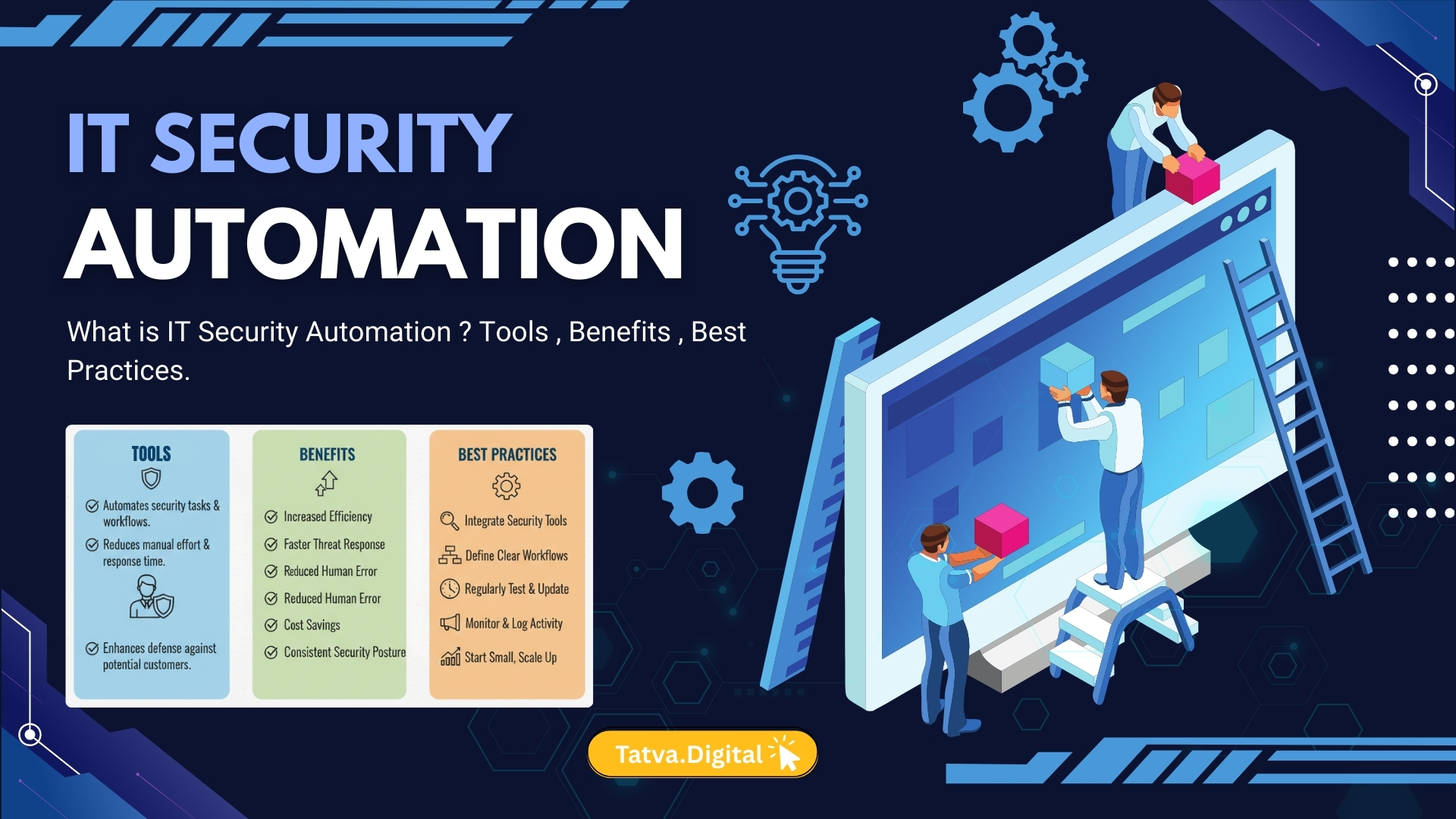
Introduction: What is IT Security Automation and Why It Matters Today IT Security Automation is a process of using tools such as SIEM, SOAR platforms, automated threat detection systems, vulnerability management and incident response automation to detect cyber threats, prevent them, and respond to them, all without requiring continual manual intervention. Cyber attacks continue to increase dramatically. Last year alone, the number of reported attacks increased by 38%. As a result, businesses must implement superior cybersecurity automation strategies in order to properly secure their network, endpoints, cloud infrastructure and sensitive data. At Tatvatech Digital, we offer advanced IT security automation services, managed security services, endpoint security automation and customized cybersecurity solutions that allow organizations to reduce risk by up to 60% and to respond to attacks 3x faster than without automation. In this blog, we will define what IT security automation is, identify the top security automation tools, discuss the major benefits of implementing security automation and provide best practices for using security automation and properly implementing it with the right technology partner. If your business is looking to increase its level of cybersecurity, reduce operational costs, improve compliance and scale securely, this guide is for you. What is IT Security Automation? Automation in IT Security means using technology to find, analyze and respond to cybersecurity threats without needing a security team to monitor logs and alerts manually 24 hours a day, seven days a week. Repetitive things like : Log monitoring Threat detection Vulnerability scanning Incident response Compliance reporting As companies continue to shift to cloud computing, remote work and digital transformation, traditional security practices aren’t sufficient anymore. Cybersecurity automation solutions are becoming increasingly common among companies located in technology hubs like Mumbai, Bangalore and Delhi due to the growing number of cyber risks associated with these technologies. Automation can help humans by giving them more time to work on strategic decision-making while an automated system handles all repetitive, time-critical tasks. Why Businesses Need Cybersecurity Automation Cyber threats have evolved into advance forms of attack. Ransomware, phishing, and zero-day vulnerabilities are growing exponentially year over year. Why is automation so important? 68% of organizations reported a cyberattack in the last year. The average cost for a data breach around the world is over $4.4 million. Manual security processes can take 40% longer to respond to cyber attacks. IT security automation will provide businesses with the following benefits: Detect threats as soon as they happen Reduce response time by as much as 70% Reduce human error Increase compliance with regulations Decrease operational expenses At Tatvatech Digital, we create customized automated security frameworks to meet the unique needs of each customer’s infrastructure (on-premise, hybrid or cloud). Top IT Security Automation Tools These are a few of the most commonly used security automation products in modern computer security and cyber security SIEM – Security Information and Event Management: SIEMs collect and analyse a wide variety of security data from multiple sources (real-time), providing assistance with log analysis, threat detection, and compliance reporting. Examples of common SIEM products include Splunk, IBM QRadar, and Microsoft Sentinel. SOAR – Security Orchestration, Automation, and Response: SOAR automates incident response workflows, integrates with existing security products, and performs automated actions, including blocking malicious IP addresses, isolating infected systems, and sending alerts, so manual interventions are significantly reduced. Automated Endpoint Security: Automates the protection of laptops, servers, and mobile devices, including automatic malware detection, isolating infected devices, and automatic patching. Automated Vulnerability Management: These tools continually scan for vulnerabilities and provide prioritization for fixes based on their risk level. Automated Threat Intelligence Platforms: These platforms leverage AI and ML to intelligently analyse potential threats and produce predictive intelligence. Here at Tatvatech Digital, we help companies select, implement, and integrate the right security automation products based on their size, industry, and compliance proficiency. Key Benefits of IT Security Automation 1. Faster Incident Response Reducing the Time for Responding to Incidents The amount of time it takes to respond to an incident can be reduced from hours to minutes with automation. A timely response can stop damage from occurring and reduce data loss. 2. Reduced Human Error When performing processes manually, you may inadvertently make errors. However, automated systems follow the same series of processes (workflows) that you provided the system. 3. Cost Savings Companies that use security automation to respond to an incident have saved an average of 30% in costs associated with breaches. 4. Improved Compliance Automated systems provide accurate record-keeping (logs) for compliance purposes and will generate a compliance report for reporting on GDPR, ISO27001, and other standards. 5. Scalability When your business grows, you can automatically increase the level of security you have without having to increase the number of people you have to do so. Organizations across India. from both new and mature, are leveraging automation for the purpose of improving their cybersecurity resilience. Best Practices for Implementing IT Security Automation In order to implement IT Security Services successfully, you must take a planned and structured approach. There are five basic steps involved in this process: 1. Start with Risk Assessment Before you begin the process of automating, evaluate your most important assets and vulnerabilities. 2. Automate Repetitive Tasks First Start with logs, patch management and basic incident response. 3. Integrate Existing Tools Use automation tools that integrate with your existing IT tools and infrastructure. 4. Maintain Human Oversight No automation will ever replace the need for experts in security. 5. Continuous Monitoring and Optimization Cyber threat actors are continuously changing and adapting their tactics. Automating your cyber security strategy will need to be continuously updated and adapted as well. At Tatvatech Digital, we employ a proven method of Cyber Security Automation that allows for seamless implementation and delivery of measured results. Case Study: From Security Chaos to Automated Protection A mid-sized E-Commerce client experienced numerous phishing attacks and significant delays in responding (up to 6 hours). All logs were manually reviewed by the security team. Some of the specific issues experienced by the customer … Read more