predictive maintenance Archives - Tatvatech Digital Private Limited predictive maintenance Archives - Tatvatech Digital Private Limited

Consumer IoT vs Industrial IoT: What’s the Difference?
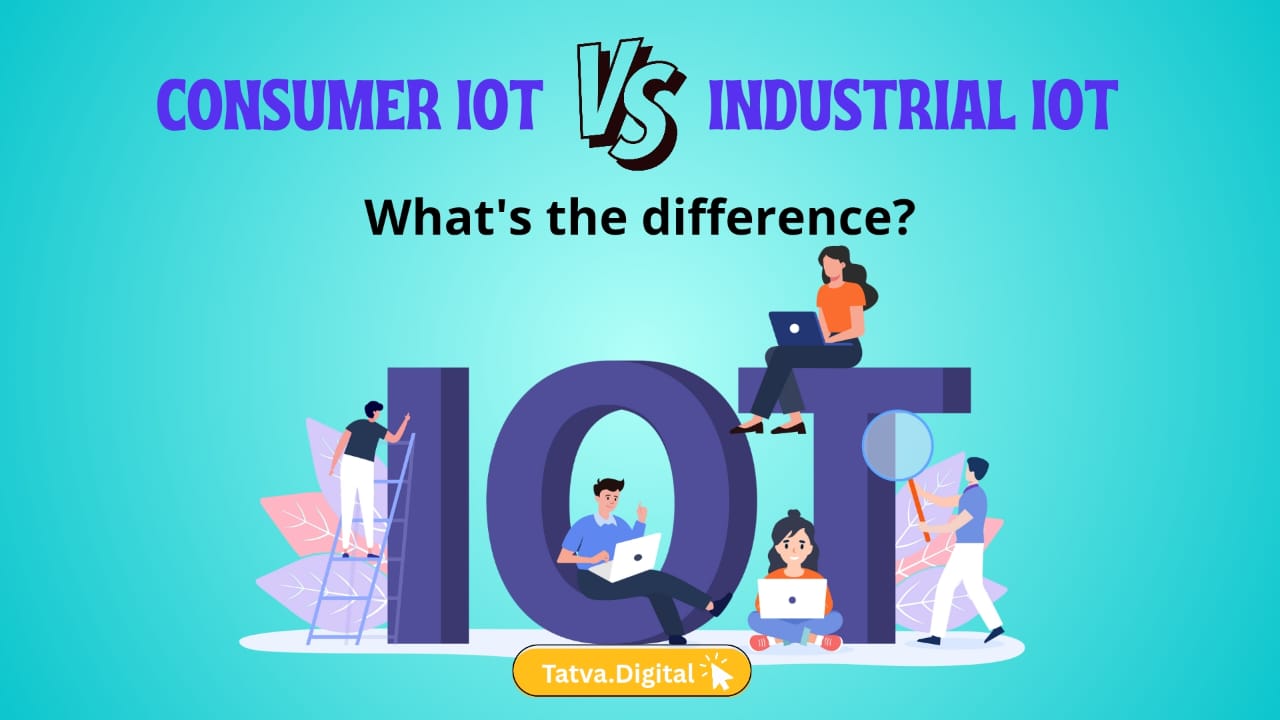
Comparison of Consumer IoT vs Industrial IoT showing smart home devices, wearables, and connected appliances versus industrial sensors, machinery, and factory automation systems

The IoT Divide Every Business Should Understand As IoT adoption grows across industries, the distinction between Consumer IoT and Industrial IoT becomes increasingly important. While consumer-focused solutions prioritize ease of use and accessibility, industrial IoT systems are built for performance, scalability, and real-time data processing. This comparison highlights how each approach supports different goals and why selecting the right IoT model is critical for successful digital transformation. Introduction: What Is This Blog All About, and Why Does It Matter? The Internet of Things (IoT) is transforming how people live, work, and interact with technology. From smartwatches tracking daily fitness to industrial sensors optimizing factory performance, IoT has become a core driver of digital transformation. However, not all IoT solutions are built for the same purpose. Two major categories dominate this space: Consumer IoT (CIoT) and Industrial IoT (IIoT). While both rely on connected devices, sensors, data analytics, and cloud platforms, their goals, complexity, scale, and impact are entirely different. Businesses often struggle to understand whether they need a consumer-focused IoT solution or a robust industrial-grade system—and choosing the wrong one can lead to wasted investment and missed opportunities. In this blog, we’ll clearly explain Consumer IoT vs. Industrial IoT, highlight real-world examples, outline key differences, and help you decide which approach best fits your needs. We’ll also show how Tatvatech Digital helps businesses design, develop, and scale secure IT solutions tailored to both consumer and industrial use cases. What Is Consumer IoT, and How Does It Work? Consumer IoT (CIoT) refers to IoT devices and applications designed for individual users and households. These devices focus on convenience, comfort, automation, and lifestyle enhancement. Consumer IoT solutions are typically easy to install, affordable, and controlled via smartphones or voice assistants. Common examples of consumer IoT include: Smart home devices (smart lights, thermostats, plugs) Wearable technology (smartwatches, fitness trackers) Smart appliances (refrigerators, washing machines) Home security systems and smart cameras Voice assistants like Alexa and Google Assistant Key characteristics of Consumer IoT: User-friendly interfaces Wireless connectivity (Wi-Fi, Bluetooth) Lower implementation cost Focus on user experience and personalization Limited scale compared to industrial systems What Is Industrial IoT, and Why Is It More Complex? Industrial IoT (IIoT) applies IoT technology to industries such as manufacturing, logistics, energy, healthcare, agriculture, and utilities. Its primary goal is operational efficiency, automation, safety, and predictive decision-making. Industrial IoT systems connect machines, sensors, and control systems to collect massive volumes of data and convert them into actionable insights. Common examples of Industrial IoT include: Smart factories and automated production lines Predictive maintenance systems Asset tracking in logistics and supply chains Smart grids and energy management Industrial robotics and process automation Key characteristics of Industrial IoT: High reliability and uptime requirements Advanced analytics and real-time monitoring Integration with legacy systems and ERP software Strong cybersecurity and compliance needs Scalable architecture for large operations Consumer IoT vs. Industrial IoT: What Are the Key Differences? While both Consumer IoT and Industrial IoT use connected devices, their purpose and execution differ significantly. Key differences at a glance: Target users: Individuals vs enterprises and industries Scale: Small networks vs large, complex ecosystems Data volume: Limited user data vs massive operational data Reliability: Convenience-based vs mission-critical Security needs: Moderate vs enterprise-grade cybersecurity Cost: Low to medium vs high initial investment Consumer IoT prioritizes ease of use, while Industrial IoT prioritizes performance, accuracy, and long-term ROI. How Do Consumer IoT and Industrial IoT Use Data Differently? Data is the backbone of IoT, but its usage varies widely between consumer and industrial environments. Consumer IoT data usage focuses on: Personalization and recommendations User behavior tracking Automation of daily tasks Real-time notifications and alerts Industrial IoT data usage focuses on: Predictive maintenance and failure prevention Process optimization and cost reduction Real-time operational visibility Compliance reporting and risk management Industrial IoT often integrates with AI, machine learning, and big data analytics, making it far more data-intensive and business-critical. How Can Tatvatech Digital Help with IoT Solutions? At Tatvatech Digital, we specialize in building scalable, secure, and intelligent IoT solutions for both consumer and industrial applications. Our IoT services include: Custom IoT software development Cloud-based IoT platforms IoT mobile and web applications Data analytics and real-time dashboards Integration with ERP, CRM, and legacy systems IoT security and compliance solutions Whether you’re launching a smart consumer product or digitizing industrial operations, Tatvatech Digital helps you turn connected data into real business value. How Do You Choose Between Consumer IoT and Industrial IoT? Choosing the right IoT approach depends on your business goals, audience, and operational complexity. Choose Consumer IoT if: Your product targets individual users Ease of use and affordability matter most You focus on lifestyle, health, or smart living Choose Industrial IoT if: You manage large-scale operations or assets Downtime directly impacts revenue or safety You need real-time monitoring and automation You want long-term operational optimization A professional consultation—like the one offered by Tatvatech Digital—can help you make the right decision from the start. FAQs: Consumer IoT vs Industrial IoT What is the main difference between Consumer IoT and Industrial IoT?Consumer IoT focuses on individual users and convenience, while Industrial IoT focuses on enterprise operations, automation, and efficiency. Is Industrial IoT more expensive than Consumer IoT?Yes, Industrial IoT usually requires higher investment due to advanced hardware, security, integration, and scalability. Can consumer IoT be used in businesses?Some consumer IoT devices can support small businesses, but they are not designed for mission-critical industrial operations. Which industries benefit most from Industrial IoT?Manufacturing, logistics, energy, healthcare, agriculture, and utilities benefit the most from IIoT solutions. Does Tatvatech Digital offer IoT development services?Yes, Tatvatech Digital provides end-to-end IoT development services for both consumer and industrial use cases. Conclusion: Consumer IoT or Industrial IoT—Which Is Right for You? The debate around Consumer IoT vs. Industrial IoT isn’t about which is better—it’s about which is right for your goals. Consumer IoT enhances daily life through convenience and automation, while Industrial IoT transforms businesses by improving efficiency, reducing costs, and enabling data-driven decisions. Understanding the differences … Read more
Top 10 IoT Trends to Watch in 2026

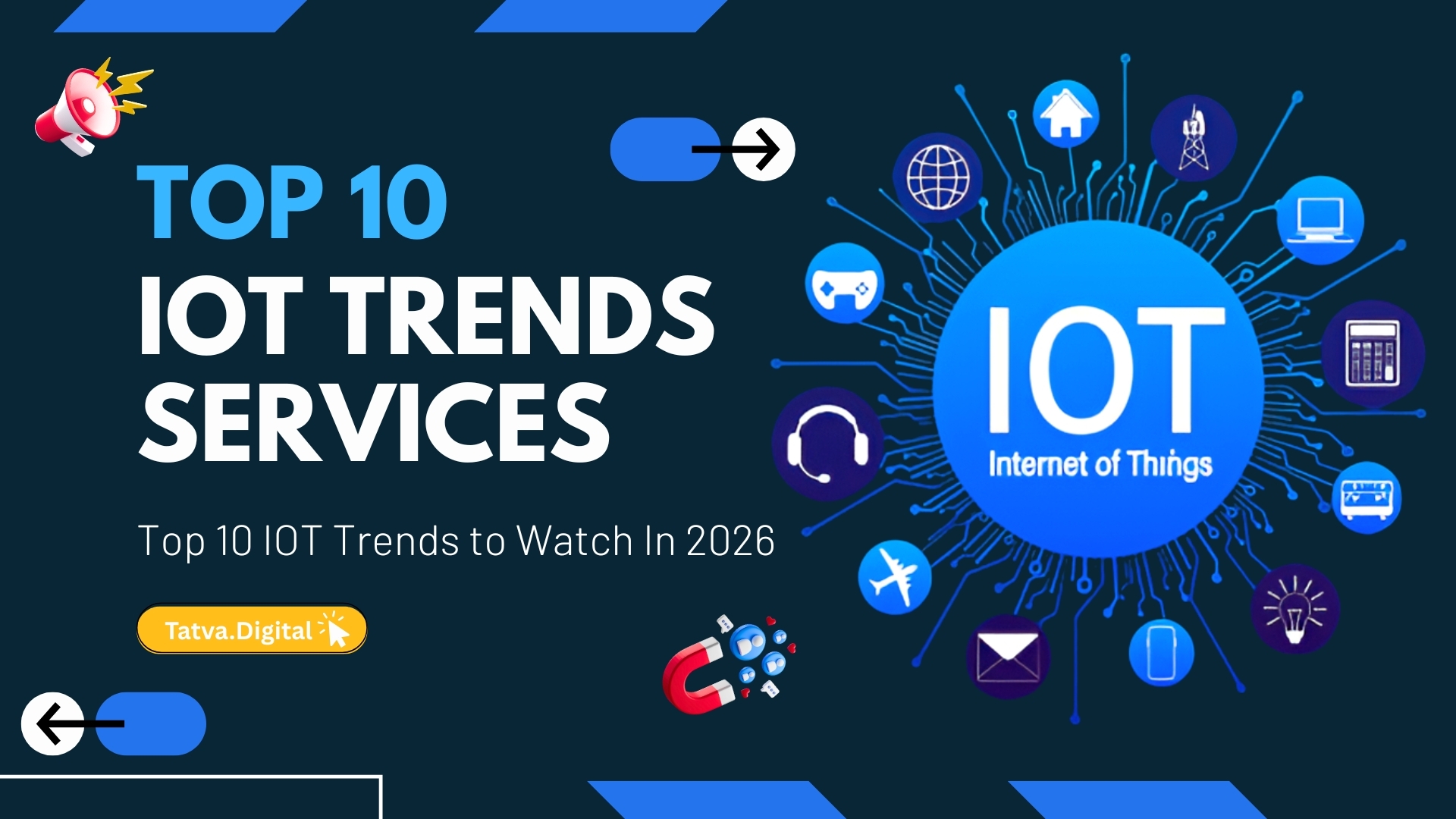
IoT trends in 2026 showing smart automation AI powered IoT-connected devices and digital transformation

Future-ready IoT trends shaping smart businesses, connected ecosystems, and digital transformation in 2026. This blog explores the most impactful IoT trends in 2026, covering Internet of Things services, smart automation, connected devices, data-driven intelligence, and scalable IoT solutions that help businesses improve efficiency, security, and long-term growth with guidance from Tatvatech Digital. The Expanding Role of IoT in the Digital-First Era In 2026, IoT services have grown beyond just connecting things together to become an integral part of how businesses operate. IoT offers so much more than just connecting devices; organizations have already moved from asking “Should we implement IoT?” to asking “How do we use IoT successfully?” IoT has evolved from a simple way of connecting things to create an integrated solution with seamless connectivity of software, automation, and analytics. Companies using IoT-based solutions and IT Services  are benefiting from 40% faster response times, improved asset utilization, and significant cost savings. At Tatvatech Digital, we work with companies to develop and implement IoT-based solutions to align with automated processes, analytics, CRM systems, and digital transformation. In this blog, we focus on the top trends in IoT to watch in 2026. Each trend discussed will provide information about how those trends impact a company’s ability to build a future-proof, scalable business model. Why IoT Trends Matter for Businesses in 2026 IoT trends illustrate how the various forms of technology have evolved to meet the ever-changing demand for business. In 2026, businesses will continue to face issues such as increased costs of operation, expeditious amounts of data, threats to security, and expectations from customers for instant service. IoT addresses these issues through the development of “smart” systems, which can sense, analyze, and act on information automatically without constant human input. Companies utilizing IoT solutions have increased visibility into their operations by 30% to 50%, reduced downtime, and gained greater control over their complicated business operations. When organizations understand IoT trends, they can make more informed decisions regarding where to invest and remain competitive within a connected economy. Predictive Maintenance and Asset Optimization Predictive maintenance employs IoT sensors to provide real-time monitoring of equipment and the detection of anomalies prior to a failure occurring. By doing so, businesses can schedule maintenance as necessary based on real-time data, instead of relying solely on scheduled maintenance. The utilization of predictive IoT maintenance has enabled organizations to reduce maintenance costs by as much as 30% and be able to maintain their assets much longer than previously. The growing adoption of predictive maintenance will help businesses reduce their downtime and maintain continuity of operations with Digital Marketing. Edge Computing Enhancing IoT Performance The emergence of edge computing provides businesses with the ability to process data at or near the location of the IoT device as opposed to solely processing IoT-related data at a centralized server. By processing IoT-related data locally, businesses can receive faster responses with less latency and greater reliability and process more data. By 2026, Edge IoT-enabled systems will be critical to organizations seeking to automate aspects of their operations and will be primary for real-time monitoring and applications where decision-making is required immediately. Edge IoT will also allow businesses to reduce their bandwidth requirements and transfer less data across public networks while gaining the benefits associated with increased automation. Stronger IoT Security and Privacy Frameworks As the number of IoT networks continues to increase, the overall associated risks to organizations and users continue to rise as well. Therefore, by 2026, all IoT systems will be implemented with a chip, which ensures that every IoT device works effectively with foundational elements of IoT security services , including encryption, authentication, and continuous monitoring. Enhanced security for IoT devices enhances protection of sensitive data, prevents unauthorized access, and ensures compliance with evolving IoT security compliance standards. Furthermore, businesses that offer a more secure IoT environment establish a greater level of trust and ultimately reduce operational risk in the implementation of these technologies. Smart Infrastructure and Connected Environments IoT has provided the foundation for creating a sophisticated level of automation for smart infrastructure where all systems will have the ability to interact, communicate, and respond automatically to input received from sensors throughout the infrastructure. The combination of connected environments will allow businesses to gain efficiencies through energy optimization, asset monitoring, and automating controls. IoT enabled ‘ Smart Infra‘ will enable companies to significantly reduce the operational waste while improving the growth of performance reliability and reliability. Digital Twins Driven by Real-Time IoT Data Digital twins are virtual representations of physical systems created using live IoT data. These models allow businesses to simulate scenarios, test changes, and optimize performance without disrupting real operations. In 2026, digital twins are rapidly becoming critical tools to help organizations develop, forecast, and improve ongoing or continual process improvement in complex environments. Transitional Process Automation through IoT Devices IoT has provided businesses the ability to automate their workflow, allowing automation of work through the use of sensors to trigger actions based on sensor data. This automation will minimize the amount of labor that is required manually, eliminate processing delays, and create a more consistent experience across all aspects of the business. Businesses that implement an IoT workflow automation have seen productivity increase between 25% and 40%, allowing companies to continue to focus their teams on their more strategic initiatives. Cloud-Based and Scalable IoT Platforms Organizations can grow device networks with performance and reliability using cloud-native IoT platforms that deliver scalability with no limits. Cloud Native IoT Services provide unlimited scalability for companies as they grow while allowing for long-lasting digital transformation. Integration of IoT with Business Systems Integrating IoT data into your Customer Relationship Management (CRM) Application, Business Analytics, and ERP Systems (Enterprise Resource Planning) creates a complete picture of what is happening in your business by providing insights into the operation of your business, how customers utilize your products, and the way services are delivered. Tatvatech Digital connects IoT platforms with digital platforms, enabling users to transform raw IoT data into … Read more