Mobile app development Archives - Tatvatech Digital Private Limited

A Complete Guide to Mobile App Development in 2026
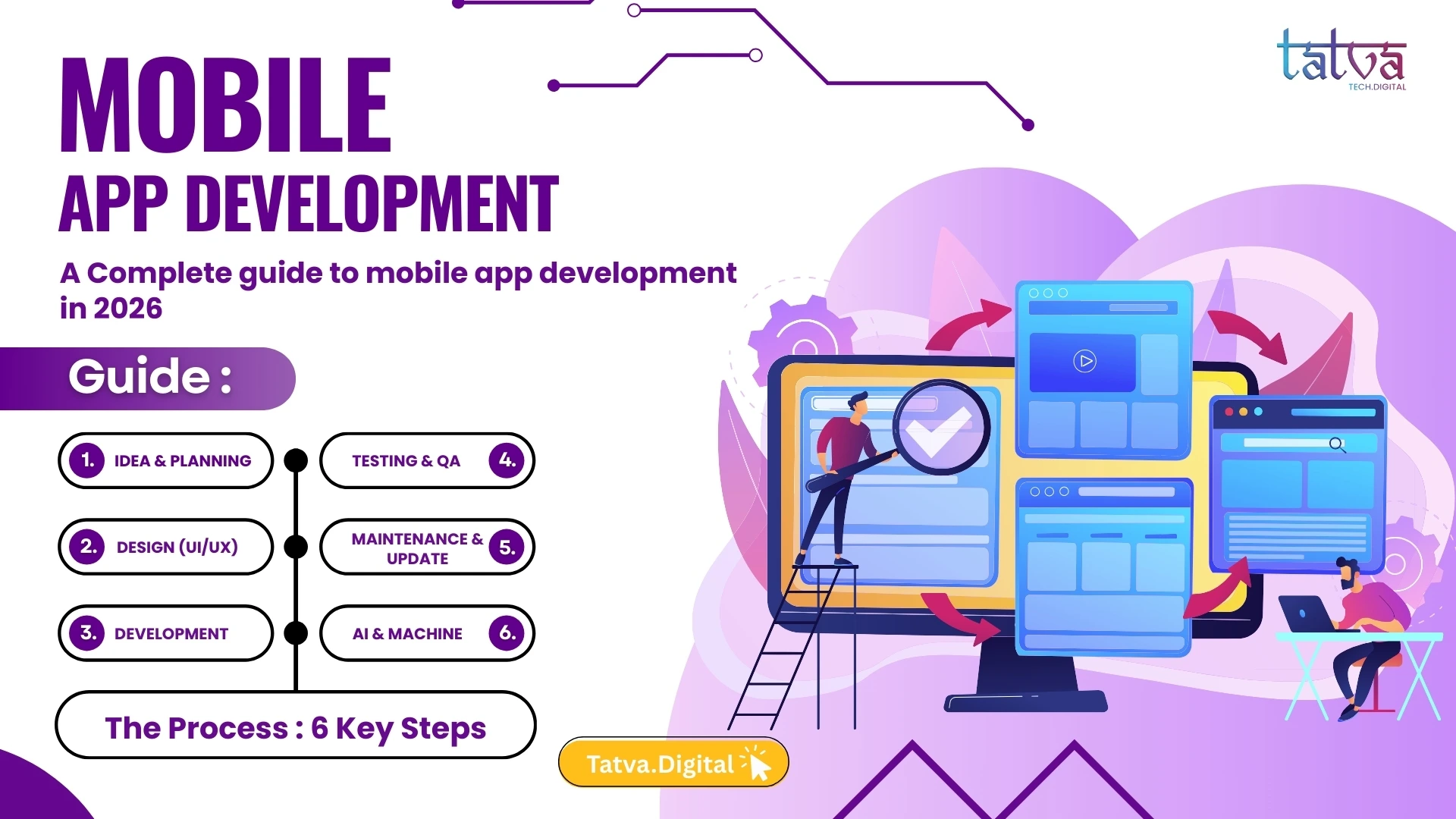
A developer designing a modern mobile application interface using advanced tools in 2026

Introduction: Mobile App Development in 2026 Mobile App Development in 2026 has become much more than simply creating an application. Today’s Mobile App Development includes designing digital experiences that are scalable, secure, and user-centric; therefore, supporting business growth is essential tied to how we design digital experiences.Mobile Application Development Industry Trends and Predictions. With the rapid pace of technological advancement, we are seeing tremendous investment from businesses of all shapes and sizes to develop custom mobile applications, Android applications, iOS applications and Cross-Platform Application Development meet the growing demands from consumers. As such, the mobile app market is projected to exceed $935 billion by 2026, with a compound annual growth rate (CAGR) of 13-15%. Advanced Technologies driving Mobile App Development by 2026 The mobile applications that we build will evolve into artificial intelligence (AI), machine learning (ML), cloud computing, Internet of Things (IoT) and big data analytics. This technology will make performance, personalization and security critical in mobile app development. Selecting the right mobile application development company is most important, both for the initial development phase of your application and for scalability and investment returns of your mobile app. Tatvatech Digital mobile application development solutions offer an end-to-end solution from the original strategy and UI/UX design phase through the technology stack development and testing phases, as well as deployment and post-launch optimization. This guide provides you with information you need to know about mobile application development in 2026, how to successfully roll out your mobile app, challenges you will face, and how to work with an agency partner, such as Tatvatech Digital, to turn your mobile concept into a digital product that produces revenue. What Is Mobile App Development in 2026? Mobile applications developed using the techniques of mobile app development in 2026 are: AI-driven Cloud-enabled Security-focused Performance optimized Scalable to multiple devices and geographic areas In contrast to previous years, many of today’s mobile applications are designed to work together with enterprise software systems, CRM solutions, cloud services, and third-party application programming interfaces (APIs) and to provide users with an excellent experience on both Android and iOS devices. At Tatvatech Digital, we take a business-focused approach to mobile app development, ensuring that each application meets needs in the real world, including: increasing user retention by 30–40%, improving operational efficiencies by 25%, and increasing levels of customer engagement by 50%. Key Mobile App Development Trends in 2026 1) AI-Enhanced Mobile Applications Over seventy-five percent (75%) of new mobile applications now include some form of artificial intelligence (AI), whether it’s used for personalizing content, chatbot use, providing predictive analytics for customer behaviour, or automating tasks; AI is helping businesses cut down on manual labour and improve customer engagement. 2) Popularity of Cross-Platform Mobile App Development Using frameworks such as Flutter and React Native comprises approximately forty-five percent (45%) to fifty percent (50%) of all mobile applications available today, allowing businesses to save thirty percent (30%) from their development budget while still offering similar performance levels. 3) Mobile App Development Focused on Security With the number of mobile-centric cyberattacks increasing at an annualized rate of twenty-eight percent (28%), developing mobile applications with security as a top priority has never been more critical; today, encryption, biometric (fingerprint) authentication, and secure application programming interface (API) development are standard features within mobile applications. 4) Super Applications and Modular Application Architecture Apps are continuing to evolve into full ecosystems — combining different functions (such as payment processing, messaging, shopping, and analytics) into one application. 5) Apps Using Geographic Distinction and Area/Country Specificity Apps that are customized for particular areas or nations (i.e., India, North America, the Middle East & Europe) typically see between twenty percent (20%) and thirty-five percent (35%) more usage by end-users! Mobile App Development Process in 2026 1. Business Strategy and Analytics Comprehending your customers, rivals, and income targets 2. User Interface and User Experience User-centric design that increases conversion rates by up to 40% 3. Applications Android application development iOS application development Cross-platform application development 4. Quality Control and Testing Ensuring that you have an application that experiences no fewer than 99.9% of crashes when being run 5. Launch and Optimization Optimize for the App Store (ASO) and tune your application for performance Tatvatech Digital uses Agile development methods to provide quicker product launches and ongoing improvements. Why Businesses Are Investing More in Mobile Apps 85% of all consumers have a preference for using mobile applications rather than accessing the web. 90% of all screen time on mobile devices happens on applications. Customers who use mobile applications have reported an increase in loyalty to businesses using applications by 60%. Nationally, the sectors that have seen significant gains from having a mobile application are listed as follows: Ecommerce Healthcare Fintech Real Estate Education SaaS & Enterprise Holdings Case Study: Client’s Perspective – Choosing the Right Mobile App Development Partner “The original vision was great, but our app had too many issues, our users were leaving, and our costs were rising too high.” One of Tatvatech Digital’s customers was experiencing – Bad app performance – Low app retention (less than 20%) – Security issues – Late releases After working with Tatvatech Digital: – App performance improved by 45% – App retention increased to 52% – Development cost decreased 30% – Time-to-market improved 40% “Not only did Tatvatech Digital help us with our app, but they also understood our business.” Tatvatech Digital When you select a strategic mobile app development agency versus a generic vendor, you gain substantial value. Why Choose Tatvatech Digital for Mobile App Development in 2026 Custom Developed Mobile Applications for Your Business Android & iOS Development Expertise Enterprise-Mobile Applications Able to Scale AI, Cloud & API-Driven Architecture Global Solutions & Experience in India, USA & International Markets Transparent Pricing and Flexible Execution Model Our mobile apps are built with Speed, allowing us to Create & Launch 2x-3x faster than traditional development approaches. Visit Tatvatech Digital Are you prepared to create a mobile application that will be suitable for the future? … Read more
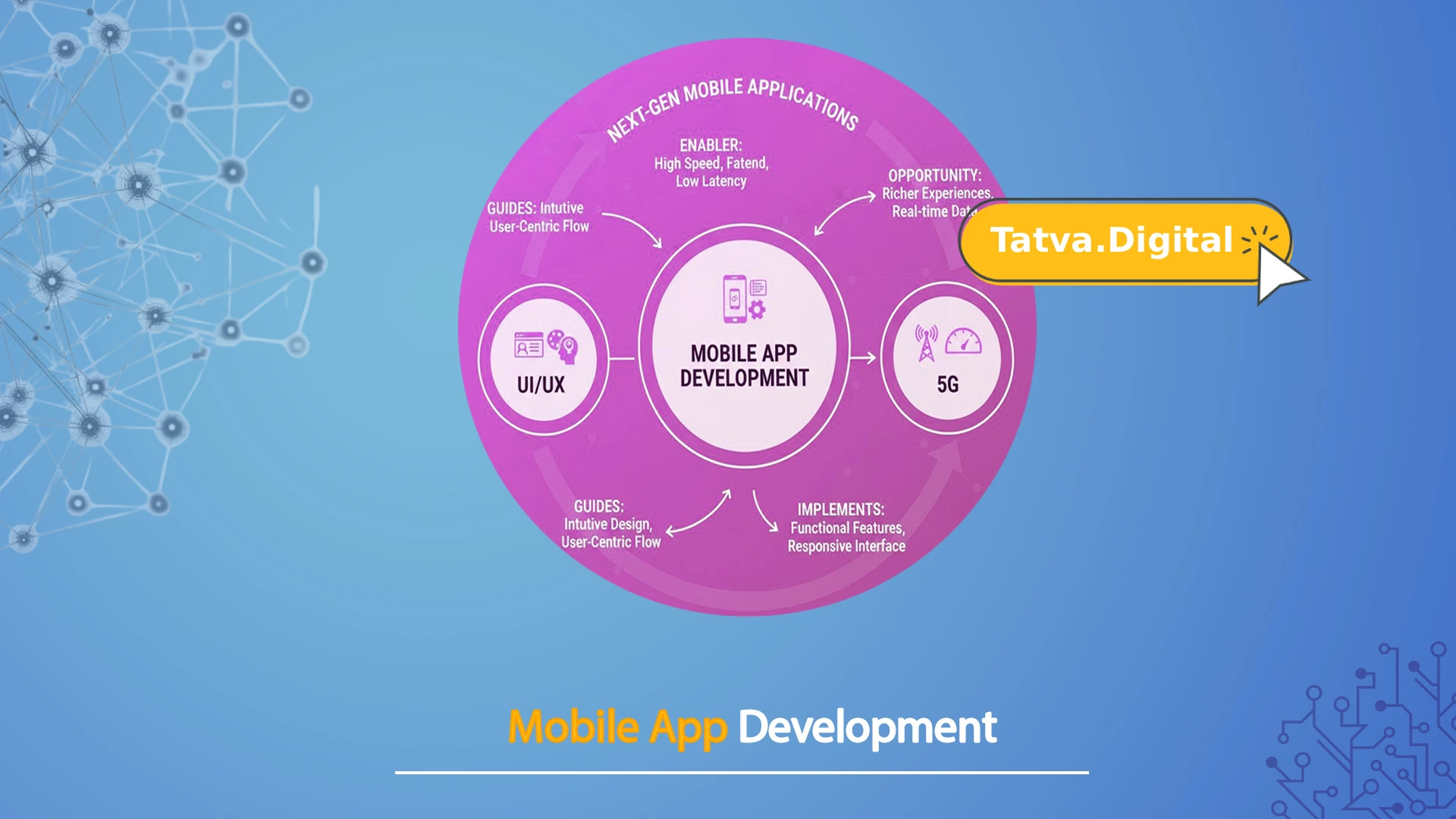
Mobile App Development –2025-26 Guide by Tatvatech Digital

Mobile App Development

Mobile app development has become an important part of today’s businesses in the fast-changing digital ecosystem. From small businesses to Fortune 500 corporations, all are trying to build innovative, secure, intuitive, and scalable apps for ever-increasing user expectations.  At Tatvatech Digital, we help build great apps to deliver outstanding user experience and drive continuous business improvement. In this inclusive guide, when you’re considering Cross-Platform development, transitioning to 5G technology, or implementing the best security, you’ll have a better understanding of how to stay relevant in 2025 and beyond Cross-Platform vs. Native Apps: Which One Should You Choose in 2025? When designing your next app, one of the biggest decisions you will need to make is to determine whether you will develop a native app or a cross-platform app.  Let’s talk about the difference and help you to decide which is best for your project. What Are Native Apps? Native apps are applications that are built solely for one platform (either Android using Kotlin/Java or iOS using Swift/Objective-C).  Native apps are designed to function with the features available for the platform and provide the user with a seamless experience.  Benefits of Native Apps: Speed: Native apps tend to run considerably faster and more smoothly than other apps because they were built for only one platform.  On top of that, the performance can make your app stand out and shine. Security: Native apps tend to integrate better with device-level security.  Use of hardware: Native app developers have full access to any hardware features available on the device i.e., GPS, camera, sensors, and notifications.   Consistency: Created natively means that there will be some level of consistency and use of the design language available for their respective platform.  For example, Android’s use of Material Design or iOS Human Interface Guidelines.  Disadvantages: Cost:  The two platforms require separate development teams to build the app.  Time:  Developing two different codebases will also require quite a bit of more time What Are Cross-Platform Apps? Cross-platform apps use a single codebase to run on multiple platforms. Popular frameworks include Flutter, React Native, and Xamarin. Benefits of Cross-Platform Apps: Faster development: One codebase for both iOS and Android. Reduced cost: Saves time and resources by eliminating redundant work. Consistent user experience: Ensures a uniform look and feel across devices. Easy maintenance: Updates and bug fixes apply to all platforms at once. Drawbacks: Limited native performance: Might not fully utilize device hardware. Delayed feature support: New OS updates may take longer to integrate. What Should You Choose in 2025? In 2025, cross-platform development continues to gain momentum due to its cost-effectiveness and speed. Frameworks like Flutter 3 and React Native 0.76+ now offer near-native performance, making them ideal for most business apps. However, if you need high-performance gaming, AR/VR, or hardware-intensive apps, a native approach remains unbeatable. Tatva Tech Digital Tip: For startups and SMEs, cross-platform apps offer a better ROI. For enterprise-grade or feature-heavy apps, go native. Top Mobile App UI/UX Trends You Can’t Ignore The visual appeal and usability of your app can make or break its success. In 2025, UI/UX design trends focus on personalization, minimalism, and immersive interactions. Here’s what’s dominating the design landscape. Personalized Experiences Modern users expect apps that adapt to their preferences. By leveraging AI and machine learning, apps can now tailor recommendations, content, and layouts to individual behavior. Examples: Personalized dashboards (like Spotify’s “Made for You”) Dynamic color themes and adaptive typography Predictive navigation based on user activity Voice and Gesture Control With the rise of voice assistants and gesture-based UIs, apps are moving beyond traditional touch input. Why it matters: Accessibility: Easier for users with disabilities. Hands-free experience: Perfect for multitasking. Futuristic appeal: Makes your app stand out in crowded markets. Neumorphism and Minimalism The “less is more” principle dominates 2025’s design scene. Neumorphism, with its soft shadows and realistic depth, offers a clean, tactile feel. Benefits: Enhanced visual hierarchy Clean, modern interfaces Focus on usability over decoration Micro-Interactions Micro-interactions — subtle animations or feedback responses — enhance user delight and engagement. Examples: Button animations when tapped Real-time input validation Progress bars or loading effects These small touches create a more human connection with users. Dark Mode Optimization Dark mode isn’t just a trend — it’s a user preference. It improves battery life, reduces eye strain, and gives a sleek aesthetic. Tatvatech Digital Insight: Always test your dark mode UI across different devices and brightness levels to maintain readability and contrast. How 5G Is Changing the Way Apps Are Built and Used The arrival of 5G technology is reshaping the mobile app ecosystem. With speeds up to 100x faster than 4G, developers now have endless opportunities to innovate. Lightning-Fast Downloads and Streaming 5G enables instant app installations, lag-free video streaming, and real-time cloud gaming. This means users can access high-quality content without delay. Example Use Cases: Cloud-based gaming platforms like Xbox Cloud Gaming High-resolution video conferencing apps Instant media uploads for social networks AR/VR Becomes Mainstream 5G’s low latency makes Augmented Reality (AR) and Virtual Reality (VR) more accessible than ever. Industries benefiting: Retail: Virtual try-ons Real estate: 3D virtual tours Healthcare: Remote diagnostics Education: Immersive learning experiences Internet of Things (IoT) Integration With 5G, IoT-enabled apps can connect and control devices in real-time — from smart homes to connected cars. Examples: Smart thermostats that learn user behavior Wearable health apps tracking live vitals Fleet management apps for logistics Real-Time Analytics and Cloud Computing 5G enhances the efficiency of edge computing and cloud synchronization, allowing apps to handle massive data in real-time. This results in smarter analytics, faster updates, and more responsive UIs. Tatvatech Digital Note: When developing for 5G, prioritize scalability and real-time communication features using WebSockets or GraphQL Mobile App Monetization Strategies That Work A great app isn’t just about functionality — it’s also about generating revenue. In 2025, monetization models have evolved to balance profitability and user satisfaction. Here are the most effective strategies to consider: Freemium Model This model offers a basic version for free and … Read more