Why Long-Term Marketing Wins Over Short-Term Campaigns
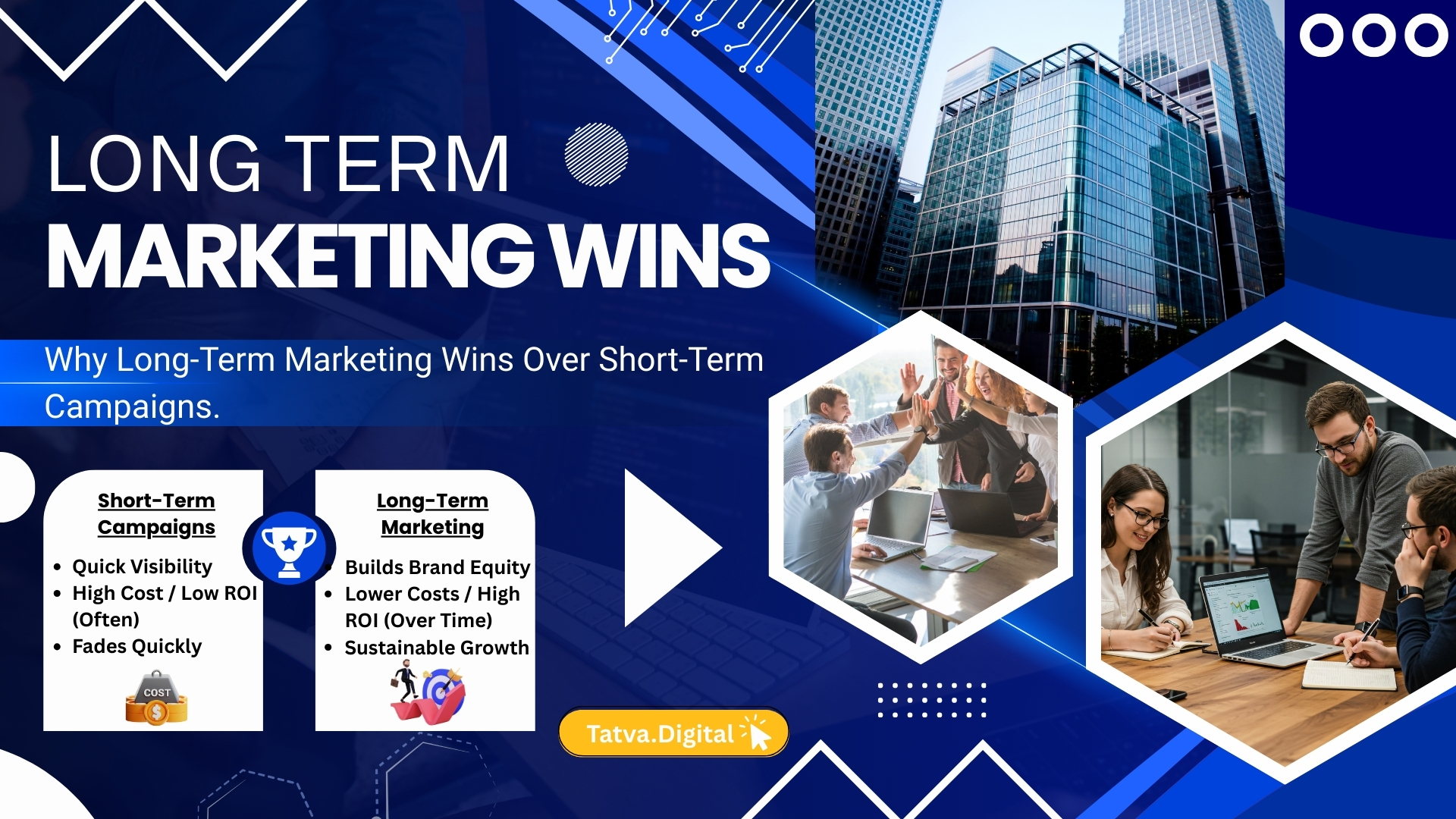
Sustainable Marketing Strategies That Build Trust, Reduce Costs, and Drive Consistent Business Growth In an era where instant results are often prioritized, many brands fall into the trap of relying only on short-term marketing campaigns. While these campaigns may generate quick visibility or leads, they rarely deliver sustainable growth. Long-term marketing, on the other hand, focuses on building trust, authority, and consistent engagement over time. Especially for high-involvement industries like real estate, education, and B2B services, long-term marketing strategies consistently outperform short-term campaigns by improving lead quality, lowering acquisition costs, and strengthening brand value. At Tatvatech Digital, we help businesses move beyond short-term wins by creating long-term, performance-driven marketing systems. Our approach combines strategic branding, performance marketing, SEO, content marketing, and data optimization to ensure that every marketing effort contributes to lasting impact. Instead of relying only on one-time campaigns, we focus on building scalable marketing frameworks that improve lead quality, reduce dependency on paid ads, and strengthen brand authority. This blog explains why long-term marketing wins over short-term campaigns, how it impacts ROI and buyer behavior, and why businesses that invest in sustainable marketing strategies achieve long-lasting success. What Are Short-Term Marketing Campaigns? Short-term marketing campaigns are designed to deliver immediate results. These typically include flash offers, limited-time promotions, aggressive paid ads, or one-time lead generation campaigns. While short-term campaigns can create quick traction, they depend heavily on continuous spending. Once the campaign ends, visibility drops and lead generation flow stops. This creates an unstable growth cycle where businesses must repeatedly invest to maintain momentum. What Is Long-Term Marketing? Long-term marketing is a strategic, ongoing approach focused on consistent brand presence and value creation. It includes SEO, content marketing, performance marketing optimization, brand storytelling, audience nurturing, and reputation building. Instead of chasing instant conversions, long-term marketing builds relationships with potential customers throughout their decision-making journey. Over time, this leads to stronger brand recall, higher trust, and better conversion rates. Why Long-Term Marketing Builds Stronger Trust Trust plays a critical role in buying decisions. Customers are more likely to choose brands they recognize and trust. Long-term marketing ensures repeated exposure across multiple channels, reinforcing credibility and reliability. When buyers consistently see valuable content, educational insights, and authentic messaging, they associate the brand with expertise rather than promotions. This trust significantly reduces hesitation and price sensitivity. The Compounding Power of Long-Term Marketing One of the biggest advantages of long-term marketing is its compounding effect. Efforts such as SEO, blogs, videos, and brand campaigns continue to deliver results long after they are created. Each piece of content strengthens future performance. Organic traffic grows, ad performance improves, and remarketing becomes more effective. Over time, this creates a sustainable growth engine that short-term campaigns cannot match. Cost Efficiency Improves Over Time Short-term campaigns usually come with higher costs per lead because they rely on urgency and broad targeting. Long-term marketing gradually lowers acquisition costs by improving brand awareness and organic reach. As audiences become familiar with the brand, conversion rates increase and reliance on high-cost ads decreases. This leads to better ROI and more predictable marketing performance. Long-Term Marketing vs Short-Term Campaigns: Key Differences Aspect Long-Term Marketing Short-Term Campaigns Primary Focus Brand trust and sustainable growth Quick visibility or leads Duration Ongoing and consistent Limited to campaign period Cost Over Time Reduces gradually Increases with repetition Lead Quality High-intent and informed Often low-intent Brand Value Strengthens long-term Temporary impact ROI Stability Predictable and scalable Unstable Dependency on Ads Decreases over time Completely dependent Buyer Relationship Nurtured over time Transaction-focused Suitability Ideal for long decision cycles Short-term spikes only Why Long-Term Marketing Works Better for Real Estate and High-Value Businesses In industries where buyers take time to research and evaluate options, long-term marketing supports the entire buyer journey. Instead of pushing immediate offers, it provides reassurance, education, and credibility through CRM services. This results in better site visits, higher engagement, and stronger closing rates. Short-term campaigns may bring inquiries, but long-term strategies build relationships that convert. How Performance Marketing Fits into a Long-Term Strategy Performance marketing becomes significantly more effective when aligned with long-term goals. Continuous optimization, data analysis, and funnel refinement improve results over time. Rather than launching one-off campaigns, performance marketing should be refined consistently to strengthen audience targeting, messaging, and conversion paths. Short-Term Campaigns Still Have a Role Short-term campaigns can be useful for launches, testing, or seasonal promotions. However, they should support a long-term strategy rather than replace it. The most successful brands balance both approaches, using short-term campaigns tactically while building long-term assets. Want Sustainable Growth? Connect with Tatvatech Digital Looking for consistent leads, better ROI, and long-term brand growth instead of temporary spikes? Connect with Tatvatech Digital to build a powerful long-term marketing strategy backed by performance marketing, SEO, content, and data-driven optimization. Whether you want to reduce dependency on paid ads or build a strong brand presence, our team helps businesses scale with clarity and confidence. Visit Tatvatech Digital today and take the first step toward sustainable growth. Conclusion: Long-Term Marketing Is the Real Growth Strategy Short-term campaigns may deliver quick wins, but long-term marketing builds real business value. It strengthens trust, improves efficiency, and creates consistent growth over time. Brands that invest in long-term marketing gain a competitive advantage by reducing costs, improving lead quality, and building lasting relationships with their audience. In a crowded digital landscape, sustainability always wins over speed. FAQs Is long-term marketing better than short-term campaigns? Yes, long-term marketing delivers sustainable growth, while short-term campaigns offer temporary results. How long does long-term marketing take to show results? Initial results may take a few months, but growth compounds over time. Can short-term campaigns still be useful? Yes, when used strategically alongside a long-term plan. Does long-term marketing reduce advertising costs? Yes, it improves efficiency and lowers cost per lead over time. Which businesses benefit most from long-term marketing? Real estate, B2B, education, healthcare, and high-value service industries. About Us Business Name: Tatvatech Digital Private Limited Tatvatech Digital Private Limited is an emerging eCommerce platform … Read more