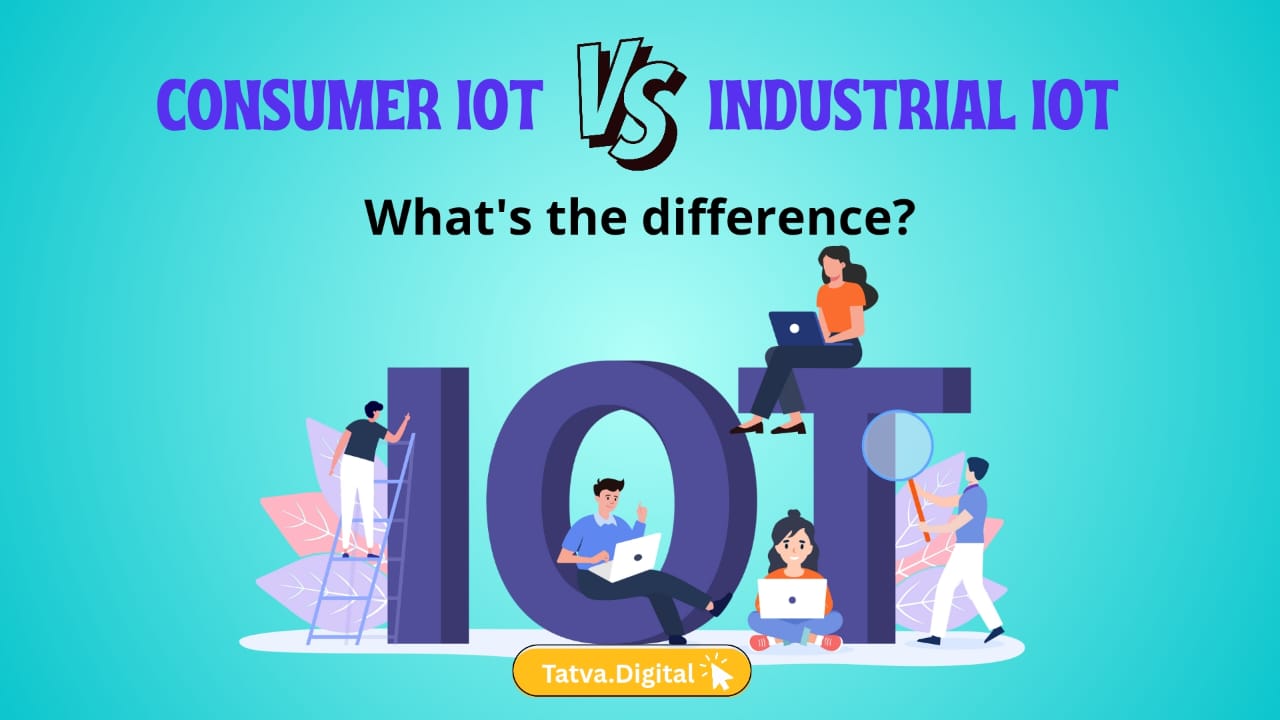
Consumer IoT vs Industrial IoT: What’s the Difference?
The IoT Divide Every Business Should Understand As IoT adoption grows across industries, the distinction between Consumer IoT and Industrial IoT becomes increasingly important. While consumer-focused solutions prioritize ease of use and accessibility, industrial IoT systems are built for performance, scalability, and real-time data processing. This comparison highlights how each approach supports different goals and why selecting the right IoT model is critical for successful digital transformation. Introduction: What Is This Blog All About, and Why Does It Matter? The Internet of Things (IoT) is transforming how people live, work, and interact with technology. From smartwatches tracking daily fitness to industrial sensors optimizing factory performance, IoT has become a core driver of digital transformation. However, not all IoT solutions are built for the same purpose. Two major categories dominate this space: Consumer IoT (CIoT) and Industrial IoT (IIoT). While both rely on connected devices, sensors, data analytics, and cloud platforms, their goals, complexity, scale, and impact are entirely different. Businesses often struggle to understand whether they need a consumer-focused IoT solution or a robust industrial-grade system—and choosing the wrong one can lead to wasted investment and missed opportunities. In this blog, we’ll clearly explain Consumer IoT vs. Industrial IoT, highlight real-world examples, outline key differences, and help you decide which approach best fits your needs. We’ll also show how Tatvatech Digital helps businesses design, develop, and scale secure IT solutions tailored to both consumer and industrial use cases. What Is Consumer IoT, and How Does It Work? Consumer IoT (CIoT) refers to IoT devices and applications designed for individual users and households. These devices focus on convenience, comfort, automation, and lifestyle enhancement. Consumer IoT solutions are typically easy to install, affordable, and controlled via smartphones or voice assistants. Common examples of consumer IoT include: Smart home devices (smart lights, thermostats, plugs) Wearable technology (smartwatches, fitness trackers) Smart appliances (refrigerators, washing machines) Home security systems and smart cameras Voice assistants like Alexa and Google Assistant Key characteristics of Consumer IoT: User-friendly interfaces Wireless connectivity (Wi-Fi, Bluetooth) Lower implementation cost Focus on user experience and personalization Limited scale compared to industrial systems What Is Industrial IoT, and Why Is It More Complex? Industrial IoT (IIoT) applies IoT technology to industries such as manufacturing, logistics, energy, healthcare, agriculture, and utilities. Its primary goal is operational efficiency, automation, safety, and predictive decision-making. Industrial IoT systems connect machines, sensors, and control systems to collect massive volumes of data and convert them into actionable insights. Common examples of Industrial IoT include: Smart factories and automated production lines Predictive maintenance systems Asset tracking in logistics and supply chains Smart grids and energy management Industrial robotics and process automation Key characteristics of Industrial IoT: High reliability and uptime requirements Advanced analytics and real-time monitoring Integration with legacy systems and ERP software Strong cybersecurity and compliance needs Scalable architecture for large operations Consumer IoT vs. Industrial IoT: What Are the Key Differences? While both Consumer IoT and Industrial IoT use connected devices, their purpose and execution differ significantly. Key differences at a glance: Target users: Individuals vs enterprises and industries Scale: Small networks vs large, complex ecosystems Data volume: Limited user data vs massive operational data Reliability: Convenience-based vs mission-critical Security needs: Moderate vs enterprise-grade cybersecurity Cost: Low to medium vs high initial investment Consumer IoT prioritizes ease of use, while Industrial IoT prioritizes performance, accuracy, and long-term ROI. How Do Consumer IoT and Industrial IoT Use Data Differently? Data is the backbone of IoT, but its usage varies widely between consumer and industrial environments. Consumer IoT data usage focuses on: Personalization and recommendations User behavior tracking Automation of daily tasks Real-time notifications and alerts Industrial IoT data usage focuses on: Predictive maintenance and failure prevention Process optimization and cost reduction Real-time operational visibility Compliance reporting and risk management Industrial IoT often integrates with AI, machine learning, and big data analytics, making it far more data-intensive and business-critical. How Can Tatvatech Digital Help with IoT Solutions? At Tatvatech Digital, we specialize in building scalable, secure, and intelligent IoT solutions for both consumer and industrial applications. Our IoT services include: Custom IoT software development Cloud-based IoT platforms IoT mobile and web applications Data analytics and real-time dashboards Integration with ERP, CRM, and legacy systems IoT security and compliance solutions Whether you’re launching a smart consumer product or digitizing industrial operations, Tatvatech Digital helps you turn connected data into real business value. How Do You Choose Between Consumer IoT and Industrial IoT? Choosing the right IoT approach depends on your business goals, audience, and operational complexity. Choose Consumer IoT if: Your product targets individual users Ease of use and affordability matter most You focus on lifestyle, health, or smart living Choose Industrial IoT if: You manage large-scale operations or assets Downtime directly impacts revenue or safety You need real-time monitoring and automation You want long-term operational optimization A professional consultation—like the one offered by Tatvatech Digital—can help you make the right decision from the start. FAQs: Consumer IoT vs Industrial IoT What is the main difference between Consumer IoT and Industrial IoT?Consumer IoT focuses on individual users and convenience, while Industrial IoT focuses on enterprise operations, automation, and efficiency. Is Industrial IoT more expensive than Consumer IoT?Yes, Industrial IoT usually requires higher investment due to advanced hardware, security, integration, and scalability. Can consumer IoT be used in businesses?Some consumer IoT devices can support small businesses, but they are not designed for mission-critical industrial operations. Which industries benefit most from Industrial IoT?Manufacturing, logistics, energy, healthcare, agriculture, and utilities benefit the most from IIoT solutions. Does Tatvatech Digital offer IoT development services?Yes, Tatvatech Digital provides end-to-end IoT development services for both consumer and industrial use cases. Conclusion: Consumer IoT or Industrial IoT—Which Is Right for You? The debate around Consumer IoT vs. Industrial IoT isn’t about which is better—it’s about which is right for your goals. Consumer IoT enhances daily life through convenience and automation, while Industrial IoT transforms businesses by improving efficiency, reducing costs, and enabling data-driven decisions. Understanding the differences … Read more