ERP development Archives - Tatvatech Digital Private Limited ERP development Archives - Tatvatech Digital Private Limited

Complete Guide to ERP Development for SMEs: Cost, Features, and Benefits Explained

ERP Development for SMEs

ERP Development for SMEs: The rapid digital transformation of SMEs is a fact. These businesses, amid the rise of competition and changes in customer expectations, need to make operations seamless, minimize manual intervention, and develop real-time insight into the performance of their business. This is where modern ERP systems come into play. While ERP software was once considered a “big enterprise” tool, today’s modular, scalable, affordable ERP solutions are designed to specifically support SMEs. From finance and inventory to HR and sales, ERP brings a multitude of business functions under one unified platform that helps growing companies operate at speed, with accuracy and efficiency. The wide-ranging guide explains everything that SMEs need to know about ERP development: key features, the implementation process, real-life benefits, the role of technology partners such as Tatvatech Digital, and a detailed cost breakdown. What Is ERP for SMEs? ERP (Enterprise Resource Planning) is an integrated software system that automates and manages core business processes. For SMEs, ERP acts as a central nervous system, connecting departments and enabling teams to work with the same updated data. Unlike spreadsheets and standalone tools, SME-specific ERP systems are designed to be: Easy to use Cost-effective Scalable Customizable Quick to implement This makes ERP an ideal solution for small and mid-sized businesses aiming to improve productivity and operational clarity without heavy IT investment. Companies often prefer working with experienced ERP development partners such as Tatvatech Digital, known for building affordable, industry-ready ERP development for SMEs. Why SMEs Need ERP More Than Ever SMEs face unique operational challenges: resource limitations, fast-changing customer demands, complex compliance requirements, and rising competition. ERP helps solve these challenges by bringing automation and visibility into everyday business operations. 1. Fragmented Data and Processes Without ERP, SMEs juggle Excel sheets, offline invoices, and isolated tools. This leads to miscommunication and inefficiency. 2. Lack of Real-Time Information Decision-making slows down when business owners lack instant visibility into sales, finance, or inventory data. 3. Difficulty Scaling Operations As SMEs grow, manual systems struggle to keep up with rising demand. 4. Compliance and Reporting Issues Without centralized records, taxation and audits become complicated. This is why SMEs increasingly partner with solution providers like Tatvatech Digital, who understand SME workflows and build ERP systems tailored to their growth stage. Key Features of ERP Software for SMEs An effective SME ERP system includes modules tailored to daily business operations. 1. Inventory & Warehouse Management Real-time stock tracking Automated reorder alerts Multi-warehouse management Stock movement history 2. Sales & Order Management Lead & opportunity tracking Automated quotations, orders & invoices Sales performance dashboards 3. Purchase & Vendor Management Supplier quotes & comparison Purchase order automation Vendor ledger management 4. Accounting & Finance Ledger, payables, receivables Bank reconciliation GST/tax management Automated financial reports 5. HR & Payroll Employee attendance Leave management Payroll processing Statutory compliance 6. Production Manufacturing Bill of Materials (BOM) Work order management WIP tracking Material requirement planning 7. CRM (Customer Relationship Management) Lead nurturing Customer engagement Follow-up automation 8. Reporting & Business Intelligence Advanced dashboards Profitability analysis Inventory insights Financial health reports Benefits of ERP for SMEs ERP implementation brings long-term strategic advantages 1. Higher Productivity: Automation reduces manual work and boosts efficiency. 2. Faster Decision-Making: Real-time dashboards support instant insights. 3. Better Customer Satisfaction: Quicker responses and timely order fulfillment improve engagement. 4. Lower Operational Costs: ERP prevents inventory losses, data duplication, and workflow delays. 5. Higher Accuracy: Unified data ensures error-free operations. 6. Scalable Growth: ERP grows with the business—multi-branch, multi-user, or multi-warehouse. 7. Easier Compliance: Automated accounting and tax reports simplify audits. How Much Does ERP Development Cost for SMEs? Cost varies based on requirements and customization needs. 1. Basic ERP – For small businesses Cost: $5,000–$15,000 2. Mid-Level ERP—For growing SMEs Cost: $15,000–$35,000 3. Advanced ERP—For manufacturing SMEs Cost: $25,000–$60,000+ Additional Cost Factors Cloud hosting Integrations Mobile app support Custom modules Training & maintenance Tech partners like Tatvatech Digital help SMEs reduce costs through modular development and scalable cloud solutions. How to Choose the Right ERP For Your SME When selecting an ERP, focus on: Ease of use Industry relevance Customization flexibility Integration capability Scalability Vendor support Experienced ERP providers like Tatvatech Digital can help assess your needs and design a solution aligned with your business model. Conclusion: Why ERP Is the Most Important Investment for SMEs Today In today’s fast-paced and digitally driven marketplace, no SME can afford to operate on outdated systems, manual processes, and fragmented data. There comes a time for every growing business when spreadsheets and basic tools are no longer supporting expansion, efficiency, or customer demands. This is where ERP becomes transformational. ERP empowers SMEs to operate with the same level of intelligence, automation, and control as large enterprises—without massive budgets or IT teams. It simplifies everyday operations, enhances financial accuracy, accelerates decision-making, and provides 360-degree visibility into the business. From reducing inventory losses to improving customer satisfaction, ERP delivers measurable impact on productivity and profitability. Additionally, ERP is not merely about buying software; it’s a long-term strategic investment. With the right implementation partner, such as Tatvatech Digital, SMEs get an ERP solution fitted to their workflows, industry needs, and growth goals. Tatvatech Digital brings deep know-how in ERP development to ensure every module, feature, and automation truly solves real business challenges. As SMEs scale, diversify, or expand into new markets, ERP serves as the backbone to hold operations together. It provides stability, intelligence, and adaptability—three essential ingredients for sustainable business growth in the digital age. Whether manufacturing units, trading companies, retail businesses, or service providers, ERP will enable you to work smarter, grow faster, and compete more effectively. About us: Business Name – Tatvatech digital private Limited TatvaTech Digital Private Limited is an emerging eCommerce platform offering a wide range of products, including electronics, home essentials, fashion, beauty, health, and more—all with a focus on quality, convenience, and customer satisfaction Contact us: Contact: +91-8130110203 Email: ecommerce@tatva.digital Trade Name: TatvaTech Digital Private Limited Address: A 8, Block B, Sector 68, Noida 201306, Uttar … Read more
Why Are Businesses Switching to Cloud-Based ERP Development Services?

Cloud-Based ERP

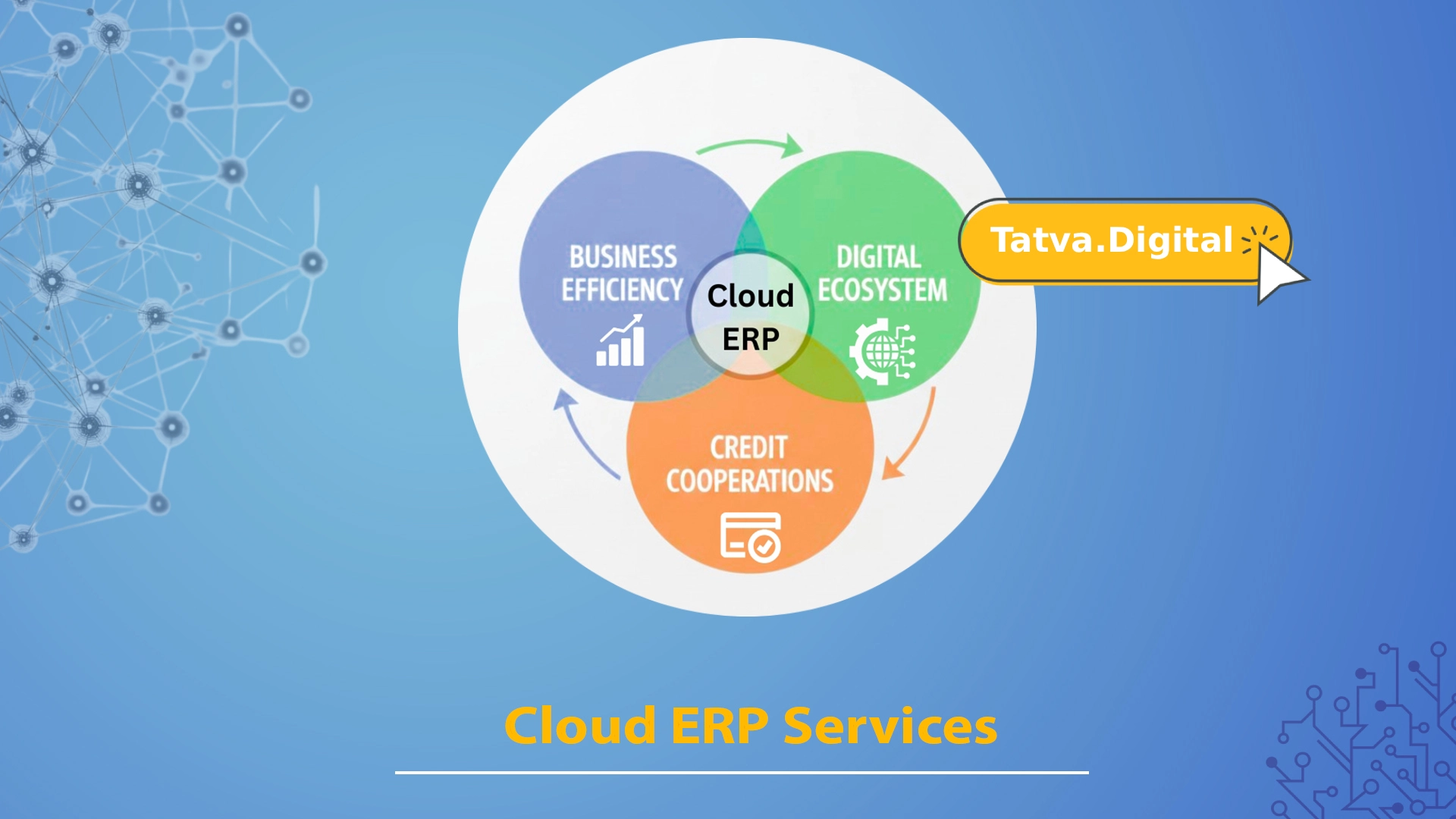
Cloud-Based ERP The global business scenario is in the midst of rapid digital expansion. Companies no longer rely on conventional, inflexible, on-premise ERP systems. They instead opt for cloud ERP development and cloud-based ERP solutions and collaborate with an experienced ERP software development company in order to upgrade their operations. In 2025, it is not about upgrading the technology; it is a strategic decision that makes companies agile, efficient, intelligent, and competitive. Across the world, organizations from various industries are adopting cloud computing as a platform for core operational systems to reduce costs, increase collaboration, and become future-ready. In this blog, we will discuss why cloud ERP adoption is growing exponentially, its benefits, how various industries—including credit cooperatives—leverage it, and why companies trust partners like Tatvatech Digital for next-generation ERP development. What Makes Cloud ERP Development the Preferred Choice in 2025? The shift toward cloud ERP is mainly driven by the demand for flexibility, cost efficiency, and smarter operational models. Let’s understand the key reasons. 1. Remote-Ready & Hybrid Workplace Support Business operations are distributed. Teams work across different locations, cities, or countries. ERP enables access to business data anywhere, anytime, on a mobile phone, tablet, or desktop.  ERP allows for continuity in workflow—from approving invoices to viewing inventory—outside the traditional office spaces. 2. Reduced Initial Investment Building an on-premise ERP requires servers, IT staff, and hardware with upgrades every year. Cloud ERP doesn’t hold such expenses. Subscription-based pricing means businesses only pay for what they utilize, therefore making ERP implementation economical for enterprises as well as SMEs. 3. Automated Updates & Minimal Maintenance eliminates system downtime and costly upgrade cycles. Updates are automatic. New features Security patches Performance Enhancements This ensures that businesses are always running on the latest versions, without extra effort. 4. Advanced Security Built-In Data security has reached whole new levels in 2025. Included in: End-to-end encryption Multi-factor authentication Automatic backups Protected hosting environments Real-time threat monitoring Cloud platforms maintain stronger security than many in-house IT setups. 5. AI-Powered Insights & Automation Modern cloud-based ERP solutions now integrate AI & ML tools to elevate decision-making. Businesses gain predictive insights into: Sales trends Inventory forecasting Resource utilization Financial patterns This improves accuracy and operational efficiency across departments. How Cloud ERP Enhances Business Efficiency Across Industries? Cloud ERP finds applications across manufacturing, logistics, healthcare, construction, retail, and BFSI since it is universally adaptable. 1. Enables Real-Time Collaboration Teams can communicate and collaborate on a single platform. Data flows smoothly across departments without departmental silos or confusion. 2. Supports Multi-Branch Operations All branches, warehouses, or project sites remain updated. Managers can track activities, analyze performance, and create consolidated reports in real time. 3. Easy Scalability Businesses can add or remove modules as needed.  ERP grows along with the organization, with no server upgrades or downtime. 4. Better Decision-Making With Live Dashboards With ERP, management gets access to real-time dashboards. Stakeholders can instantly evaluate KPIs and make quick data-driven decisions. What Is Cloud ERP’s Role in the Digital Ecosystem of 2025? While industries move towards automation, IoT, AI, and RPA, ERP becomes the backbone of digital transformation. 1. Integration With Modern Technologies Cloud ERPs work seamlessly with: IoT devices Machine sensors E-commerce platforms Payment gateways CRM & HRMS systems 2. Eco-Friendly, Paperless Workspace Automation eliminates the need for manual paperwork, physical approval, and printed reports; instead, it promotes sustainable digital operations for a business. 3. Agility in Changing Business Environments Market conditions flip on a dime.  ERP empowers businesses to change processes in real time and not rely on heavy technical changes. Cloud ERP for Credit Cooperatives: A Game-Changer in 2025 Credit cooperatives frequently deal with high volumes of members, complicated loan processes, and regulatory compliance. This is where it presents a transformational upgrade. Key Benefits for Credit Cooperative Societies: 1. Centralized Member Data Loan accounts, deposits, withdrawals, and share capital for members are all kept in a single cloud platform. 2. Automated Loans & Interest Calculation The system automates: Loan approvals EMI schedules Interest calculations Tracking of the payment While workload reduces, accuracy increases. 3. Compliance & Audit Transparency Audits have become faster, more transparent, and smoother, with ERP maintaining all the required logs and real-time financial records. 4. Mobile-Friendly Member Access Members can view accounts, apply for loans, and check statements online, thus improving service delivery. 5. Multi-Branch and Multi-Center Support Cooperatives operating in different locations can synchronize operations without depending on manual reporting. Why Choose an Expert ERP Software Development Company? Development needs solid technical knowledge and experience with the workflow of the industry. Businesses rely on trusted partners like Tatvatech Digital in building flexible, secure, and scalable ERP systems. Tatvatech Digital Offers: Customized for industry-specific needs Seamless integration with third-party tools Strong domain knowledge across diverse industries Cutting-edge technology stack with AI, automation & IoT Faster implementation by using proprietary frameworks End-to-end ERP development & support Tatvatech Digital ensures that businesses get future-ready ERP solutions to bring in more efficiency and reduce operational gaps. The Future of Cloud ERP Beyond 2025 The next decade will see even further development in cloud ERP with: AI-driven automation for repetitive tasks Voice-based ERP commands Robotic process automation (RPA) integration Predictive analytics for real-time decision-making Personalized dashboards for every user role Industry-specific microservices & plug-and-play modules Industry-specific microservices & plug-and-play modules Cloud ERP is turning into an intelligent business companion. FAQs: Cloud-Based ERP Development Services in 2025 1. What is cloud ERP? Cloud ERP is an internet-based ERP system hosted on remote servers that could be accessed from any device to reduce hardware costs and enhance operational flexibility. 2. Why is cloud ERP popular in 2025? Because it enables remote work, cuts down on operational costs, automatically updates, has better security, and supports all kinds of advanced technologies. 3. Is cloud ERP safe for critical business data? Yes, Cloud ERP provides protection against data exposure by means of encryption, firewalls, MFA, backups, and continuous monitoring. 4. Can cloud ERP support multi-branch businesses? Absolutely, all branch data is kept up … Read more

Why ERP Development Services Essential for Modern Industries?

Enterprise resource planning Services

Enterprise Resource Planning (ERP) software has become a must-have for enterprises in all sectors. From manufacturing and construction to real estate, garments, cooperatives, and corporate training, ERP software automates procedures, enhances efficiency, and facilitates data-driven decision-making. This article discusses the functionality of ERP software and the sectoral advantages it offers, organized under main headings for understanding. How ERP Systems Are Transforming the Construction Industry in 2025 The construction industry is highly complex, involving multiple stakeholders, strict deadlines, and extensive documentation. Modern construction ERP software integrates project management, resource allocation, budgeting, and compliance tracking into a single platform. Key Features for Construction ERP Real-time Project Monitoring: Dashboards provide visibility over project milestones, budgets, and timelines. Resource Optimization: Track labor, equipment, and materials to reduce wastage and avoid delays. Compliance Management: Centralized documentation ensures adherence to safety and regulatory standards. Industry Benefits On-time Project Delivery – Real-time tracking eliminates delays and bottlenecks. Cost Reduction – Improved resource management reduces operation expenses. Improved Decision Making – Immediate data access enables informed decisions. Top Features to Look for in a Manufacturing ERP System Manufacturing companies are confronted with difficulties in synchronizing production, inventory, supply chain, and sales. A sound manufacturing ERP software consolidates all these functions for streamlined operations. Key Features Production Planning and Scheduling: Forecast demand, maximize machine utilization, and reduce downtime. Quality Control: Track product quality at each step to ensure standards. Supply Chain Management: Enhance transparency, coordination between suppliers, and inventory handling. Analytics and Reporting: Create real-time reports for cost reduction and strategic planning. Industry Benefits Increased Production Efficiency – Efficient processes minimize slowdowns. Better Product Quality – Ongoing quality inspections keep defects to a minimum. Better Supply Chain – Easier supplier coordination and fewer inventory problems. Why Real Estate Companies Require Custom ERP Solutions Now Real estate businesses operate various activities, such as property listings, client interactions, and financial transactions. Industry-specific Custom ERP solutions bring these processes into one place, enhancing operational efficiency and transparency. Key Features Centralized Property and Client Database: Get all property, sales, and client information in real time. Financial and Contract Management: Automate billing, lease agreements, and payments. CRM Integration: Streamline client communication and relationship management. Industry Benefits Faster Decision-Making – Centralized data allows for quicker, informed decisions. Precise Financial Management – Automated operations minimize mistakes. Enhanced Client Interaction – Enhanced communication and follow-ups enhance client satisfaction. Why ERP Solutions Make Garment Businesses Grow Faster Apparel and garment businesses face seasonal demand changes and intricate production processes. Garment ERP software facilitates the tracking of production, inventory management, and streamlined operations. Top Features End-to-End Production Tracking: Track each process from material procurement to delivery. Inventory Management: Optimize stock levels to prevent shortage or overstocking. Cost and Profit Analysis: Real-time tracking aids in setting pricing to compete in the market. Industry Benefits Effective Production Management – Minimized delays and wastage. Inventory Optimization – Avoids overstocking or shortages. Improved Profit Control – Insights to keep profitability intact. Credit Cooperative ERP: Essential Features for Financial Management Transparency, precision, and regulation adherence are needed for credit cooperatives. Automate fundamental processes and provide actionable insights through Cooperative ERP systems. Key Features Member and Account Management: Store deposits, loans, and transaction records. Automated Loan Processing: Speed up approval and cut down on errors. Real-Time Financial Reporting: Use precise insights for strategic purposes. Industry Benefits Transparent Operations – Precise tracking fosters trust among members. Improved Loan Processing Speed – Automation enhances service efficiency. Informed Money Decisions – Real-time reporting supports improved planning. Advantages of Scaffolding ERP for Equipment and Project Tracking The scaffolding and equipment hire business calls for efficient tracking of assets and project timelines. Scaffolding ERP solutions simplify operations and optimize equipment utilization. Key Features Equipment Tracking: Track usage, maintenance, and availability. Project Coordination: Coordinate schedules, inventory, and labor. Billing Automation: Automate invoicing and maintenance tracking. Industry Benefits Optimized Equipment Utilization – Minimize idle equipment and losses. Enhanced Project Coordination – Timely availability guarantees smooth operations. Operational Efficiency – Automation expedites time and minimizes errors. Training ERP Systems: Transforming Corporate Learning & Development Corporate learning initiatives gain from training ERP systems, which consolidate employee training, monitor performance, and enforce compliance. Key Features Centralized Learning Management: Host courses online, monitor progress, and handle certifications. Performance Evaluation: Detect skill gaps and develop training programs. Compliance Tracking: Streamline regulatory training obligations. Industry Benefits Effective Learning Management – Easy access to training and tracking. Enhanced Employee Performance – Targeted programs improve skills. Regulatory Compliance – Automated tracking lessens risk. The Future of ERP: Blending AI and Machine Learning in 2025 AI and machine learning are revolutionizing ERP systems, making them predictive, intelligent, and user-friendly. Key Features Predictive Analytics: Predict equipment failures, demand shifts, and operational risks. Intelligent Insights: Analyze big data for strategic decisions. Automation and Smart Assistance: AI chatbots ease tasks and reporting. Industry Benefits Improved Forecasting – Identify issues before they arise. Data-Driven Decisions – Quicker and more accurate strategies. Operational Efficiency – Less manual intervention across industries. How to Select the Best ERP Platform for Your Business (Dycon ERP Example) The right ERP platform selection is based on business requirements, size, and industry. Selection Criteria Define Core Requirements: Identify processes to be automated. Evaluate Scalability and Integration: Seamless integration with existing systems. User Experience and Support: Vendor support and ease-of-use drive adoption. Platforms such as Dycon ERP provide industry-specific, modular customization to suit specific needs. Industry Benefits Improved Platform Alignment – ERP aligns business workflows. Scalability – System scales with organizational needs. Seamless Integration – Reduces disruption and optimizes ROI. Conclusion ERP systems are holistic platforms that align operations, analytics, and decision-making across industries. From manufacturing and construction to real estate, apparel, cooperatives, and corporate development, ERP solutions enhance productivity, lower errors, and facilitate decision making. Evolutions in AI and machine learning render ERP systems smart, predictive, and extremely user-friendly. Companies considering ERP solutions have to weigh factors, uses, cost against value, and scalability to select the optimum platform. For businesses looking for professional ERP development solutions, Tatvatech Digital  provides scalable, custom, and … Read more