
ERP benefits Archives - Tatvatech Digital Private Limited ERP benefits Archives - Tatvatech Digital Private Limited

ERP Software Development Services: Steps, Cost, and How It Benefits Your Business
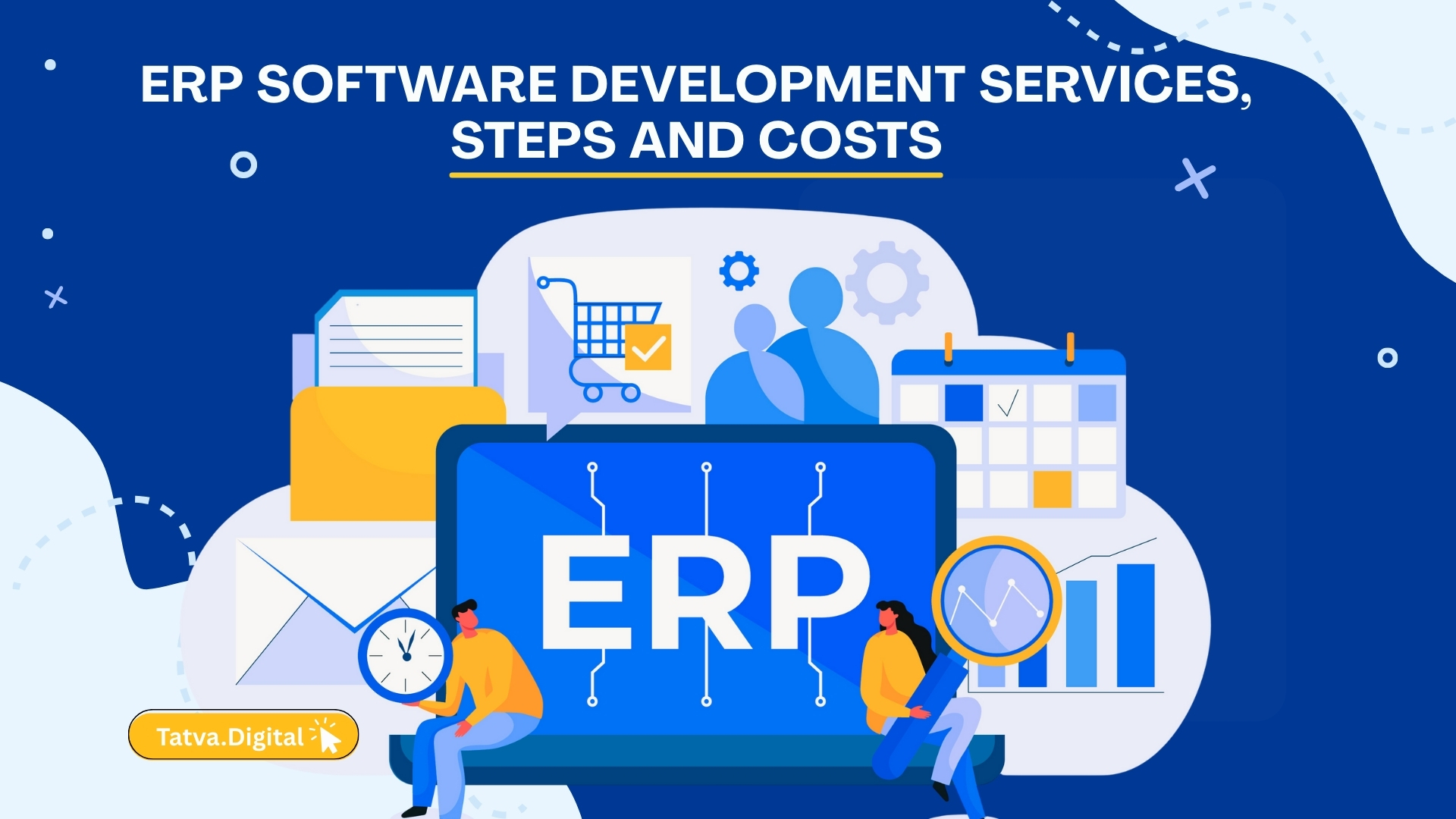
ERP system dashboard showing finance, HR, and inventory modules

Introduction: What Is ERP, and Why Businesses Need It Discover ERP software development services, implementation steps, cost factors, and how Tatvatech Digital builds custom ERP solutions for businesses of all sizes. Growing companies eventually reach a point where spreadsheets no longer cut it. That’s where enterprise resource planning (ERP) software comes in. ERP systems collect and organize key business information and help organizations run lean, efficient operations, even as they expand. Most business professionals know the term “ERP,” but they may not know exactly what enterprise resource planning systems can do for their teams. Introduction: What Is ERP, and Why Businesses Need It Enterprise Resource Planning (ERP) software integrates core business processes into a single, centralized system. It streamlines functions like finance, HR, inventory, procurement, and sales, allowing companies to operate more efficiently and make data-driven decisions. With growing operational complexity, businesses often ask: What are ERP software development services? How is ERP implemented? How much does ERP cost? This blog answers these questions and explains how Tatvatech Digital delivers training ERP solutions that help businesses scale and optimize operations. What Are ERP Software Development Services? ERP is a category of business software that automates business processes and provides insights and internal controls, drawing on a central database that collects inputs from departments including accounting, manufacturing, supply chain management, sales, marketing, and human resources (HR). Every business has multiple stakeholders collaborating to make things work. However, it becomes challenging when critical information is scattered across disconnected systems. For example, the accounting and FP&A teams could each have different spreadsheets with different figures for expense tracking. ERP systems centralize data, provide cross-departmental visibility, fuel efficient analysis, resolve data conflicts, and drive process improvements. That translates to cost savings and better productivity as people spend less time digging for needed data. Key Takeaways Centralized Data: ERP collects information from all departments into a single database for accurate, real-time insights. Unified Business Functions: It integrates finance, manufacturing, inventory, sales, marketing, HR, and project management. Efficiency and Savings: ERP boosts productivity, reduces errors, and uncovers growth opportunities. Flexible Deployment: Available as on-premises, cloud, or hybrid solutions to suit different business needs. Informed Decisions: Understanding features, integration, and total cost is crucial when selecting an ERP system. How Does ERP Software Work? An ERP system combines a central database, integrated modules, and a unified interface to connect departments and automate processes. Core Components of ERP Central Database: Eliminates duplicate data and ensures all departments work from the same information. Modular Architecture: Modules are dedicated to specific business functions, like accounting, HR, manufacturing, and CRM. Workflows & Logic: Automates processes like order-to-cash, procure-to-pay, and payroll approvals. Real-Time Sync: Transactions update all relevant modules instantly. Role-Based Access: Employees see dashboards and reports relevant to their roles, maintaining data security. What Are the Steps in ERP Software Development? An ERP system works by combining a shared database, modular applications, and a common user interface to support real-time information flow across the business. This architecture lets organizations automate processes, improve data accuracy, and make smarter decisions. Here’s how it comes together: Central database: All modules draw from a single unified data source. This eliminates data duplication and enables every department to work from the same real-time information. Modular architecture: ERP systems are built from distinct, interconnected applications (modules) tailored to specific business functions. These modules are tightly integrated and share information automatically. Built-in workflows and logic: ERP systems use predefined rules to automate business processes, such as order-to-cash, procure-to-pay, and payroll. For example, it can trigger purchase orders when inventory drops below a threshold or route an invoice for approval. Real-time data syncing: Transactions in one area update relevant data across the system instantly, promoting faster decision-making and tighter coordination. Shared interfaces and role-based access: Employees access the ERP system through dashboards and reports tailored to their roles. Permissions restrict access to sensitive data while giving teams the information they need to act quickly.  What Factors Affect ERP Development Costs? ERP development costs depend on multiple variables: Number of modules and features Level of customization Deployment type: cloud, on-premises, hybrid Integration with existing systems Maintenance and support needs Estimated ERP Costs Small businesses: $10,000–$500,000 Medium businesses: $50–$150,000.00 Large enterprises: $150,000+ Partnering with Tatvatech Digital ensures cost-efficient ERP solutions designed to deliver maximum ROI. ERP Integration and Data Sharing Virtually every organization considering an SAP ERP implementation will have systems in place that could be replaced by modules of the ERP under consideration. As such, part of adopting an ERP system involves determining which existing systems will be replaced, which must be integrated, and which will be left to stand independently. Is the existing system doing the job you need it to do?  If not, then there’s a good case to be made for using the relevant module offered by your ERP vendor. If the existing system is a keeper, is there a connector available from the ERP vendor, the existing system vendor, or a third party to get data flowing between the ERP and your existing system? And if so, how good is it? Data migration is complex. These connectors can do a decent job of integrating systems from different vendors, but quality and commitment to updates can vary. Remember: Upgrades to the ERP or the standalone system can break connectors or require rework. In the worst case, the lack of a new connector could derail upgrade plans completely. If a connector exists, does it operate in real time and keep all necessary data flowing to and from each system?  Some connectors operate in real time, and others sync up systems daily or weekly. Some move a limited data set between systems, and some work in only one direction—from an inventory management system into the ERP. If your team has done extensive custom configurations, the connector might not know some data types. Which ERP Deployment Option Should You Choose? ERP can be deployed in multiple ways based on business needs: On-Premises ERP Installed locally on company servers Requires IT staff for maintenance Offers control … Read more

Complete Guide to ERP Development for SMEs: Cost, Features, and Benefits Explained

ERP Development for SMEs

ERP Development for SMEs: The rapid digital transformation of SMEs is a fact. These businesses, amid the rise of competition and changes in customer expectations, need to make operations seamless, minimize manual intervention, and develop real-time insight into the performance of their business. This is where modern ERP systems come into play. While ERP software was once considered a “big enterprise” tool, today’s modular, scalable, affordable ERP solutions are designed to specifically support SMEs. From finance and inventory to HR and sales, ERP brings a multitude of business functions under one unified platform that helps growing companies operate at speed, with accuracy and efficiency. The wide-ranging guide explains everything that SMEs need to know about ERP development: key features, the implementation process, real-life benefits, the role of technology partners such as Tatvatech Digital, and a detailed cost breakdown. What Is ERP for SMEs? ERP (Enterprise Resource Planning) is an integrated software system that automates and manages core business processes. For SMEs, ERP acts as a central nervous system, connecting departments and enabling teams to work with the same updated data. Unlike spreadsheets and standalone tools, SME-specific ERP systems are designed to be: Easy to use Cost-effective Scalable Customizable Quick to implement This makes ERP an ideal solution for small and mid-sized businesses aiming to improve productivity and operational clarity without heavy IT investment. Companies often prefer working with experienced ERP development partners such as Tatvatech Digital, known for building affordable, industry-ready ERP development for SMEs. Why SMEs Need ERP More Than Ever SMEs face unique operational challenges: resource limitations, fast-changing customer demands, complex compliance requirements, and rising competition. ERP helps solve these challenges by bringing automation and visibility into everyday business operations. 1. Fragmented Data and Processes Without ERP, SMEs juggle Excel sheets, offline invoices, and isolated tools. This leads to miscommunication and inefficiency. 2. Lack of Real-Time Information Decision-making slows down when business owners lack instant visibility into sales, finance, or inventory data. 3. Difficulty Scaling Operations As SMEs grow, manual systems struggle to keep up with rising demand. 4. Compliance and Reporting Issues Without centralized records, taxation and audits become complicated. This is why SMEs increasingly partner with solution providers like Tatvatech Digital, who understand SME workflows and build ERP systems tailored to their growth stage. Key Features of ERP Software for SMEs An effective SME ERP system includes modules tailored to daily business operations. 1. Inventory & Warehouse Management Real-time stock tracking Automated reorder alerts Multi-warehouse management Stock movement history 2. Sales & Order Management Lead & opportunity tracking Automated quotations, orders & invoices Sales performance dashboards 3. Purchase & Vendor Management Supplier quotes & comparison Purchase order automation Vendor ledger management 4. Accounting & Finance Ledger, payables, receivables Bank reconciliation GST/tax management Automated financial reports 5. HR & Payroll Employee attendance Leave management Payroll processing Statutory compliance 6. Production Manufacturing Bill of Materials (BOM) Work order management WIP tracking Material requirement planning 7. CRM (Customer Relationship Management) Lead nurturing Customer engagement Follow-up automation 8. Reporting & Business Intelligence Advanced dashboards Profitability analysis Inventory insights Financial health reports Benefits of ERP for SMEs ERP implementation brings long-term strategic advantages 1. Higher Productivity: Automation reduces manual work and boosts efficiency. 2. Faster Decision-Making: Real-time dashboards support instant insights. 3. Better Customer Satisfaction: Quicker responses and timely order fulfillment improve engagement. 4. Lower Operational Costs: ERP prevents inventory losses, data duplication, and workflow delays. 5. Higher Accuracy: Unified data ensures error-free operations. 6. Scalable Growth: ERP grows with the business—multi-branch, multi-user, or multi-warehouse. 7. Easier Compliance: Automated accounting and tax reports simplify audits. How Much Does ERP Development Cost for SMEs? Cost varies based on requirements and customization needs. 1. Basic ERP – For small businesses Cost: $5,000–$15,000 2. Mid-Level ERP—For growing SMEs Cost: $15,000–$35,000 3. Advanced ERP—For manufacturing SMEs Cost: $25,000–$60,000+ Additional Cost Factors Cloud hosting Integrations Mobile app support Custom modules Training & maintenance Tech partners like Tatvatech Digital help SMEs reduce costs through modular development and scalable cloud solutions. How to Choose the Right ERP For Your SME When selecting an ERP, focus on: Ease of use Industry relevance Customization flexibility Integration capability Scalability Vendor support Experienced ERP providers like Tatvatech Digital can help assess your needs and design a solution aligned with your business model. Conclusion: Why ERP Is the Most Important Investment for SMEs Today In today’s fast-paced and digitally driven marketplace, no SME can afford to operate on outdated systems, manual processes, and fragmented data. There comes a time for every growing business when spreadsheets and basic tools are no longer supporting expansion, efficiency, or customer demands. This is where ERP becomes transformational. ERP empowers SMEs to operate with the same level of intelligence, automation, and control as large enterprises—without massive budgets or IT teams. It simplifies everyday operations, enhances financial accuracy, accelerates decision-making, and provides 360-degree visibility into the business. From reducing inventory losses to improving customer satisfaction, ERP delivers measurable impact on productivity and profitability. Additionally, ERP is not merely about buying software; it’s a long-term strategic investment. With the right implementation partner, such as Tatvatech Digital, SMEs get an ERP solution fitted to their workflows, industry needs, and growth goals. Tatvatech Digital brings deep know-how in ERP development to ensure every module, feature, and automation truly solves real business challenges. As SMEs scale, diversify, or expand into new markets, ERP serves as the backbone to hold operations together. It provides stability, intelligence, and adaptability—three essential ingredients for sustainable business growth in the digital age. Whether manufacturing units, trading companies, retail businesses, or service providers, ERP will enable you to work smarter, grow faster, and compete more effectively. About us: Business Name – Tatvatech digital private Limited TatvaTech Digital Private Limited is an emerging eCommerce platform offering a wide range of products, including electronics, home essentials, fashion, beauty, health, and more—all with a focus on quality, convenience, and customer satisfaction Contact us: Contact: +91-8130110203 Email: ecommerce@tatva.digital Trade Name: TatvaTech Digital Private Limited Address: A 8, Block B, Sector 68, Noida 201306, Uttar … Read more