digital marketing Archives - Tatvatech Digital Private Limited

What Is Digital Marketing? Types, Channels & Real-World Examples
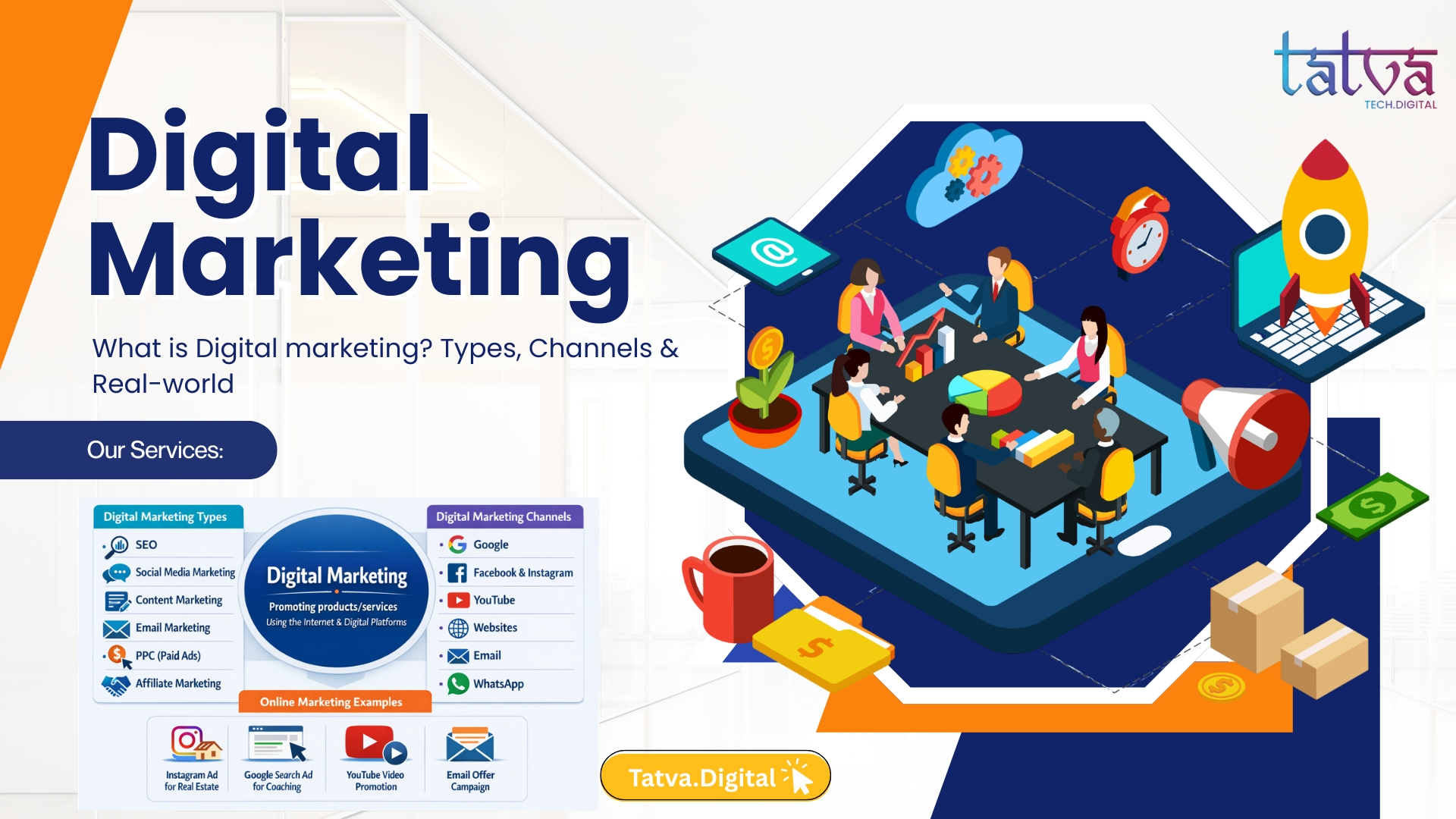
A Complete Guide to Digital Marketing Types, Channels, and Practical Online Marketing Examples for Business Growth What Is Digital Marketing? Digital marketing, also known as online marketing or internet marketing, is the use of digital marketing channels like search engines, social media platforms, email marketing, content marketing, PPC advertising, mobile apps, and websites to promote products and services online. Today, businesses rely on digital marketing types such as SEO (Search Engine Optimization), social media marketing, content marketing, affiliate marketing, influencer marketing, and email campaigns to increase brand awareness, generate leads, drive website traffic, and boost sales. In simple words, digital marketing is how businesses connect with customers online. From Google search results and Instagram ads to YouTube videos and email newsletters, every online interaction is part of a digital marketing strategy. At Tatvatech Digital, a trusted IT Company in Noida and a leading Modern Tech Solutions Provider Delhi NCR, we help businesses grow using smart, data-driven digital marketing strategies. This blog will explain everything about digital marketing types, digital marketing channels, and real-world online marketing examples so you can understand how it works and how it can grow your business. What Is Digital Marketing? Digital marketing refers to promoting products, services, or brands through digital platforms using the internet and electronic devices. Unlike traditional marketing (TV, newspapers, radio), digital marketing focuses on measurable online strategies. According to industry reports, over 65% of businesses worldwide increased their digital marketing budget in recent years. Why? Because it works. With the right internet marketing channel, businesses can: Reach global audiences Target specific customers Track campaign performance in real time Improve ROI by up to 30–50% That’s the power of digital marketing. Why Digital Marketing Is Important for Businesses Here are some key benefits: 1. Wider Reach With digital marketing channels like Google, Facebook, and LinkedIn, you can reach millions of users instantly. 2. Cost-Effective Compared to traditional advertising, digital marketing costs 40–60% less and provides better tracking. 3. Better Targeting You can target users by age, location, interests, job title, and more. 4. Measurable Results Tools like Google Analytics help measure clicks, conversions, and ROI easily. As a leading IT Company in Noida, Tatvatech Digital helps businesses use these benefits effectively to increase revenue and online visibility. Digital Marketing Types (Explained in Depth) Let’s explore the major digital marketing types in detail. 1.Search Engine Optimization (SEO) SEO is one of the most powerful digital marketing types. It helps your website rank higher on Google and other search engines. How SEO Works: Keyword research On-page optimization Technical SEO Link building Content optimization Example: If someone searches for “best IT Company in Noida,” SEO helps your business appear on page one. SEO can increase organic traffic by 50% or more when done correctly. 2. Pay-Per-Click Advertising (PPC) PPC is paid advertising where you pay only when someone clicks your ad. Common PPC platforms: Google Ads Facebook Ads LinkedIn Ads Example: A real estate company runs Google Ads targeting “flats in Noida.” They generate 100+ leads in one month. PPC delivers instant results and is ideal for lead generation. 3. Social Media Marketing Social media marketing uses platforms like Facebook, Instagram, LinkedIn, Twitter, and YouTube to promote brands. Benefits: Direct audience engagement Brand awareness Customer feedback Viral marketing opportunities Over 4.8 billion people use social media globally. That’s a huge opportunity. 4. Content Marketing Content marketing focuses on creating valuable blogs, videos, infographics, and guides. Examples of content marketing: Blog posts Case studies E-books Videos Good content builds trust and improves SEO rankings. 5. Email Marketing Email marketing is one of the highest ROI digital marketing channels. For every ₹1 spent, businesses can earn up to ₹36 in return. Uses: Newsletters Promotions Customer retention Product updates 6. Affiliate Marketing Businesses partner with affiliates who promote products and earn commissions on sales. Example: Amazon’s affiliate programme is one of the largest in the world. 7. Influencer Marketing Brands collaborate with social media influencers to promote products. Example: A beauty brand partners with Instagram influencers to promote skincare products. Digital Marketing Channels Now let’s understand the main digital marketing channels used in internet marketing. 1. Search Engines Google and Bing are powerful internet marketing channels. 2. Social Media Platforms Facebook, Instagram, LinkedIn, Twitter, Pinterest. 3. Email Direct communication with subscribers. 4. Websites Your website is your digital office. 5. Mobile Apps Push notifications and in-app promotions. Choosing the right internet marketing channel depends on your target audience and goals. Real-World Online Marketing Examples Here are some simple and practical online marketing examples: Example 1: Local Business SEO A restaurant in Delhi improved its Google ranking using SEO and increased bookings by 45%. Example 2: E-commerce PPC Campaign An online clothing store used Facebook Ads and generated 3X ROI in 2 months. Example 3: Email Automation A SaaS company used automated email sequences to increase conversions by 25%. These examples show how digital marketing types work in real life. How Tatvatech Digital Helps Businesses Grow At Tatvatech Digital, we combine technology with marketing strategy. As a trusted Modern Tech Solutions Provider Delhi NCR, we offer: SEO services PPC campaign management Social media marketing Website development Lead generation strategies Performance analytics We understand that every business is different. That’s why we create customized digital marketing strategies that deliver measurable results. If you’re searching for a reliable IT Company in Noida, our team is here to help you scale your business online. Ready to Grow Your Business Online? Want to improve website traffic, increase leads, and boost sales? Visit Tatvatech Digital today and explore our digital marketing services. You can add your clickable Contact Us link here to connect with our experts and get a free consultation. Let’s build your brand digitally and grow together. Conclusion So, what is digital marketing? It is the process of promoting products and services using digital marketing channels like search engines, social media, email, websites, and mobile apps. We explored: Different digital marketing types Major digital marketing channels Real-world online marketing examples The importance … Read more
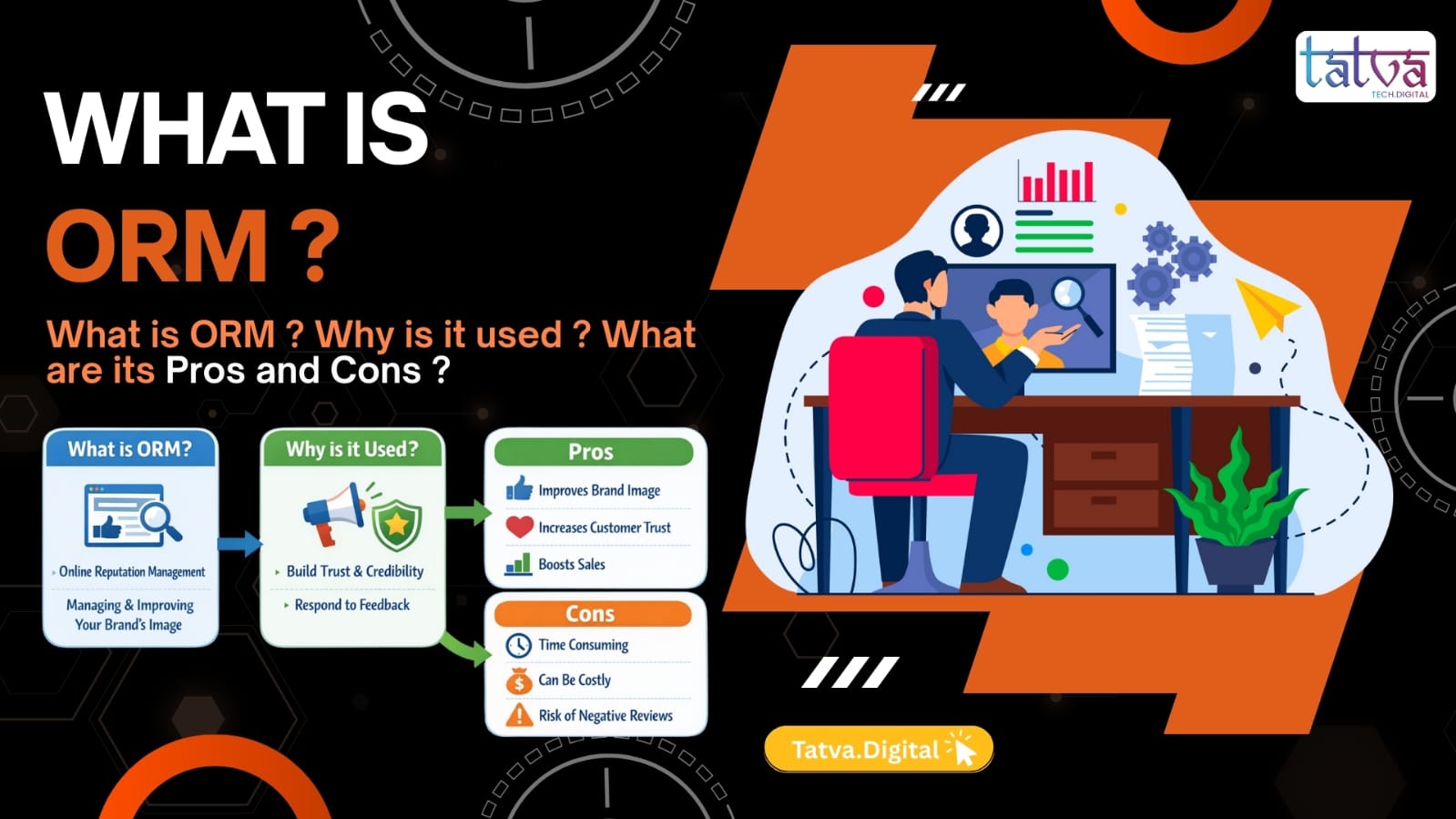
A Complete Guide to Online Reputation Management for Modern Businesses

Online reputation management dashboard showing customer reviews, ratings, and brand monitoring analytics

Online Reputation Management (ORM), digital reputation management, brand reputation management, SEO reputation management, online brand monitoring, review management, negative review removal, and social media monitoring are all critical parts of modern digital marketing strategies. If you are thinking about what ORM is and why it is used, this guide will help you understand everything in simple terms. In today’s digital world, more than 90% of customers check online reviews before buying a product or service, and nearly 85% trust online reviews as much as personal recommendations. This means your online reputation directly impacts your sales, trust, and brand credibility. At Tatvatech Digital – a leading IT company in Noida and modern tech solutions provider – we help businesses protect, manage, and grow their online reputation using advanced ORM strategies, SEO techniques, and digital marketing solutions. In this blog, we will explain: What is ORM? Why is ORM used? Pros and cons of ORM How businesses can benefit from professional ORM services Why choosing Tatvatech Digital is the smart decision What is ORM? ORM (Online Reputation Management) is the process of monitoring, influencing, and improving how a brand, company, or individual appears online. It focuses on: Managing Google search results Handling online reviews Monitoring social media mentions Responding to customer feedback Reducing the impact of negative content Simply put, ORM ensures that when someone searches your business name on Google, they see positive, trustworthy, and professional content instead of negative reviews or harmful information. For example, if a customer searches for your company and finds bad reviews on the first page of Google, there is a 70% chance they may not contact you. ORM helps control that narrative. Why is ORM used? Online reputation management is used for multiple reasons. Let’s understand them one by one. 1. To Build Brand Trust Trust is everything in business. Studies show that businesses with a rating above 4 stars get 30–40% more clicks than those with lower ratings. ORM helps improve your brand’s online image and build credibility. 2. To Increase Sales and Leads A strong digital reputation increases conversions. When customers see positive reviews and a strong online presence, they are more likely to buy. 3. To Control Negative Content Negative reviews, false accusations, or competitor attacks can damage your brand. ORM uses SEO strategies to push down negative content and promote positive stories. 4. To Improve Search Engine Visibility SEO reputation management improves your visibility on Google. When positive content ranks higher, your brand image improves automatically. 5. To Stay Ahead of Competitors Companies that invest in ORM often gain a competitive advantage. As a modern tech solutions provider in Delhi NCR, Tatvatech Digital helps brands stay ahead in competitive markets. Key Components of ORM 1. Review Management Responding professionally to positive and negative reviews on platforms like Google, Justdial, and social media. 2. Social Media Monitoring Tracking brand mentions and customer conversations. 3. Search Engine Optimization (SEO) Optimizing positive content to rank higher on Google. 4. Content Creation Publishing blogs, press releases, and positive brand stories. 5. Crisis Management Handling online reputation crises quickly and professionally.  Advantages of ORM Let’s look at the advantages of online reputation management.  1. Builds Strong Brand Image A positive online presence increases brand value and credibility. 2. Boosts Customer Trust Over 88% of people read reviews before making decisions. ORM ensures those reviews work in your favour. 3. Increases Revenue Companies with good reputations see up to 20% higher revenue growth. 4. Better Customer Relationships Responding to reviews shows customers you care.  5. Long-Term Business Growth A strong reputation leads to consistent leads and repeat customers. Disadvantages of ORM While ORM offers many benefits, it also has some challenges. 1. Time-Consuming Managing reviews and monitoring platforms regularly takes time. 2. Not Instant Reputation improvement is a gradual process. It may take 3–6 months to see strong results. 3. Requires Expertise Without proper SEO knowledge, efforts may not deliver results. This is why hiring a professional reputation management company like Tatvatech Digital is a smart investment. How Tatvatech Digital Helps with ORM As a trusted IT company in Noida and a modern tech solutions provider, Tatvatech Digital offers: Advanced Online Reputation Management Services SEO & Digital Marketing Website Development Social Media Management Review Monitoring & Response Crisis Reputation Recovery We combine technology, analytics, and strategy to deliver measurable results. Our team ensures: Positive content ranks on the first page of Google Negative results are pushed down Brand trust increases Customer engagement improves If you are already using our digital marketing or web development services, ORM is the next smart step to protect your brand online. Why Businesses Need ORM in 2026 and Beyond Digital competition is growing rapidly. Every day, new businesses enter the market. Without proper reputation management: Customers may choose competitors Negative reviews can spread quickly Brand credibility may decline In fact, 1 negative article on the first page of Google can reduce potential leads by 22%. That’s a big loss. Investing in professional ORM services ensures your brand remains strong, visible, and trustworthy. Visit Tatvatech Digital If you want to protect and grow your online reputation, now is the right time to act. At Tatvatech Digital – IT Company in Noida & Modern Tech Solutions Provider, we offer customised online reputation management solutions designed for startups, SMEs, and enterprises. Visit our website and reach out through our Contact Us page to discuss your ORM strategy today. Conclusion Online Reputation Management (ORM) is not optional anymore — it is essential. In a world where customers trust online reviews and Google search results, your digital image defines your success. Tatvatech Digital – a leading IT company in Noida and modern tech solutions provider  ORM helps: Build trust Increase sales Improve brand credibility Manage negative content Strengthen long-term growth While it takes time and expertise, the benefits far outweigh the challenges. Partnering with a trusted reputation management company like Tatvatech Digital ensures professional handling of your brand’s online image. If you want to stay competitive and trustworthy … Read more

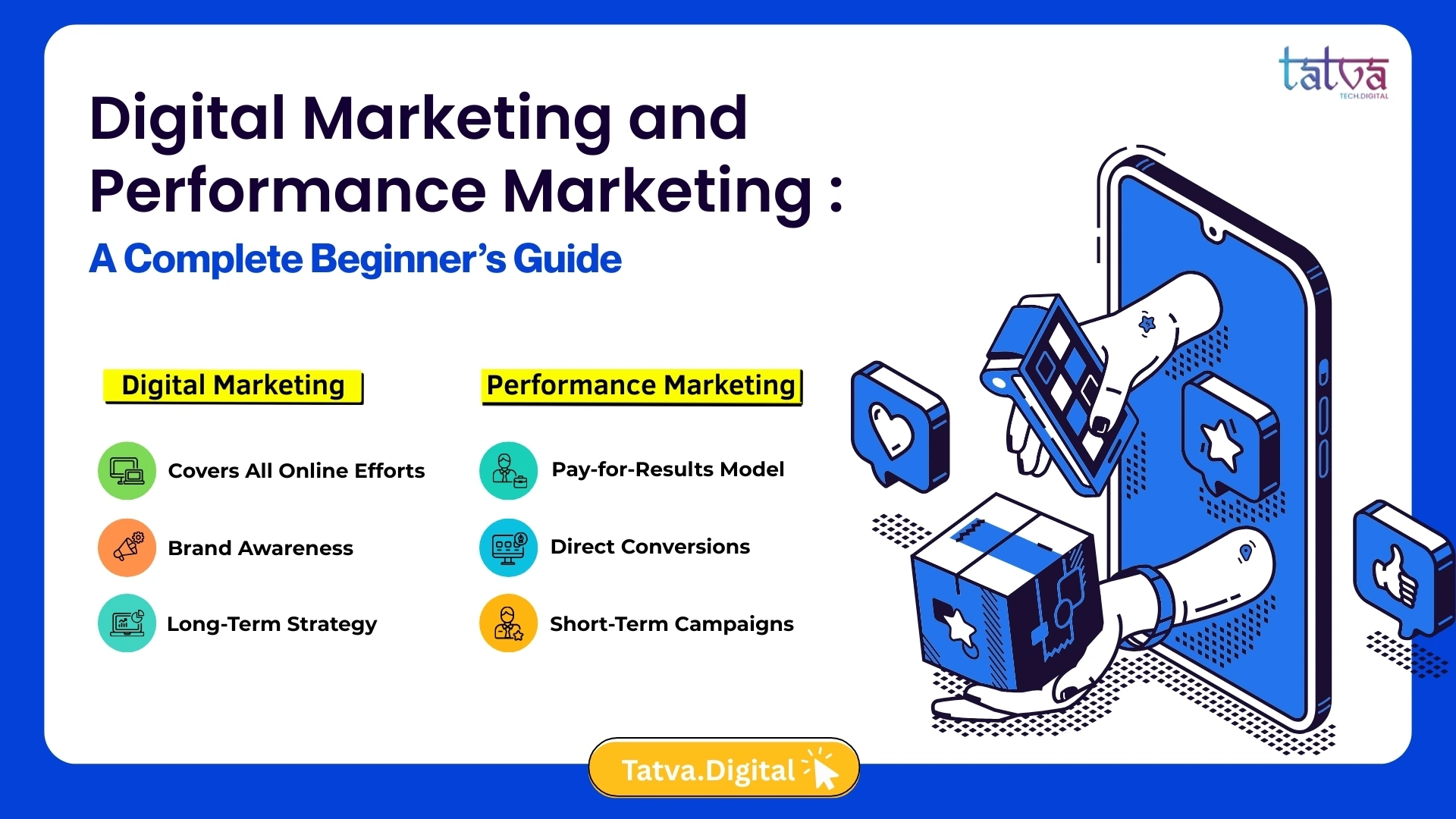
Digital Marketing and Performance Marketing: A Complete Guide for Beginners

Digital marketing and performance marketing overview showing SEO, social media ads, PPC, analytics, and lead generation strategies

Understanding How Modern Businesses Grow Online with the Right Marketing Strategy If you are a beginner in the online marketing world, you might find yourself confused by terms such as “digital marketing” and “performance marketing.” Many online marketing beginners are left wondering what the actual difference is between these two terms, which one they should concentrate on, and how businesses actually apply these strategies to create leads, sales, and long-term growth. This blog post is a complete guide for beginners that will explain to you what digital marketing and performance marketing are, how they can work well together, and how businesses can apply them to create online growth. At Tatvatech Digital, we assist startups, brands, and businesses in creating a solid foundation online through the use of SEO, content marketing, social media marketing, performance marketing, paid advertising, branding, and automation. This guide breaks down each concept in simple terms and shows how a combined approach delivers the best results in today’s competitive digital landscape. What Is Digital Marketing? Digital marketing is a broad term that refers to all marketing efforts carried out through digital channels. The main aim of digital marketing is to create online visibility, awareness, trust, and engagement with the target audience. Digital marketing is centered on long-term growth, audience engagement, and sustained brand presence on the internet. Key Components of Digital Marketing Digital marketing includes multiple channels that work together: Search Engine Optimization (SEO) to improve organic visibility Content Marketing through blogs, articles, and guides Social Media Marketing to build engagement and community Email Marketing for nurturing relationships Branding and Online Reputation Management Website Optimization and UX At Tatvatech Digital, digital marketing campaigns are planned to establish a solid foundation that can support organic and paid marketing efforts. What Is Performance Marketing? Performance marketing is a data-driven marketing strategy in which businesses pay for actions, not just for impressions. These actions may include leads, clicks, app downloads, sign-ups, or purchases. Performance marketing is different from traditional marketing in that it is results-oriented, tracks data, and measures ROI. Key Features of Performance Marketing Payment based on performance Tracking real-time data Continuous optimization Clear ROI measurement Common performance marketing channels include: Google Ads Meta (Facebook & Instagram) Ads Display and remarketing campaigns Conversion-focused landing pages Tatvatech Digital is an expert in performance marketing strategies that emphasize quality leads, lower acquisition costs, and scalable growth. Digital Marketing vs Performance Marketing: Key Differences While both are important, they serve different purposes. Digital marketing builds trust and visibility over time, while performance marketing drives immediate, measurable results. Digital marketing focuses on brand building, SEO, content, and engagement. Performance marketing focuses on paid campaigns, conversions, and optimization. When combined, they create a powerful growth engine. Why Beginners Should Understand Both Many beginners make the mistake of choosing only one approach. In reality, digital marketing and performance marketing work best together. Performance marketing without digital foundations leads to high costs and low trust. Digital marketing without performance campaigns may take longer to deliver leads and revenue. Tatvatech Digital helps beginners and businesses balance both strategies for sustainable success. How Digital Marketing Supports Performance Marketing Strong digital marketing improves the effectiveness of performance campaigns by: Increasing brand trust before ads are clicked Improving landing page quality through SEO and content Reducing cost per lead with better audience familiarity Supporting remarketing with organic touchpoints Businesses with strong SEO and content often see 20–40% better performance from paid campaigns. How Performance Marketing Accelerates Digital Marketing Results Performance marketing helps digital marketing by: Driving quick traffic to new content Testing messaging and audience intent Generating immediate leads while SEO grows Scaling campaigns that already show traction At Tatvatech Digital, performance insights are used to refine long-term digital strategies. Essential Digital Marketing Channels for Beginners For beginners, focusing on the right channels is important. A balanced strategy usually starts with: SEO for long-term organic growth Content marketing for authority Social media for visibility Paid ads for quick results Tatvatech Digital helps businesses choose the right mix based on goals, budget, and industry. Common Beginner Mistakes to Avoid Many beginners struggle because of: Expecting instant results from SEO Running ads without clear goals Ignoring data and analytics Focusing only on traffic, not conversions Treating digital and performance marketing separately A structured strategy avoids wasted budgets and inconsistent results. How to Measure Success in Digital and Performance Marketing Success is not just about clicks or followers. It includes: Lead quality Conversion rates Cost per acquisition Engagement metrics Brand search growth Return on ad spend Tatvatech Digital tracks meaningful metrics that align marketing efforts with business outcomes. Why Businesses Need a Full-Service Digital Marketing Partner Managing SEO, content, ads, analytics, and optimization requires expertise and coordination. Businesses that work with a full-service agency benefit from unified strategies and consistent execution. Tatvatech Digital provides: Digital marketing strategy SEO and content marketing Performance marketing and paid ads Branding and social media Automation and analytics This integrated approach ensures every marketing effort supports growth. How Tatvatech Digital Helps Beginners Get Started For beginners, clarity is key. Tatvatech Digital simplifies marketing by creating step-by-step strategies that align with business goals. From building a strong digital presence to launching performance campaigns, our team ensures beginners avoid common pitfalls and scale confidently. Conclusion: Digital and Performance Marketing Work Better Together Digital marketing and performance marketing are not competitors. They are complementary strategies that, when combined, deliver consistent growth, better ROI, and stronger brand presence. For beginners, understanding this balance is the first step toward successful online marketing. With the right guidance and strategy, businesses can build visibility today and revenue tomorrow. Tatvatech Digital helps brands turn complexity into clarity and strategy into results Request Appointment for Digital & Performance marketing services .  FAQs What is the main difference between digital marketing and performance marketing? Digital marketing focuses on long-term brand building, while performance marketing focuses on measurable actions and ROI. Is performance marketing suitable for beginners? Yes, when guided properly and supported by strong digital marketing foundations. … Read more

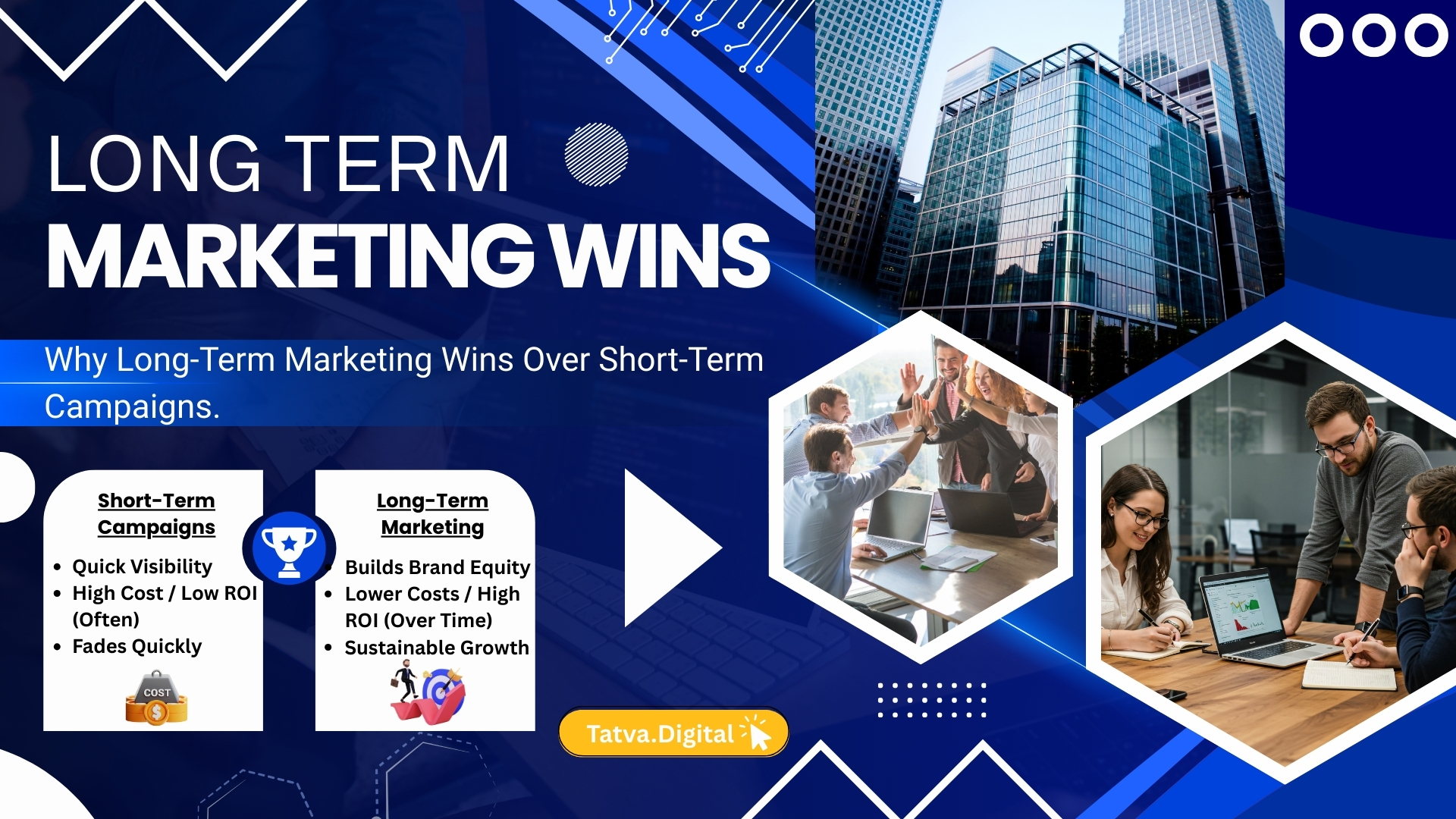
Why Long-Term Marketing Wins Over Short-Term Campaigns

Long-term marketing strategy compared with short-term campaigns showing sustainable business growth

Sustainable Marketing Strategies That Build Trust, Reduce Costs, and Drive Consistent Business Growth In an era where instant results are often prioritized, many brands fall into the trap of relying only on short-term marketing campaigns. While these campaigns may generate quick visibility or leads, they rarely deliver sustainable growth. Long-term marketing, on the other hand, focuses on building trust, authority, and consistent engagement over time. Especially for high-involvement industries like real estate, education, and B2B services, long-term marketing strategies consistently outperform short-term campaigns by improving lead quality, lowering acquisition costs, and strengthening brand value. At Tatvatech Digital, we help businesses move beyond short-term wins by creating long-term, performance-driven marketing systems. Our approach combines strategic branding, performance marketing, SEO, content marketing, and data optimization to ensure that every marketing effort contributes to lasting impact. Instead of relying only on one-time campaigns, we focus on building scalable marketing frameworks that improve lead quality, reduce dependency on paid ads, and strengthen brand authority. This blog explains why long-term marketing wins over short-term campaigns, how it impacts ROI and buyer behavior, and why businesses that invest in sustainable marketing strategies achieve long-lasting success. What Are Short-Term Marketing Campaigns? Short-term marketing campaigns are designed to deliver immediate results. These typically include flash offers, limited-time promotions, aggressive paid ads, or one-time lead generation campaigns. While short-term campaigns can create quick traction, they depend heavily on continuous spending. Once the campaign ends, visibility drops and lead generation flow stops. This creates an unstable growth cycle where businesses must repeatedly invest to maintain momentum. What Is Long-Term Marketing? Long-term marketing is a strategic, ongoing approach focused on consistent brand presence and value creation. It includes SEO, content marketing, performance marketing optimization, brand storytelling, audience nurturing, and reputation building. Instead of chasing instant conversions, long-term marketing builds relationships with potential customers throughout their decision-making journey. Over time, this leads to stronger brand recall, higher trust, and better conversion rates. Why Long-Term Marketing Builds Stronger Trust Trust plays a critical role in buying decisions. Customers are more likely to choose brands they recognize and trust. Long-term marketing ensures repeated exposure across multiple channels, reinforcing credibility and reliability. When buyers consistently see valuable content, educational insights, and authentic messaging, they associate the brand with expertise rather than promotions. This trust significantly reduces hesitation and price sensitivity. The Compounding Power of Long-Term Marketing One of the biggest advantages of long-term marketing is its compounding effect. Efforts such as SEO, blogs, videos, and brand campaigns continue to deliver results long after they are created. Each piece of content strengthens future performance. Organic traffic grows, ad performance improves, and remarketing becomes more effective. Over time, this creates a sustainable growth engine that short-term campaigns cannot match. Cost Efficiency Improves Over Time Short-term campaigns usually come with higher costs per lead because they rely on urgency and broad targeting. Long-term marketing gradually lowers acquisition costs by improving brand awareness and organic reach. As audiences become familiar with the brand, conversion rates increase and reliance on high-cost ads decreases. This leads to better ROI and more predictable marketing performance. Long-Term Marketing vs Short-Term Campaigns: Key Differences Aspect Long-Term Marketing Short-Term Campaigns Primary Focus Brand trust and sustainable growth Quick visibility or leads Duration Ongoing and consistent Limited to campaign period Cost Over Time Reduces gradually Increases with repetition Lead Quality High-intent and informed Often low-intent Brand Value Strengthens long-term Temporary impact ROI Stability Predictable and scalable Unstable Dependency on Ads Decreases over time Completely dependent Buyer Relationship Nurtured over time Transaction-focused Suitability Ideal for long decision cycles Short-term spikes only Why Long-Term Marketing Works Better for Real Estate and High-Value Businesses In industries where buyers take time to research and evaluate options, long-term marketing supports the entire buyer journey. Instead of pushing immediate offers, it provides reassurance, education, and credibility through CRM services. This results in better site visits, higher engagement, and stronger closing rates. Short-term campaigns may bring inquiries, but long-term strategies build relationships that convert. How Performance Marketing Fits into a Long-Term Strategy Performance marketing becomes significantly more effective when aligned with long-term goals. Continuous optimization, data analysis, and funnel refinement improve results over time. Rather than launching one-off campaigns, performance marketing should be refined consistently to strengthen audience targeting, messaging, and conversion paths. Short-Term Campaigns Still Have a Role Short-term campaigns can be useful for launches, testing, or seasonal promotions. However, they should support a long-term strategy rather than replace it. The most successful brands balance both approaches, using short-term campaigns tactically while building long-term assets. Want Sustainable Growth? Connect with Tatvatech Digital Looking for consistent leads, better ROI, and long-term brand growth instead of temporary spikes? Connect with Tatvatech Digital to build a powerful long-term marketing strategy backed by performance marketing, SEO, content, and data-driven optimization. Whether you want to reduce dependency on paid ads or build a strong brand presence, our team helps businesses scale with clarity and confidence. Visit Tatvatech Digital today and take the first step toward sustainable growth. Conclusion: Long-Term Marketing Is the Real Growth Strategy Short-term campaigns may deliver quick wins, but long-term marketing builds real business value. It strengthens trust, improves efficiency, and creates consistent growth over time. Brands that invest in long-term marketing gain a competitive advantage by reducing costs, improving lead quality, and building lasting relationships with their audience. In a crowded digital landscape, sustainability always wins over speed. FAQs Is long-term marketing better than short-term campaigns? Yes, long-term marketing delivers sustainable growth, while short-term campaigns offer temporary results. How long does long-term marketing take to show results? Initial results may take a few months, but growth compounds over time. Can short-term campaigns still be useful? Yes, when used strategically alongside a long-term plan. Does long-term marketing reduce advertising costs? Yes, it improves efficiency and lowers cost per lead over time. Which businesses benefit most from long-term marketing? Real estate, B2B, education, healthcare, and high-value service industries. About Us Business Name: Tatvatech Digital Private Limited Tatvatech Digital Private Limited is an emerging eCommerce platform … Read more

Why Real Estate Brands Are Moving From Lead Quantity to Lead Quality

Real Estate Lead Quality

How High-Intent Buyer Leads Are Replacing Bulk Enquiries in Modern Real Estate Marketing For years, real estate marketing success was measured by one simple metric: the number of leads generated. More leads meant more calls, more site visits, and eventually more bookings. However, as the digital real estate market has evolved, developers and agents have realized that lead quantity does not equal sales. This shift is the reason real estate brands are moving from lead quantity to lead quality by using lead generation. Today, real estate companies are more focused on generating high-intent buyer leads, improving conversion rates, reducing cost per lead (CPL), and building long-term brand trust. With rising advertising costs, increased competition, and more informed buyers, collecting bulk enquiries without intent is no longer sustainable. Instead, brands now prioritize lead quality, smart targeting, and structured sales funnels to drive predictable revenue. This blog explains why the shift is happening, what defines a quality lead, how focusing on quality improves sales performance, and what strategies modern real estate brands are using to attract serious buyers instead of just large numbers using digital marketing. Why Real Estate Brands Are Moving From Lead Quantity to Lead Quality The real estate buyer journey has changed dramatically. Buyers no longer make decisions after a single phone call. They research projects online, compare multiple options, watch videos, read reviews, and follow brands before making contact. As a result, bulk lead generation tactics are becoming inefficient. Brands that chase volume often experience: Low contact rates High no-show site visits Poor lead engagement Increased sales team burnout Rising CPL with declining ROI This is why real estate brands are moving from lead quantity to lead quality—to focus on fewer but better-qualified prospects who are closer to making a purchase decision. What Is the Difference Between Lead Quantity and Lead Quality? Understanding this difference is critical for real estate growth. Lead Quantity focuses on: High number of form fills Broad targeting Generic messaging Low filtering These leads often include casual browsers, investors without budget clarity, or people simply collecting information. Lead quality focuses on: Buyer intent Budget alignment Location relevance Project suitability Readiness to visit the site High-quality leads may be fewer in number, but they convert at a much higher rate and require less follow-up effort. Why Lead Quantity No Longer Works in Real Estate 1. Rising Advertising Costs Digital advertising platforms like Google and Meta have become more competitive. As a result: CPL has increased Poorly targeted campaigns waste budget Bulk lead strategies drain ad spend Generating 500 low-quality leads is often more expensive than generating 50 high-intent leads. 2. Sales Teams Can’t Handle Bulk Leads Sales teams struggle when lead volume is too high but quality is low. This leads to: Missed follow-ups Lower morale Inefficient calling cycles Poor conversion ratios When teams focus on fewer qualified leads, productivity improves significantly. 3. Modern Buyers Are More Informed Today’s real estate buyers: Research online before calling Compare multiple projects Know pricing benchmarks Ask specific questions Low-intent leads are often just exploring, while quality leads already understand the market and are closer to decision-making. 4. Poor Lead Quality Damages Brand Image Excessive calling and irrelevant follow-ups frustrate prospects. Over time, this: Reduces trust Increases unsubscribes Damages brand perception Quality-focused marketing creates better user experiences and strengthens brand credibility. What Defines a High-Quality Real Estate Lead? A quality real estate lead typically shows: Clear interest in a specific location or project Budget alignment with pricing Engagement with ads or content Willingness to schedule a site visit Interaction with emails, WhatsApp, or follow-ups These leads may take longer to generate but convert faster once acquired. How Real Estate Brands Are Shifting Toward Lead Quality Smarter Targeting and Segmentation Instead of broad targeting, brands now use: Location-specific targeting Income and interest filters Custom audiences Retargeting strategies This ensures ads reach buyers with genuine purchase intent. Intent-Driven Ad Messaging Quality-focused campaigns use messaging that: Mentions pricing ranges Highlights location advantages Clearly states property type Filters casual enquiries This naturally discourages non-serious prospects from submitting forms. Optimized Landing Pages Modern real estate landing pages: Ask qualifying questions Highlight key USPs Set clear expectations Reduce unnecessary form submissions Well-designed pages improve lead relevance and conversion quality. Lead Nurturing and Automation Instead of instant hard selling, brands now use: WhatsApp follow-ups Email nurturing CRM-based lead scoring Automated reminders This approach warms up leads before sales calls, improving close rates. The Business Benefits of Focusing on Lead Quality Real estate brands that prioritize quality experience: Higher site visit ratios Better call connection rates Faster sales cycles Lower sales costs Improved ROI from marketing In many cases, reducing lead volume by 40–50% leads to a 20–30% increase in actual bookings. Case Insight: What Real Estate Brands Are Experiencing Many real estate brands like M3M that shifted from lead quantity to lead quality reported: Fewer wasted calls More meaningful conversations Improved sales confidence Better coordination between marketing and sales Stronger long-term customer relationships This strategic change helps brands scale sustainably rather than relying on short-term lead spikes. Why Lead Quality Matters More Than Ever in 2025 and Beyond As competition increases and buyers become more selective, success will depend on: Precision targeting Smart funnels Better data usage Strong branding Content marketing Brands that still chase numbers will struggle, while those that prioritize intent and trust will grow consistently. Conclusion: The Future of Real Estate Marketing Is Quality-Driven The shift from lead quantity to lead quality marks a turning point in real estate marketing. Instead of measuring success by the number of leads, modern brands measure conversion rates, site visits, and bookings. By focusing on high-intent buyers, improving targeting, refining messaging, and nurturing leads properly, real estate brands can reduce waste, increase profitability, and build lasting market authority. In today’s environment, quality is not just better than quantity—it is essential for sustainable real estate growth with real estate strategy. FAQs 1. What is a quality lead in real estate? A quality lead shows genuine purchase intent, … Read more