cloud ERP solutions Archives - Tatvatech Digital Private Limited cloud ERP solutions Archives - Tatvatech Digital Private Limited

ERP Software Development Services: Steps, Cost, and How It Benefits Your Business
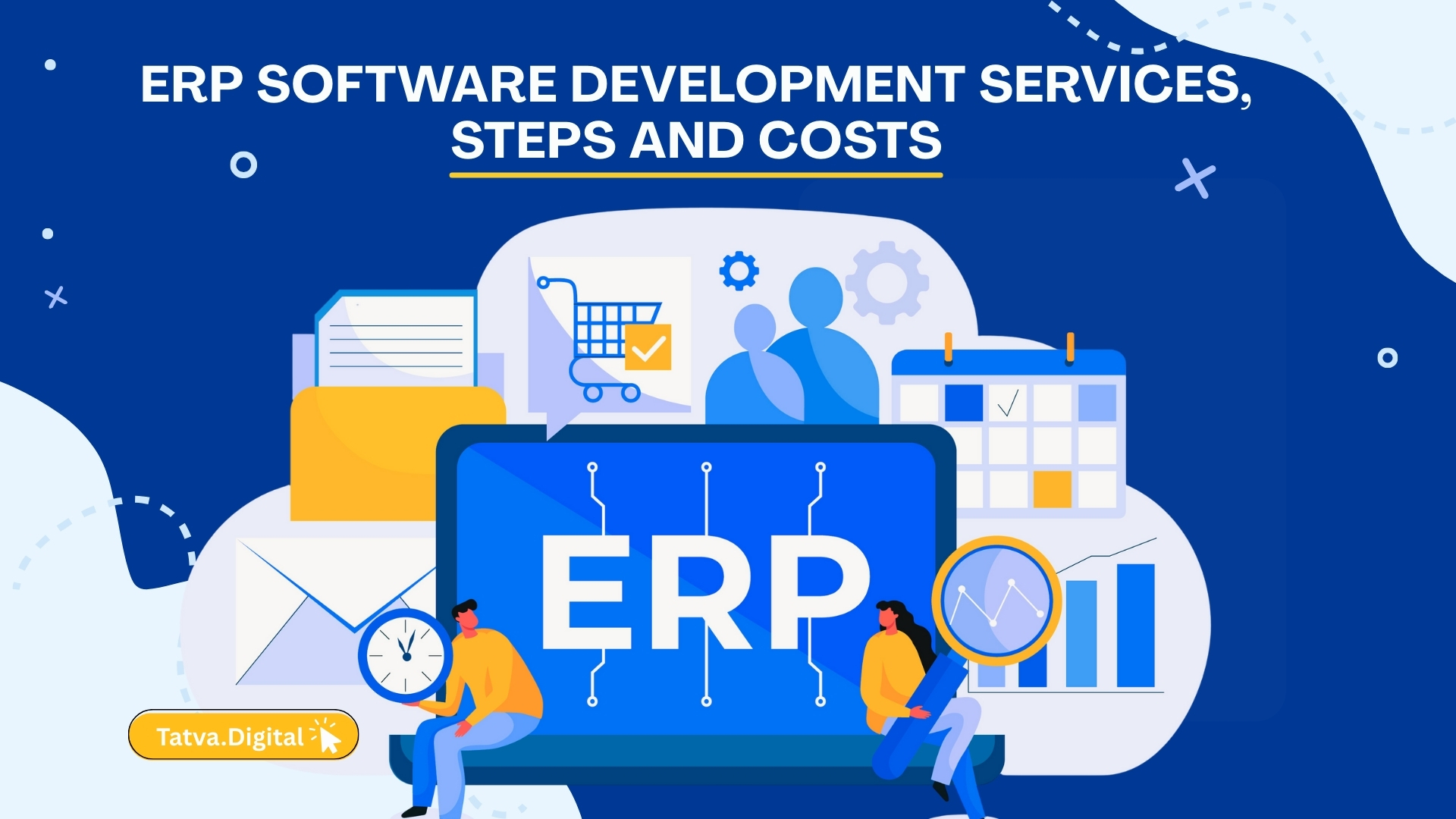
ERP system dashboard showing finance, HR, and inventory modules

Introduction: What Is ERP, and Why Businesses Need It Discover ERP software development services, implementation steps, cost factors, and how Tatvatech Digital builds custom ERP solutions for businesses of all sizes. Growing companies eventually reach a point where spreadsheets no longer cut it. That’s where enterprise resource planning (ERP) software comes in. ERP systems collect and organize key business information and help organizations run lean, efficient operations, even as they expand. Most business professionals know the term “ERP,” but they may not know exactly what enterprise resource planning systems can do for their teams. Introduction: What Is ERP, and Why Businesses Need It Enterprise Resource Planning (ERP) software integrates core business processes into a single, centralized system. It streamlines functions like finance, HR, inventory, procurement, and sales, allowing companies to operate more efficiently and make data-driven decisions. With growing operational complexity, businesses often ask: What are ERP software development services? How is ERP implemented? How much does ERP cost? This blog answers these questions and explains how Tatvatech Digital delivers training ERP solutions that help businesses scale and optimize operations. What Are ERP Software Development Services? ERP is a category of business software that automates business processes and provides insights and internal controls, drawing on a central database that collects inputs from departments including accounting, manufacturing, supply chain management, sales, marketing, and human resources (HR). Every business has multiple stakeholders collaborating to make things work. However, it becomes challenging when critical information is scattered across disconnected systems. For example, the accounting and FP&A teams could each have different spreadsheets with different figures for expense tracking. ERP systems centralize data, provide cross-departmental visibility, fuel efficient analysis, resolve data conflicts, and drive process improvements. That translates to cost savings and better productivity as people spend less time digging for needed data. Key Takeaways Centralized Data: ERP collects information from all departments into a single database for accurate, real-time insights. Unified Business Functions: It integrates finance, manufacturing, inventory, sales, marketing, HR, and project management. Efficiency and Savings: ERP boosts productivity, reduces errors, and uncovers growth opportunities. Flexible Deployment: Available as on-premises, cloud, or hybrid solutions to suit different business needs. Informed Decisions: Understanding features, integration, and total cost is crucial when selecting an ERP system. How Does ERP Software Work? An ERP system combines a central database, integrated modules, and a unified interface to connect departments and automate processes. Core Components of ERP Central Database: Eliminates duplicate data and ensures all departments work from the same information. Modular Architecture: Modules are dedicated to specific business functions, like accounting, HR, manufacturing, and CRM. Workflows & Logic: Automates processes like order-to-cash, procure-to-pay, and payroll approvals. Real-Time Sync: Transactions update all relevant modules instantly. Role-Based Access: Employees see dashboards and reports relevant to their roles, maintaining data security. What Are the Steps in ERP Software Development? An ERP system works by combining a shared database, modular applications, and a common user interface to support real-time information flow across the business. This architecture lets organizations automate processes, improve data accuracy, and make smarter decisions. Here’s how it comes together: Central database: All modules draw from a single unified data source. This eliminates data duplication and enables every department to work from the same real-time information. Modular architecture: ERP systems are built from distinct, interconnected applications (modules) tailored to specific business functions. These modules are tightly integrated and share information automatically. Built-in workflows and logic: ERP systems use predefined rules to automate business processes, such as order-to-cash, procure-to-pay, and payroll. For example, it can trigger purchase orders when inventory drops below a threshold or route an invoice for approval. Real-time data syncing: Transactions in one area update relevant data across the system instantly, promoting faster decision-making and tighter coordination. Shared interfaces and role-based access: Employees access the ERP system through dashboards and reports tailored to their roles. Permissions restrict access to sensitive data while giving teams the information they need to act quickly.  What Factors Affect ERP Development Costs? ERP development costs depend on multiple variables: Number of modules and features Level of customization Deployment type: cloud, on-premises, hybrid Integration with existing systems Maintenance and support needs Estimated ERP Costs Small businesses: $10,000–$500,000 Medium businesses: $50–$150,000.00 Large enterprises: $150,000+ Partnering with Tatvatech Digital ensures cost-efficient ERP solutions designed to deliver maximum ROI. ERP Integration and Data Sharing Virtually every organization considering an SAP ERP implementation will have systems in place that could be replaced by modules of the ERP under consideration. As such, part of adopting an ERP system involves determining which existing systems will be replaced, which must be integrated, and which will be left to stand independently. Is the existing system doing the job you need it to do?  If not, then there’s a good case to be made for using the relevant module offered by your ERP vendor. If the existing system is a keeper, is there a connector available from the ERP vendor, the existing system vendor, or a third party to get data flowing between the ERP and your existing system? And if so, how good is it? Data migration is complex. These connectors can do a decent job of integrating systems from different vendors, but quality and commitment to updates can vary. Remember: Upgrades to the ERP or the standalone system can break connectors or require rework. In the worst case, the lack of a new connector could derail upgrade plans completely. If a connector exists, does it operate in real time and keep all necessary data flowing to and from each system?  Some connectors operate in real time, and others sync up systems daily or weekly. Some move a limited data set between systems, and some work in only one direction—from an inventory management system into the ERP. If your team has done extensive custom configurations, the connector might not know some data types. Which ERP Deployment Option Should You Choose? ERP can be deployed in multiple ways based on business needs: On-Premises ERP Installed locally on company servers Requires IT staff for maintenance Offers control … Read more
Why Are Businesses Switching to Cloud-Based ERP Development Services?

Cloud-Based ERP

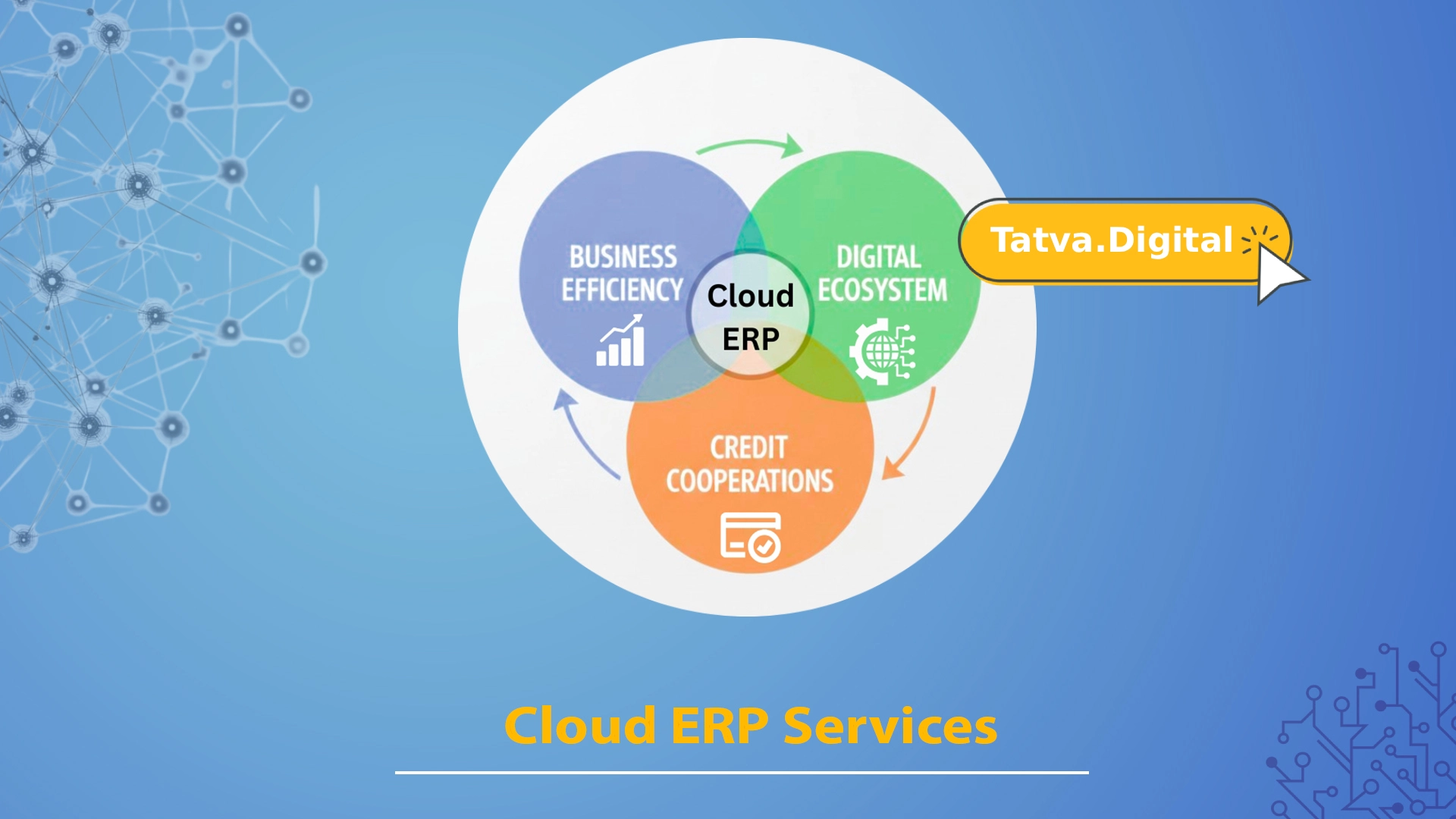
Cloud-Based ERP The global business scenario is in the midst of rapid digital expansion. Companies no longer rely on conventional, inflexible, on-premise ERP systems. They instead opt for cloud ERP development and cloud-based ERP solutions and collaborate with an experienced ERP software development company in order to upgrade their operations. In 2025, it is not about upgrading the technology; it is a strategic decision that makes companies agile, efficient, intelligent, and competitive. Across the world, organizations from various industries are adopting cloud computing as a platform for core operational systems to reduce costs, increase collaboration, and become future-ready. In this blog, we will discuss why cloud ERP adoption is growing exponentially, its benefits, how various industries—including credit cooperatives—leverage it, and why companies trust partners like Tatvatech Digital for next-generation ERP development. What Makes Cloud ERP Development the Preferred Choice in 2025? The shift toward cloud ERP is mainly driven by the demand for flexibility, cost efficiency, and smarter operational models. Let’s understand the key reasons. 1. Remote-Ready & Hybrid Workplace Support Business operations are distributed. Teams work across different locations, cities, or countries. ERP enables access to business data anywhere, anytime, on a mobile phone, tablet, or desktop.  ERP allows for continuity in workflow—from approving invoices to viewing inventory—outside the traditional office spaces. 2. Reduced Initial Investment Building an on-premise ERP requires servers, IT staff, and hardware with upgrades every year. Cloud ERP doesn’t hold such expenses. Subscription-based pricing means businesses only pay for what they utilize, therefore making ERP implementation economical for enterprises as well as SMEs. 3. Automated Updates & Minimal Maintenance eliminates system downtime and costly upgrade cycles. Updates are automatic. New features Security patches Performance Enhancements This ensures that businesses are always running on the latest versions, without extra effort. 4. Advanced Security Built-In Data security has reached whole new levels in 2025. Included in: End-to-end encryption Multi-factor authentication Automatic backups Protected hosting environments Real-time threat monitoring Cloud platforms maintain stronger security than many in-house IT setups. 5. AI-Powered Insights & Automation Modern cloud-based ERP solutions now integrate AI & ML tools to elevate decision-making. Businesses gain predictive insights into: Sales trends Inventory forecasting Resource utilization Financial patterns This improves accuracy and operational efficiency across departments. How Cloud ERP Enhances Business Efficiency Across Industries? Cloud ERP finds applications across manufacturing, logistics, healthcare, construction, retail, and BFSI since it is universally adaptable. 1. Enables Real-Time Collaboration Teams can communicate and collaborate on a single platform. Data flows smoothly across departments without departmental silos or confusion. 2. Supports Multi-Branch Operations All branches, warehouses, or project sites remain updated. Managers can track activities, analyze performance, and create consolidated reports in real time. 3. Easy Scalability Businesses can add or remove modules as needed.  ERP grows along with the organization, with no server upgrades or downtime. 4. Better Decision-Making With Live Dashboards With ERP, management gets access to real-time dashboards. Stakeholders can instantly evaluate KPIs and make quick data-driven decisions. What Is Cloud ERP’s Role in the Digital Ecosystem of 2025? While industries move towards automation, IoT, AI, and RPA, ERP becomes the backbone of digital transformation. 1. Integration With Modern Technologies Cloud ERPs work seamlessly with: IoT devices Machine sensors E-commerce platforms Payment gateways CRM & HRMS systems 2. Eco-Friendly, Paperless Workspace Automation eliminates the need for manual paperwork, physical approval, and printed reports; instead, it promotes sustainable digital operations for a business. 3. Agility in Changing Business Environments Market conditions flip on a dime.  ERP empowers businesses to change processes in real time and not rely on heavy technical changes. Cloud ERP for Credit Cooperatives: A Game-Changer in 2025 Credit cooperatives frequently deal with high volumes of members, complicated loan processes, and regulatory compliance. This is where it presents a transformational upgrade. Key Benefits for Credit Cooperative Societies: 1. Centralized Member Data Loan accounts, deposits, withdrawals, and share capital for members are all kept in a single cloud platform. 2. Automated Loans & Interest Calculation The system automates: Loan approvals EMI schedules Interest calculations Tracking of the payment While workload reduces, accuracy increases. 3. Compliance & Audit Transparency Audits have become faster, more transparent, and smoother, with ERP maintaining all the required logs and real-time financial records. 4. Mobile-Friendly Member Access Members can view accounts, apply for loans, and check statements online, thus improving service delivery. 5. Multi-Branch and Multi-Center Support Cooperatives operating in different locations can synchronize operations without depending on manual reporting. Why Choose an Expert ERP Software Development Company? Development needs solid technical knowledge and experience with the workflow of the industry. Businesses rely on trusted partners like Tatvatech Digital in building flexible, secure, and scalable ERP systems. Tatvatech Digital Offers: Customized for industry-specific needs Seamless integration with third-party tools Strong domain knowledge across diverse industries Cutting-edge technology stack with AI, automation & IoT Faster implementation by using proprietary frameworks End-to-end ERP development & support Tatvatech Digital ensures that businesses get future-ready ERP solutions to bring in more efficiency and reduce operational gaps. The Future of Cloud ERP Beyond 2025 The next decade will see even further development in cloud ERP with: AI-driven automation for repetitive tasks Voice-based ERP commands Robotic process automation (RPA) integration Predictive analytics for real-time decision-making Personalized dashboards for every user role Industry-specific microservices & plug-and-play modules Industry-specific microservices & plug-and-play modules Cloud ERP is turning into an intelligent business companion. FAQs: Cloud-Based ERP Development Services in 2025 1. What is cloud ERP? Cloud ERP is an internet-based ERP system hosted on remote servers that could be accessed from any device to reduce hardware costs and enhance operational flexibility. 2. Why is cloud ERP popular in 2025? Because it enables remote work, cuts down on operational costs, automatically updates, has better security, and supports all kinds of advanced technologies. 3. Is cloud ERP safe for critical business data? Yes, Cloud ERP provides protection against data exposure by means of encryption, firewalls, MFA, backups, and continuous monitoring. 4. Can cloud ERP support multi-branch businesses? Absolutely, all branch data is kept up … Read more

Custom ERP Development Services: How Can Tailored ERP Solutions Boost Efficiency Across Industries?

Custom ERP Development Services

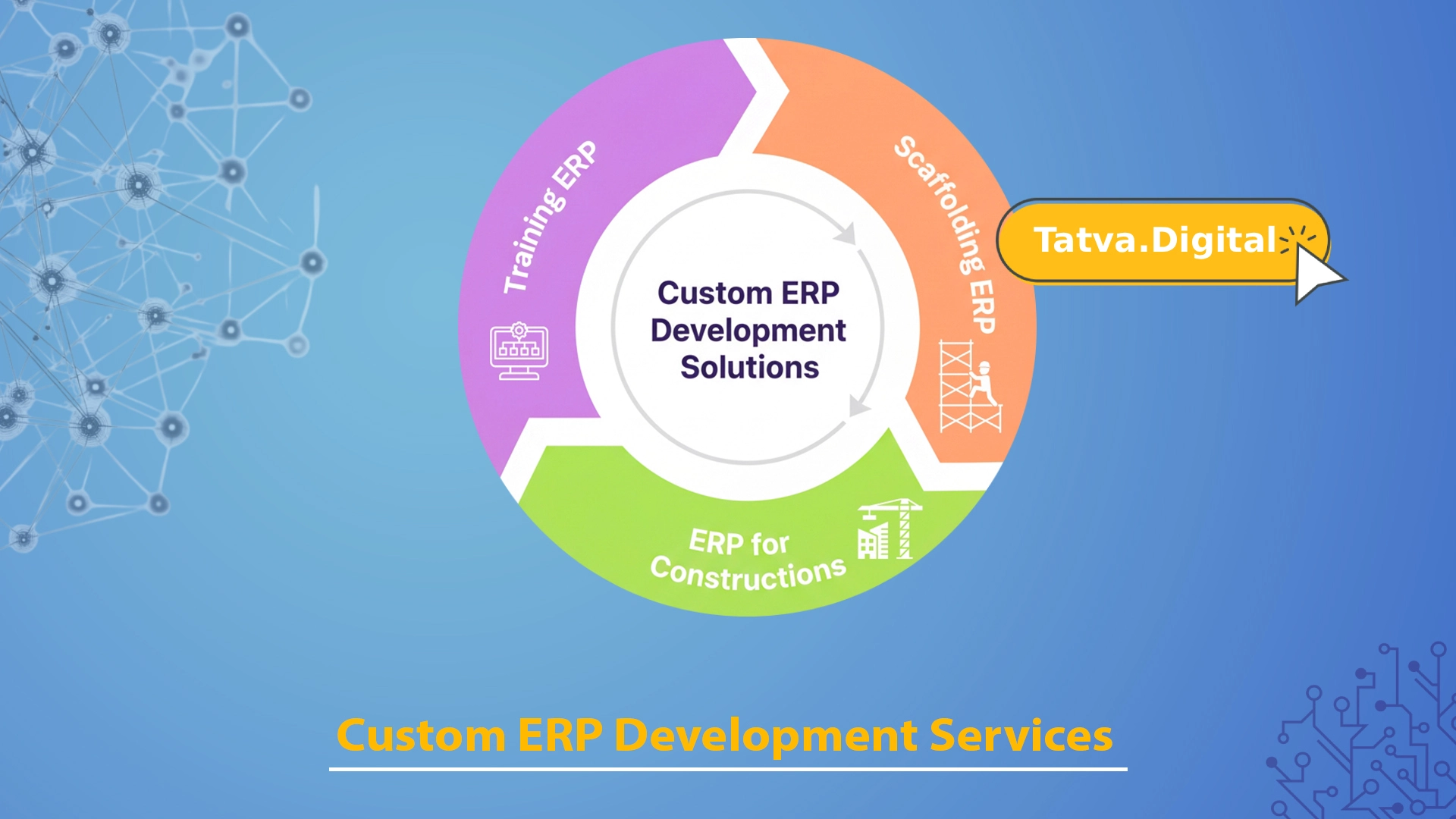
Introduction Custom ERP solutions are transforming how organizations operate in today’s data-driven business landscape. Companies are under constant pressure to improve efficiency and streamline operations. So, how can modern businesses stay competitive while managing complex workflows? The answer lies in custom ERP development services—scalable software solutions that integrate finance, HR, operations, inventory, and customer data into one platform. At Tatvatech Digital, we specialize in designing custom ERP solutions that empower businesses across industries—construction, manufacturing, scaffolding, and training—to automate tasks, enhance collaboration, and make faster, data-based decisions. What Is Custom ERP Development, and Why Does It Matter? What Exactly Is a Custom ERP System? A custom ERP (Enterprise Resource Planning) system is a business management platform tailored to your company’s unique processes. It connects every department—from accounting and HR to supply chain and customer management—into a unified digital hub. Unlike pre-built tools, custom ERP software adapts to your organization, ensuring every feature supports real-world workflows. Key advantages include: Personalized modules that match your operations Scalable architecture that grows with your business Seamless integrations with existing tools Enhanced data security and ownership By aligning technology with processes, Tatvatech Digital ensures your ERP becomes the operational backbone of your business. Why Do Businesses Choose Custom ERP Over Pre-Built Solutions? Prepackaged ERP systems often include unnecessary features or lack crucial industry-specific tools. Custom ERP development solves that by building exactly what your business needs. Top reasons companies choose custom ERP: Process automation and time savings Improved team collaboration Real-time analytics for decision-making Long-term cost efficiency compared to licensing models Businesses partnering with Tatvatech Digital benefit from tailor-made ERP platforms that eliminate redundancy, increase productivity, and scale seamlessly. How Are Custom ERP Solutions Transforming Construction, Scaffolding, and Training Industries?  How Does ERP Streamline Construction and Manufacturing? In sectors like construction and manufacturing, efficiency determines profitability. A custom ERP solution unifies project planning, inventory management, and supply chain tracking to improve accuracy and reduce downtime. Core benefits include: Project management dashboards with real-time visibility Automated inventory control and resource allocation Predictive maintenance to avoid delays Centralized cost tracking and compliance management With Tatvatech Digital’s ERP expertise, construction and manufacturing companies gain full control over operations—delivering projects faster and improving overall ROI.  How Can Scaffolding ERP Improve Project Accuracy and Safety? Scaffolding businesses manage numerous moving parts—equipment, labour, and safety standards. A Scaffolding ERP system brings everything together under one intelligent platform. Key features: Live inventory tracking for scaffolding materials and rentals Automated billing, quotations, and reports Workforce and safety compliance monitoring Project scheduling for setup and dismantling activities By offering real-time visibility, Scaffolding ERP helps avoid equipment losses, ensures regulatory compliance, and increases project accuracy. Tatvatech Digital develops dedicated scaffolding management modules to help companies maintain transparency, cut costs, and improve site safety.  How Does Training ERP Enhance Educational and Skill Management? Training institutes and learning centres require strong organization to manage students, trainers, and resources efficiently. A Training ERP system automates administrative processes and provides insight into academic performance. Core benefits: Centralized student and trainer management Automated attendance and performance tracking Streamlined course scheduling and payment workflows Integration with LMS and e-learning platforms With Tatvatech Digital Training ERP, institutions can monitor operations in real time, enhance learner engagement, and focus more on teaching quality rather than paperwork. How Can Businesses Successfully Implement a Custom ERP System? What Are the Key Stages of ERP Development? A successful ERP rollout follows a structured roadmap: Requirement analysis—Understanding your goals and challenges System design—Creating a modular and scalable framework Development and integration—coding, testing, and connecting modules Implementation and training—Deploying the system and onboarding users Maintenance and support—Ensuring long-term performance and upgrades Tatvatech Digital follows agile methodology to deliver ERP systems that adapt quickly to changing business needs.  How Do You Choose the Right ERP Development Partner? The right technology partner determines your ERP’s long-term success. When choosing an ERP developer, consider: Industry expertise (Construction, Scaffolding, Training) Proven experience in cloud ERP and mobile-ready solutions Post-launch support and maintenance reliability Transparent and flexible pricing models With Tatvatech Digital, clients gain a trusted partner offering end-to-end ERP development—from concept to support.  What Does the Future Hold for ERP Solutions? ERP systems are evolving with AI, IoT, and cloud computing, transforming how businesses analyze data and make predictions. Emerging ERP trends: AI-based forecasting for demand and inventory Mobile ERP apps for real-time access anywhere Cloud ERP solutions reducing infrastructure costs Sustainability analytics to monitor carbon and resource usage Tatvatech Digital helps enterprises embrace these innovations to stay future-ready and competitive. Frequently Asked Questions (FAQs) 1. What makes custom ERP development better than pre-built software? A custom ERP is built for your processes, ensuring flexibility, accuracy, and improved efficiency—unlike rigid off-the-shelf systems. 2. How long does ERP development take? Most custom ERP projects take 3–9 months, depending on features, integrations, and complexity. 3. Which industries benefit most from ERP systems? Construction, manufacturing, scaffolding, training, retail, healthcare, and real estate see major gains in productivity and transparency. 4. Can Scaffolding ERP and Training ERP integrate with other tools? Yes, both systems integrate with CRM, HR, accounting, and data analytics platforms, enabling seamless workflows. 5. Is cloud ERP better than on-premise ERP? Cloud ERP offers scalability and remote access, while on-premise ERP provides greater control over data. The right choice depends on your infrastructure and security needs. 6. How much does a custom ERP cost? Pricing varies by size and scope, but most businesses invest $20,000–$100,000 for a scalable, long-term ERP solution developed by Tatvatech Digital. Conclusion: Is Custom ERP the Future of Business Efficiency? Absolutely. From construction and manufacturing to scaffolding and training, custom ERP development services from Tatvatech Digital help organizations simplify operations, reduce manual work, and achieve digital excellence. As industries embrace automation, adopting a custom ERP system is no longer optional—it’s a strategic move that ensures your business remains efficient, data-driven, and ready for the future. About us: Business Name – Tatvatech digital private Limited Tatva Tech Digital Private Limited is an emerging eCommerce platform offering a wide range of products, … Read more