Tatvatech Digital Private Limited, Author at Tatvatech Digital Private Limited - Page 6 of 8

What Are Real Estate ERP Systems and Why Are They Essential for Today’s Property Businesses?

Real estate ERP systems

The real estate ERP industry is undergoing a major transformation driven by technology, automation, and increasing customer expectations. Spreadsheets, manual documentation, and disconnected tools can’t support complex real estate operations anymore, which is why businesses turn to real estate ERP systems. A real estate ERP (Enterprise Resource Planning) system centralizes property operations, leasing activities, financial processes, sales pipelines, and project management into a single digital ecosystem. With experienced providers like Tatvatech Digital, businesses can implement real estate ERP development services tailored to their exact needs. This alignment of technology with operational goals allows real estate companies to eliminate inefficiencies, maintain real-time visibility, and deliver better customer experiences. How Do Real Estate ERP Systems Streamline Property Management? Property management involves coordinating multiple moving parts—occupancy tracking, maintenance tasks, tenant communication, compliance activities, and asset updates. When these processes rely on manual systems, errors and delays are almost guaranteed. A real estate ERP system brings all property-related data into one platform so managers can view unit status, examine maintenance schedules, update listings, and track building performance in real time. For example, a single dashboard may show which units are vacant, which require servicing, and which tenants have pending requests. This consolidated approach allows teams to act faster, reduce operating costs, and maintain better oversight of their assets. Tatvatech Digital enhances these capabilities by designing solutions that match each company’s workflow and scale. Why Are Custom ERP Solutions More Effective Than Pre-Built Software? Every real estate business operates differently. Some focus on high-rise residential projects, others handle commercial leasing, while many manage mixed-use developments. Off-the-shelf software cannot always adapt to these differences. Custom real estate ERP development services give companies the freedom to build a system engineered specifically for their processes. Custom solutions allow tailored approval flows, flexible leasing rules, location-based reporting, and personalized financial structures. Here are key advantages of custom ERP, written in the format you requested: Integration: Integration means having one source of truth that ties departments such as finance, operations, leasing, and sales together so everyone works from the same data. Automation: Streamlined workflows reduce manual tasks, minimize the possibility of errors, and ensure higher efficiency. Scalability: Modular architectures make it easy to add new features, support new property types, or integrate emerging technologies. Intelligence: Built-in analytics and forecasting tools offer actionable insights for better decision-making. These benefits make custom ERP solutions significantly more flexible and future-ready than generic software products. ERP Solutions Improve Leasing and Tenant Management Leasing operations must be accurate and timely. Delays in communication, incorrect rent schedules, or misplaced documentation can affect both revenue and tenant satisfaction. A real estate ERP system brings structure and transparency to the full leasing cycle. Lease agreements can be digitized, tenant applications tracked, and rent reminders automated. Instead of managing multiple spreadsheets, teams work with centralized tenant profiles containing history, contracts, payment details, and communication logs. This leads to smoother onboarding, more predictable collections, and greater tenant confidence—because every step of the process is documented and accessible. How Can Real Estate ERP Software Enhance Sales and Customer Relationship Management? The sales process in real estate is complex, especially when managing large inventories and multiple customer touchpoints. Without a single organized system, sales teams may miss follow-ups, lose leads, or provide inaccurate information about unit availability. ERP-enabled CRM modules allow sales teams to work more strategically. They can view updated inventory instantly, manage follow-ups automatically, track inquiry sources, and analyze sales performance. Customers receive accurate responses, quicker confirmations, and better communication throughout their journey. With Tatvatech Digital’s expertise, sales teams benefit from an intuitive interface that brings together lead management, booking workflows, payment tracking, and customer support—all in one place. Core Modules Should a Real Estate ERP System Include A strong real estate ERP system typically includes modules for property management, leasing and tenant operations, sales and CRM, finance, construction project management, and document compliance. Each module works together seamlessly, ensuring smooth data flow across departments. For example, when a lease is approved, the financial module updates revenue forecasts automatically. When a construction milestone is achieved, the project module synchronizes with accounting, procurement, and management dashboards. This interconnected structure reduces manual data entry and improves operational reliability. How Does Tatvatech Digital Deliver High-Quality Real Estate ERP Development Services? Tatvatech Digital focuses on creating flexible, scalable, and secure ERP systems designed specifically for real estate operations. Their development process begins with understanding your business’s daily activities, challenges, and future goals. They map workflows, gather requirements, and design an architecture that reflects your organization’s operational DNA. The development phase incorporates the latest frameworks and technologies to ensure performance and security. Integrations with third-party tools—such as accounting systems, IoT sensors, payment gateways, CRM platforms, and marketing tools—are completed with precision. Once the system is ready, Tatvatech Digital manages deployment, staff training, and continuous technical support, ensuring that the transition into the ERP environment is smooth, stable, and sustainable. What Business Benefits Can a Real Estate ERP System Provide? The benefits of ERP adoption extend far beyond automation. When every department is connected and information flows seamlessly, businesses experience improved collaboration, more consistent customer service, and stronger financial stability. ERP systems also enhance compliance by keeping essential documents, contracts, and permits stored securely and updated in real time. This reduces operational risks and makes audits easier. Over time, companies gain the ability to scale confidently, knowing that their digital infrastructure can support larger portfolios and more complex projects.  Types of Real Estate Businesses Benefit from ERP Implementation A real estate ERP system is useful for developers handling multiple projects, leasing firms with large tenant bases, property management companies, brokerage agencies, and construction firms managing complex project timelines. Both small and large organizations benefit from the structure, clarity, and efficiency ERPs provide.  Cost to Build a Real Estate ERP System The cost of ERP development depends on the modules included, customization requirements, integration needs, security preferences, and deployment choices. Tatvatech Digital offers flexible pricing options so organizations can choose what suits their scale and budget. … Read more
Garment Industry ERP: Tailored Development Services for Apparel Manufacturers & Supply Chains

garment industry ERP development services

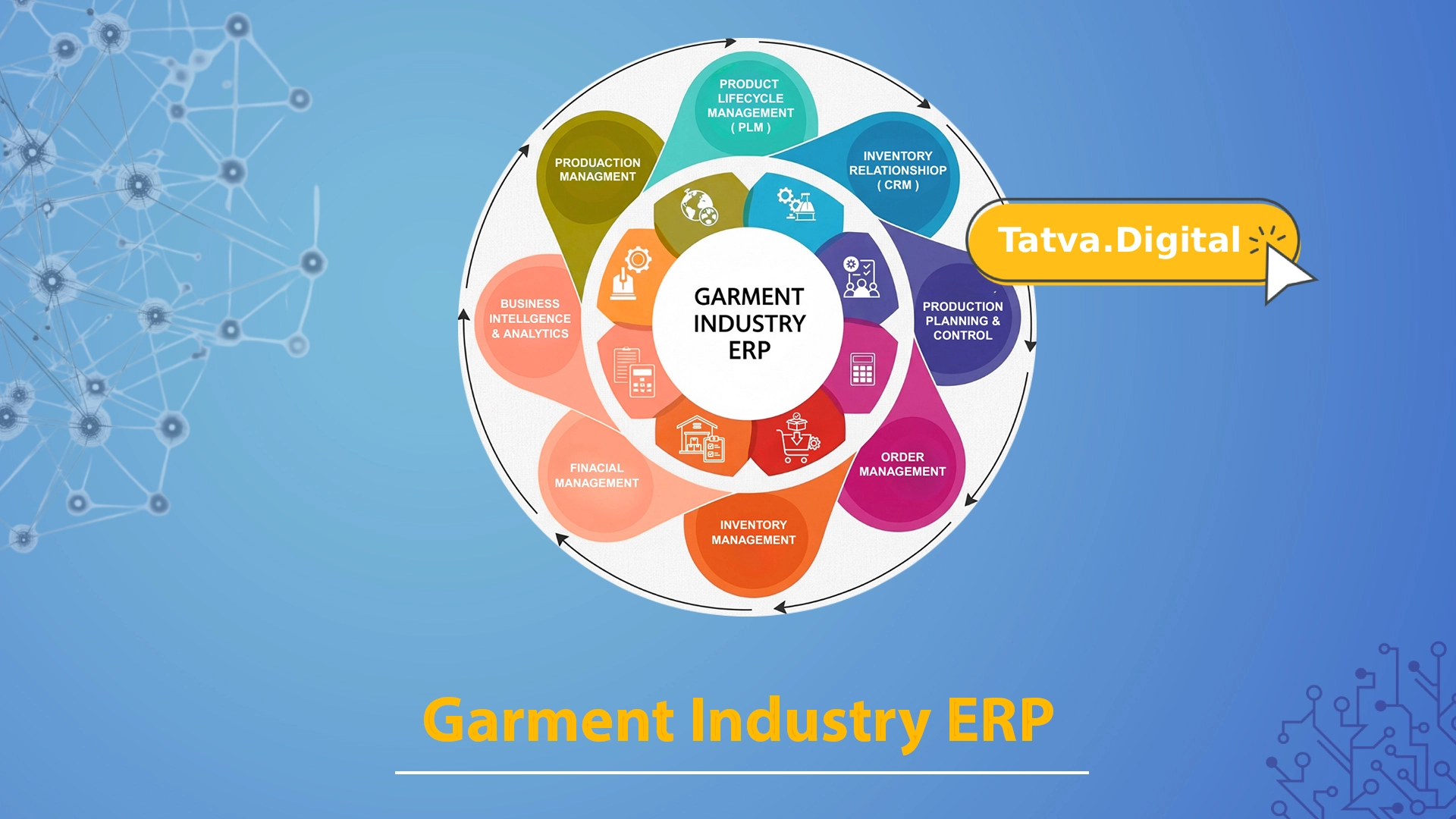
The garment and apparel industry is one of the most dynamic, fast-moving, and competitive manufacturing sectors in the world. With rapid changes in fashion trends, rising customer expectations, increasing supply chain complexities, and the growing demand for real-time visibility, apparel manufacturers need more than just traditional software systems. They require a powerful, integrated, and customized ERP solution designed specifically for the garment domain. This is where garment industry ERP development services come into play. A tailored ERP system helps apparel brands, manufacturers, exporters, buying houses, and supply chain partners streamline their operations, improve efficiency, reduce costs, and accelerate production cycles. In this blog, we will explore how Garment Industry ERP is transforming apparel manufacturing, why businesses need custom garment ERP solutions, and the critical features that support apparel supply chains from design to delivery. We will also detail how Tatvatech Digital Private Limited can help businesses implement the most advanced ERP solutions in the garment sector. Why the Garment Sector Needs Tailored ERP Solutions The garment industry operates differently compared to typical manufacturing companies. Apparel production involves: Multiple sizes, fits, and colors Rapid collection changes Material wastage management Vendor coordination Multi-level quality checking Shipment tracking Merchandising planning Export documentation Generic ERP systems fail to support these detailed workflows. This is why companies are shifting toward: Custom garment ERP solutions End-to-end garment ERP development Textile and garment ERP solutions Tailored ERP software can simplify processes such as production planning, inventory control, merchandising management, fabric and trim tracking, and supply chain coordination. How Custom Garment Industry ERP Development Services Add Value A custom ERP system for apparel manufacturers is built around their unique workflows. Here’s how garment industry ERP development services offer value: 1. Workflow Matching Every garment factory follows a unique production flow. A custom ERP aligns with exact operations—cutting, stitching, washing, ironing, finishing, packing, and dispatching. 2. Real-Time Production Monitoring Track progress at every stage with a digital dashboard. This increases transparency and avoids bottlenecks. 3. Automated Planning ERP ensures materials, labor, machines, and timelines are perfectly aligned. 4. Cost Control From fabric consumption to wastage, ERP helps control every detail and reduce production expenses. 5. Accurate Data & Reporting Generate reports on costs, production status, efficiency, order progress, and shipments. Key Modules in a Powerful Garment ERP System A modern fashion industry ERP system includes several integrated modules that streamline entire operations: 1. Merchandising & Order Management This is the backbone of apparel production. Using ERP for apparel merchandising, you can manage: Buyer orders Tech packs Sampling Purchase RFQs Approvals 2. Material Requirement Planning (MRP) This system calculates how much fabric, trims, accessories, and packing items are needed—reducing shortages or excess stock. 3. Inventory Management Monitor: Fabric rolls Accessories Ready garments Warehousing Stock transfers 4. Production Planning & Control Garment production management software helps track: Cutting orders Batch processing Line planning Operator efficiency WIP (Work in Progress) 5. Supply Chain & Logistics Apparel supply chain ERP simplifies: Vendor communication Shipment tracking Export documentation Packing lists Delivery schedules 6. Quality Control Reduce returns and ensure international standards are met. 7. Finance & Accounting Integrate purchase, sales, payments, payroll, taxation, invoice management, and more. Benefits of Implementing Garment ERP Systems Here’s how fashion industry ERP systems help transform your business: Reduced Production Delays Real-time communication ensures faster decision-making. Higher Accuracy in Inventory Avoid mismatches in fabric, trims, and raw materials. Improved Workforce Efficiency Track operator performance and productivity. Better Costing & Profit Analysis Accurate calculations from raw materials to finished goods. Increased Customer Satisfaction Deliver on time, every time, with fewer errors. Scalability Grow your business without operational chaos. End-to-End Garment ERP Development: A Complete Digital Transformation With end-to-end garment ERP development, businesses can transform all operations across: Design Sampling Merchandising Production Quality control Packaging Dispatch Export documentation Whether you run a small factory or a large multi-location apparel brand, ERP can significantly enhance productivity, accuracy, and profitability. Why Choose Custom Garment ERP Solutions Over Ready-Made Software? Ready-made ERP systems often include unnecessary features or lack industry-specific modules. But custom garment ERP solutions provide: Tailored workflows Flexible modules Industry-specific features Enterprise scalability Easier integration with machines & IoT Long-term cost-effectiveness This is why more companies are investing in specialized garment industry ERP development services to stay competitive. How Tatvatech Digital Private Limited Supports Garment ERP Implementation Tatvatech Digital Private Limited provides advanced, customized ERP development services suited for the textile, fashion, and apparel industries. Our ERP solutions are built to support: Garment factories Buying houses Export houses Fashion brands Textile mills OEM manufacturers We deliver customized solutions that include: Garment production management software Textile and garment ERP solutions Apparel supply chain ERP ERP for apparel merchandising End-to-end garment ERP development Our systems ensure more automation, faster workflows, fewer errors, and improved profitability. Frequently Asked Questions (FAQs) 1. What is a Garment ERP system? A garment ERP is specialized software that manages apparel production, supply chain, merchandising, inventory, finance, and quality control in a centralized platform. 2. Why do garment factories need customized ERP systems? Because the garment industry involves unique processes—sizes, colors, cutting markers, seasons, and multiple production lines—that generic ERPs cannot handle effectively. 3. How does ERP help in merchandising? ERP for apparel merchandising helps manage buyer orders, samples, tech packs, fabric booking, approvals, and timelines in one place. 4. Can ERP reduce production costs? Yes. By minimizing wastage, optimizing inventory, improving planning, and reducing delays, ERP significantly lowers operational costs. 5. Can small garment factories use ERP? Absolutely. ERP systems can be developed for small, medium, and large organizations with scalable features. About Us Business Name: Tatvatech Digital Private Limited Tatvatech Digital Private Limited is an emerging eCommerce platform offering a diverse range of products, including electronics, home essentials, fashion, beauty, and lifestyle goods. Our mission is to combine quality, convenience, and customer satisfaction through innovation and reliability. Under our brand DNA eStore, we aim to connect global customers with high-quality products that enhance everyday living. Contact Us Contact: +91-8130110203 Email: ecommerce@tatva.digital Trade Name: Tatva Tech Digital Private … Read more

Manufacturing ERP Solutions 2025: How Do Custom ERP Development Services Optimize Production & Inventory for the Industry?

Manufacturing ERP Solutions

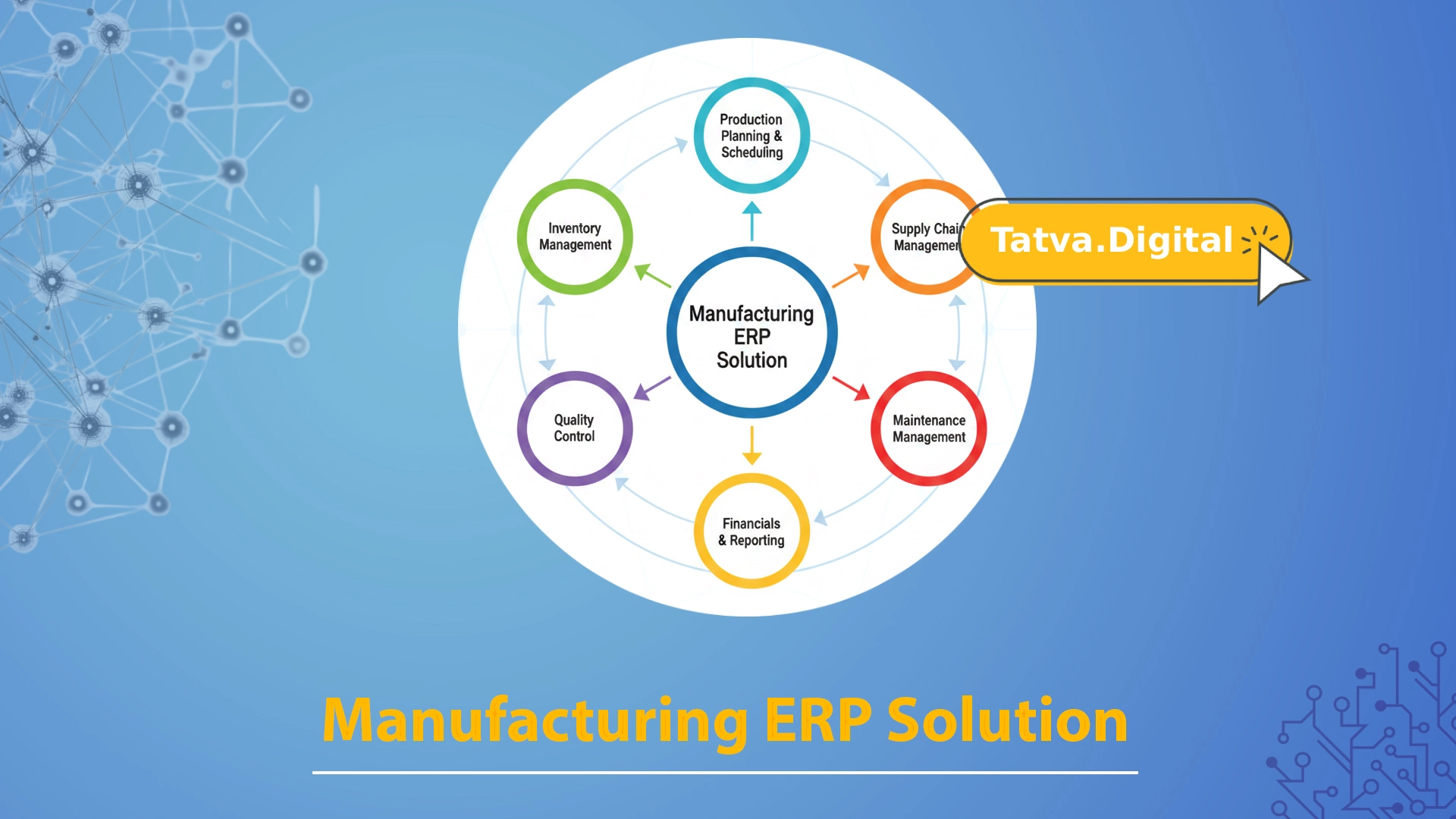
Manufacturing ERP Solution In 2025 is undergoing one of the fastest digital transformations in history. Global supply chain disruptions, fluctuating customer demand, shrinking labor pools, and rising cost pressures have accelerated the need for intelligent systems that bring automation, visibility, and precision to daily operations. Manufacturers who once relied on spreadsheets, manual workflows, or rigid off-the-shelf ERP systems now realize that survival—and growth—require a far more adaptable solution. This is where custom Manufacturing ERP solutions come into play. Unlike generic tools, these tailored systems are designed to reflect the true heartbeat of your factory floor. They integrate machines, people, data, supply chains, financials, scheduling systems, and quality processes into a single smart ecosystem. And with partners like tatvatech digital, manufacturers gain the ability to build an ERP that matches their exact operational DNA—something standard ERPs simply can’t deliver. Production Planning & Scheduling, Supply Chain Management, Maintenance Management, Financials & Reporting, Quality Control, and Inventory Management. Together, these functions create a highly efficient, data-driven manufacturing engine ready for the challenges of 2025 and beyond. Let’s explore how they transform manufacturing operations at scale. How Are Custom ERP Solutions Powering Production, Quality, and Maintenance Efficiency Like Never Before? Manufacturing floors are incredibly dynamic environments. Machines break down unexpectedly. Demand fluctuates. Human errors occur. Schedules shift. Raw materials arrive late. A single disruption can ripple across the entire production chain. Custom ERP development creates the real-time visibility and precision manufacturers need to stay ahead of these challenges. 1. Production Planning & Scheduling: The Brain of Modern Manufacturing Production Planning & Scheduling at the top—and rightfully so. This is the core of any successful manufacturing operation. A custom ERP empowers planners with: Real-Time Machine Capacity Visibility: Instantly monitor machine load, availability, and performance to plan efficiently. Automatic Schedule Adjustments: The system auto-reschedules jobs based on machine downtime, delays, or priority changes. Dynamic Routing Based on Constraints: Orders automatically route through the best machines, lines, or work centers based on capacity and limitations. Order Prioritization with Drag-and-Drop Planning: Planners can easily rearrange job priority using a visual drag-and-drop scheduler. Integration with Demand Forecasts and Customer Timelines: Production plans align automatically with real-time demand forecasts and customer delivery commitments. Imagine a system that automatically reschedules a job because a machine needs maintenance, alerts procurement if materials will run short, and notifies operators instantly—all without manual effort. That is the power of custom ERP. 2.Quality Control: Ensuring Zero-Defect Manufacturing Manufacturers cannot afford inconsistent quality. Custom ERP systems embed quality controls into every stage of production: Incoming Material Inspections: Ensure every raw material meets quality standards before entering production. In-Process Checks: Monitor product quality at every manufacturing stage to prevent defects early. Tolerance Tracking: Automatically track dimensional and performance tolerances for precision manufacturing. Automated Rejection Workflows: Instantly flag defects and trigger corrective actions without manual intervention. Batch-Level Traceability: Trace every component, batch, or lot across the entire production lifecycle. Compliance Documentation: Maintain audit-ready documentation that meets industry and regulatory standards. If deviations occur, alerts are raised instantly. Data is captured automatically. And entire product genealogies can be traced in seconds. 3.Maintenance Management: Predictive Uptime in the IoT Era Downtime is one of manufacturing’s most expensive problems. Custom ERP systems integrate with IoT sensors and machine monitoring tools to support: Predictive Maintenance: Identify equipment issues in advance using sensor data and machine-learning insights. Automated Work-Order Creation: Automatically generate maintenance tasks when thresholds are crossed or anomalies are detected. Spare Parts Inventory Visibility: Track availability, usage, and reorder levels of critical spare parts in real time. Maintenance Calendars and Logs: Maintain organized schedules, records, and service histories for every machine. Downtime Trend Analytics: Analyze recurring downtime patterns to eliminate root causes and improve uptime. This means machines no longer “surprise” your team with sudden failures. Instead, your ERP predicts issues before they occur. With tatvatech digital, manufacturers can connect all three pillars—production, quality, and maintenance—into one synchronized command center. How Do Custom ERP Systems Optimize Inventory, Supply Chain, and Financial Control in 2025? If production is the heart of manufacturing, then inventory, supply chain, and finances are the veins and arteries that keep everything moving. This section aligns with the image modules that create operational stability. 1. Inventory Management: Precision Stocking Without Guesswork Inventory mistakes can cost millions—either through overstocking or shortages. Custom ERP solutions eliminate guesswork by offering: real-time material visibility across plants automated reorder points based on live consumption FEFO/FIFO controls for perishable or regulated products barcode and RFID tracking optimized safety stock levels WIP (Work-in-Progress) transparency With dynamic forecasting and intelligent restocking, you never tie up unnecessary capital in inventory—or halt production due to stockouts. 2.Supply Chain Management: End-to-End Coordination Across Vendors Supply chain disruptions have become the norm. Custom ERP systems help manufacturers strengthen predictability with: vendor performance analytics automated PO creation and tracking shipment and logistics visibility supplier portals lead-time variability insights alternate vendor recommendations When materials are delayed, the ERP triggers warnings early, allowing planners to adjust schedules proactively. 3. Financials & Reporting: Profitability Through Data Visibility Financial modules integrated with operational data provide powerful benefits: real-time cost tracking job costing and profitability analysis automated invoicing and billing budget monitoring variance analysis compliance-ready financial reports forecasting and scenario analysis Executives gain clear visibility into the financial impact of production efficiency, supply chain performance, and labor utilization. This financial clarity—combined with inventory and supply chain optimization—makes custom ERP Solution the ultimate business intelligence engine. Why Are Integrations, AI, IoT Connectivity, and Analytics the Backbone of the 2025 Manufacturing ERP? In 2025, technology isn’t just supporting manufacturing—it’s shaping it. Custom ERPs are becoming smarter through machine connectivity, AI-driven insights, predictive analytics, and seamless integration with other enterprise systems. 1.Seamless Integrations Create a Unified Manufacturing Ecosystem A modern ERP must integrate with: MES (Manufacturing Execution Systems): Connect production operations with real-time execution data for improved shop-floor control. PLM (Product Lifecycle Management): Integrate product design, engineering changes, and lifecycle data into the ERP ecosystem. WMS (Warehouse Management Systems): Synchronize warehouse movements, picking, put-away, and dispatch with ERP … Read more

Complete Guide to ERP Development for SMEs: Cost, Features, and Benefits Explained

ERP Development for SMEs

ERP Development for SMEs: The rapid digital transformation of SMEs is a fact. These businesses, amid the rise of competition and changes in customer expectations, need to make operations seamless, minimize manual intervention, and develop real-time insight into the performance of their business. This is where modern ERP systems come into play. While ERP software was once considered a “big enterprise” tool, today’s modular, scalable, affordable ERP solutions are designed to specifically support SMEs. From finance and inventory to HR and sales, ERP brings a multitude of business functions under one unified platform that helps growing companies operate at speed, with accuracy and efficiency. The wide-ranging guide explains everything that SMEs need to know about ERP development: key features, the implementation process, real-life benefits, the role of technology partners such as Tatvatech Digital, and a detailed cost breakdown. What Is ERP for SMEs? ERP (Enterprise Resource Planning) is an integrated software system that automates and manages core business processes. For SMEs, ERP acts as a central nervous system, connecting departments and enabling teams to work with the same updated data. Unlike spreadsheets and standalone tools, SME-specific ERP systems are designed to be: Easy to use Cost-effective Scalable Customizable Quick to implement This makes ERP an ideal solution for small and mid-sized businesses aiming to improve productivity and operational clarity without heavy IT investment. Companies often prefer working with experienced ERP development partners such as Tatvatech Digital, known for building affordable, industry-ready ERP development for SMEs. Why SMEs Need ERP More Than Ever SMEs face unique operational challenges: resource limitations, fast-changing customer demands, complex compliance requirements, and rising competition. ERP helps solve these challenges by bringing automation and visibility into everyday business operations. 1. Fragmented Data and Processes Without ERP, SMEs juggle Excel sheets, offline invoices, and isolated tools. This leads to miscommunication and inefficiency. 2. Lack of Real-Time Information Decision-making slows down when business owners lack instant visibility into sales, finance, or inventory data. 3. Difficulty Scaling Operations As SMEs grow, manual systems struggle to keep up with rising demand. 4. Compliance and Reporting Issues Without centralized records, taxation and audits become complicated. This is why SMEs increasingly partner with solution providers like Tatvatech Digital, who understand SME workflows and build ERP systems tailored to their growth stage. Key Features of ERP Software for SMEs An effective SME ERP system includes modules tailored to daily business operations. 1. Inventory & Warehouse Management Real-time stock tracking Automated reorder alerts Multi-warehouse management Stock movement history 2. Sales & Order Management Lead & opportunity tracking Automated quotations, orders & invoices Sales performance dashboards 3. Purchase & Vendor Management Supplier quotes & comparison Purchase order automation Vendor ledger management 4. Accounting & Finance Ledger, payables, receivables Bank reconciliation GST/tax management Automated financial reports 5. HR & Payroll Employee attendance Leave management Payroll processing Statutory compliance 6. Production Manufacturing Bill of Materials (BOM) Work order management WIP tracking Material requirement planning 7. CRM (Customer Relationship Management) Lead nurturing Customer engagement Follow-up automation 8. Reporting & Business Intelligence Advanced dashboards Profitability analysis Inventory insights Financial health reports Benefits of ERP for SMEs ERP implementation brings long-term strategic advantages 1. Higher Productivity: Automation reduces manual work and boosts efficiency. 2. Faster Decision-Making: Real-time dashboards support instant insights. 3. Better Customer Satisfaction: Quicker responses and timely order fulfillment improve engagement. 4. Lower Operational Costs: ERP prevents inventory losses, data duplication, and workflow delays. 5. Higher Accuracy: Unified data ensures error-free operations. 6. Scalable Growth: ERP grows with the business—multi-branch, multi-user, or multi-warehouse. 7. Easier Compliance: Automated accounting and tax reports simplify audits. How Much Does ERP Development Cost for SMEs? Cost varies based on requirements and customization needs. 1. Basic ERP – For small businesses Cost: $5,000–$15,000 2. Mid-Level ERP—For growing SMEs Cost: $15,000–$35,000 3. Advanced ERP—For manufacturing SMEs Cost: $25,000–$60,000+ Additional Cost Factors Cloud hosting Integrations Mobile app support Custom modules Training & maintenance Tech partners like Tatvatech Digital help SMEs reduce costs through modular development and scalable cloud solutions. How to Choose the Right ERP For Your SME When selecting an ERP, focus on: Ease of use Industry relevance Customization flexibility Integration capability Scalability Vendor support Experienced ERP providers like Tatvatech Digital can help assess your needs and design a solution aligned with your business model. Conclusion: Why ERP Is the Most Important Investment for SMEs Today In today’s fast-paced and digitally driven marketplace, no SME can afford to operate on outdated systems, manual processes, and fragmented data. There comes a time for every growing business when spreadsheets and basic tools are no longer supporting expansion, efficiency, or customer demands. This is where ERP becomes transformational. ERP empowers SMEs to operate with the same level of intelligence, automation, and control as large enterprises—without massive budgets or IT teams. It simplifies everyday operations, enhances financial accuracy, accelerates decision-making, and provides 360-degree visibility into the business. From reducing inventory losses to improving customer satisfaction, ERP delivers measurable impact on productivity and profitability. Additionally, ERP is not merely about buying software; it’s a long-term strategic investment. With the right implementation partner, such as Tatvatech Digital, SMEs get an ERP solution fitted to their workflows, industry needs, and growth goals. Tatvatech Digital brings deep know-how in ERP development to ensure every module, feature, and automation truly solves real business challenges. As SMEs scale, diversify, or expand into new markets, ERP serves as the backbone to hold operations together. It provides stability, intelligence, and adaptability—three essential ingredients for sustainable business growth in the digital age. Whether manufacturing units, trading companies, retail businesses, or service providers, ERP will enable you to work smarter, grow faster, and compete more effectively. About us: Business Name – Tatvatech digital private Limited TatvaTech Digital Private Limited is an emerging eCommerce platform offering a wide range of products, including electronics, home essentials, fashion, beauty, health, and more—all with a focus on quality, convenience, and customer satisfaction Contact us: Contact: +91-8130110203 Email: ecommerce@tatva.digital Trade Name: TatvaTech Digital Private Limited Address: A 8, Block B, Sector 68, Noida 201306, Uttar … Read more

Why Are Businesses Switching to Cloud-Based ERP Development Services?

Cloud-Based ERP

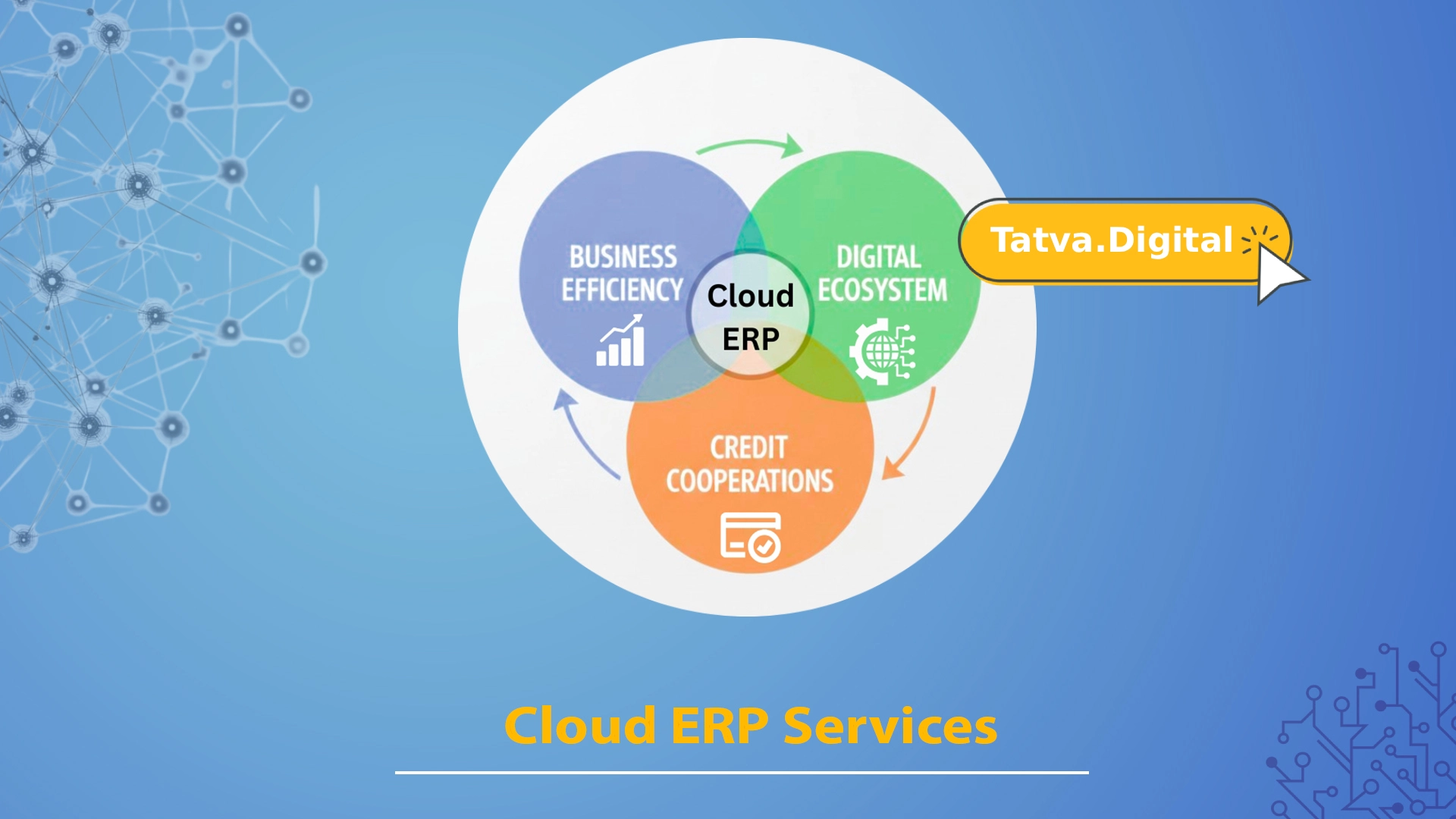
Cloud-Based ERP The global business scenario is in the midst of rapid digital expansion. Companies no longer rely on conventional, inflexible, on-premise ERP systems. They instead opt for cloud ERP development and cloud-based ERP solutions and collaborate with an experienced ERP software development company in order to upgrade their operations. In 2025, it is not about upgrading the technology; it is a strategic decision that makes companies agile, efficient, intelligent, and competitive. Across the world, organizations from various industries are adopting cloud computing as a platform for core operational systems to reduce costs, increase collaboration, and become future-ready. In this blog, we will discuss why cloud ERP adoption is growing exponentially, its benefits, how various industries—including credit cooperatives—leverage it, and why companies trust partners like Tatvatech Digital for next-generation ERP development. What Makes Cloud ERP Development the Preferred Choice in 2025? The shift toward cloud ERP is mainly driven by the demand for flexibility, cost efficiency, and smarter operational models. Let’s understand the key reasons. 1. Remote-Ready & Hybrid Workplace Support Business operations are distributed. Teams work across different locations, cities, or countries. ERP enables access to business data anywhere, anytime, on a mobile phone, tablet, or desktop.  ERP allows for continuity in workflow—from approving invoices to viewing inventory—outside the traditional office spaces. 2. Reduced Initial Investment Building an on-premise ERP requires servers, IT staff, and hardware with upgrades every year. Cloud ERP doesn’t hold such expenses. Subscription-based pricing means businesses only pay for what they utilize, therefore making ERP implementation economical for enterprises as well as SMEs. 3. Automated Updates & Minimal Maintenance eliminates system downtime and costly upgrade cycles. Updates are automatic. New features Security patches Performance Enhancements This ensures that businesses are always running on the latest versions, without extra effort. 4. Advanced Security Built-In Data security has reached whole new levels in 2025. Included in: End-to-end encryption Multi-factor authentication Automatic backups Protected hosting environments Real-time threat monitoring Cloud platforms maintain stronger security than many in-house IT setups. 5. AI-Powered Insights & Automation Modern cloud-based ERP solutions now integrate AI & ML tools to elevate decision-making. Businesses gain predictive insights into: Sales trends Inventory forecasting Resource utilization Financial patterns This improves accuracy and operational efficiency across departments. How Cloud ERP Enhances Business Efficiency Across Industries? Cloud ERP finds applications across manufacturing, logistics, healthcare, construction, retail, and BFSI since it is universally adaptable. 1. Enables Real-Time Collaboration Teams can communicate and collaborate on a single platform. Data flows smoothly across departments without departmental silos or confusion. 2. Supports Multi-Branch Operations All branches, warehouses, or project sites remain updated. Managers can track activities, analyze performance, and create consolidated reports in real time. 3. Easy Scalability Businesses can add or remove modules as needed.  ERP grows along with the organization, with no server upgrades or downtime. 4. Better Decision-Making With Live Dashboards With ERP, management gets access to real-time dashboards. Stakeholders can instantly evaluate KPIs and make quick data-driven decisions. What Is Cloud ERP’s Role in the Digital Ecosystem of 2025? While industries move towards automation, IoT, AI, and RPA, ERP becomes the backbone of digital transformation. 1. Integration With Modern Technologies Cloud ERPs work seamlessly with: IoT devices Machine sensors E-commerce platforms Payment gateways CRM & HRMS systems 2. Eco-Friendly, Paperless Workspace Automation eliminates the need for manual paperwork, physical approval, and printed reports; instead, it promotes sustainable digital operations for a business. 3. Agility in Changing Business Environments Market conditions flip on a dime.  ERP empowers businesses to change processes in real time and not rely on heavy technical changes. Cloud ERP for Credit Cooperatives: A Game-Changer in 2025 Credit cooperatives frequently deal with high volumes of members, complicated loan processes, and regulatory compliance. This is where it presents a transformational upgrade. Key Benefits for Credit Cooperative Societies: 1. Centralized Member Data Loan accounts, deposits, withdrawals, and share capital for members are all kept in a single cloud platform. 2. Automated Loans & Interest Calculation The system automates: Loan approvals EMI schedules Interest calculations Tracking of the payment While workload reduces, accuracy increases. 3. Compliance & Audit Transparency Audits have become faster, more transparent, and smoother, with ERP maintaining all the required logs and real-time financial records. 4. Mobile-Friendly Member Access Members can view accounts, apply for loans, and check statements online, thus improving service delivery. 5. Multi-Branch and Multi-Center Support Cooperatives operating in different locations can synchronize operations without depending on manual reporting. Why Choose an Expert ERP Software Development Company? Development needs solid technical knowledge and experience with the workflow of the industry. Businesses rely on trusted partners like Tatvatech Digital in building flexible, secure, and scalable ERP systems. Tatvatech Digital Offers: Customized for industry-specific needs Seamless integration with third-party tools Strong domain knowledge across diverse industries Cutting-edge technology stack with AI, automation & IoT Faster implementation by using proprietary frameworks End-to-end ERP development & support Tatvatech Digital ensures that businesses get future-ready ERP solutions to bring in more efficiency and reduce operational gaps. The Future of Cloud ERP Beyond 2025 The next decade will see even further development in cloud ERP with: AI-driven automation for repetitive tasks Voice-based ERP commands Robotic process automation (RPA) integration Predictive analytics for real-time decision-making Personalized dashboards for every user role Industry-specific microservices & plug-and-play modules Industry-specific microservices & plug-and-play modules Cloud ERP is turning into an intelligent business companion. FAQs: Cloud-Based ERP Development Services in 2025 1. What is cloud ERP? Cloud ERP is an internet-based ERP system hosted on remote servers that could be accessed from any device to reduce hardware costs and enhance operational flexibility. 2. Why is cloud ERP popular in 2025? Because it enables remote work, cuts down on operational costs, automatically updates, has better security, and supports all kinds of advanced technologies. 3. Is cloud ERP safe for critical business data? Yes, Cloud ERP provides protection against data exposure by means of encryption, firewalls, MFA, backups, and continuous monitoring. 4. Can cloud ERP support multi-branch businesses? Absolutely, all branch data is kept up … Read more

How Does Industry-Specific software Shape the Future of Construction, Garment & Real Estate?

Industry-specific ERP

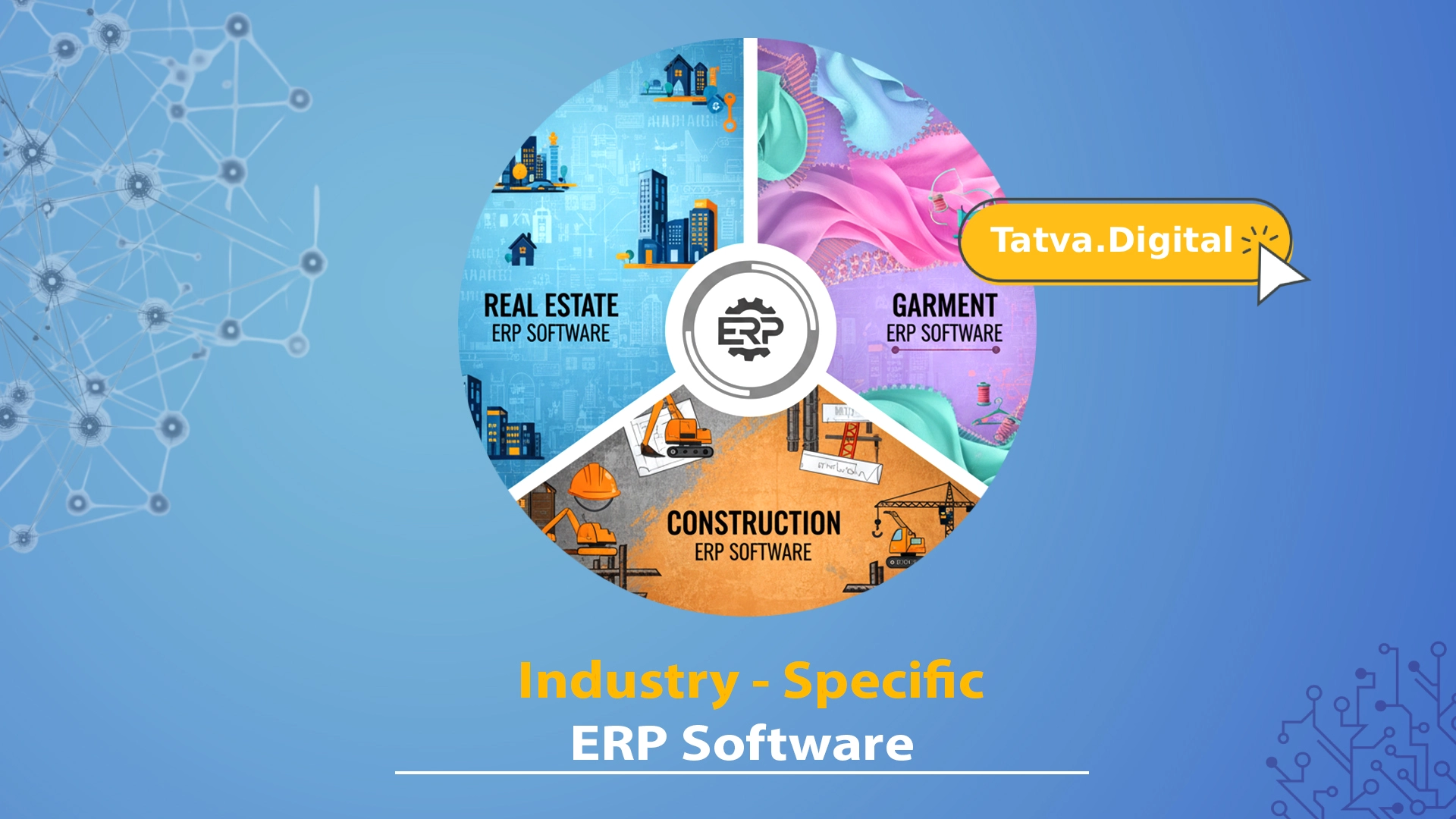
Industry-specific ERP software Businesses are rapidly shifting toward digital automation, real-time data access, and cloud-driven operations. As industries become more complex and competitive, companies are no longer satisfied with generic ERP solutions. They need systems that understand their industry, their workflows, and their challenges. This is where industry-specific ERP software is reshaping the digital landscape. Today, industries such as construction, garment manufacturing, and real estate heavily rely on specialized ERP systems to streamline operations, improve efficiency, and make smarter decisions. In this blog, we’ll explore how industry-specific ERP works, why it’s essential in 2025, and how Tatvatech Digital empowers businesses with customized ERP development services. Why Are Businesses Moving Toward Industry-Specific ERP Software? The shift toward specialized ERPs is driven by one core reality: every industry works differently. Construction sites are unpredictable, garment production involves multistage precision, and real estate requires seamless customer and property management. Generic ERP systems fail to address industry-level complexities, whereas industry-specific ERP software is built precisely for those needs. What Makes Industry-Specific ERP More Effective? 1. Does It Match Real Industry Workflows? Absolutely. Each industry has unique processes: Construction: contractor billing, site material tracking, project scheduling Garment: size ratios, BOM, cutting plans, quality checks Real estate: leads, bookings, payment schedules, unit inventory Industry-specific ERP fits these workflows naturally — reducing customization, training time, and friction. 2. Does It Provide Faster Implementation & ROI? Yes. Because the system already understands your industry, you avoid: High customization costs Long deployment timelines Complicated integrations Companies get faster adoption and better ROI. 3. Does It Support Industry Regulations? Yes. Industry-specific ERP systems include: Construction safety and compliance Export shipping documents for garment RERA & real estate legal compliance Generic ERPs lack this precision. 4. Does It Support AI and Automation? Industry-focused ERP systems have accurate structured datasets, enabling: Predictive analytics Demand forecasting Automated workflows Smart alerts & recommendations How Does Construction ERP Software Improve Project Management? The construction industry faces challenges like site communication gaps, material mismanagement, budgeting issues, and unpredictable delays. A construction ERP solves these problems with centralized, real-time project control. What Features Make Construction ERP Essential? 1. How Does Project Planning Work? Users can track: Milestones Resource allocation Dependencies Actual vs. planned timelines 2. How Does It Handle BOQ & Estimation? It provides: Accurate BOM Cost forecasting Real-time budget tracking 3. How Is Material Managed on Sites? With: Automated stock updates Vendor tracking Purchase order management 4. How Are Contractors Managed? Through: Work orders Digital billing Payment approvals Progress-based tracking 5. How Does It Improve Compliance? By storing: Contracts Blueprints Safety documents Inspection reports What Benefits Do Construction Companies Gain? Reduction in project delays Better collaboration across sites Accurate budgeting Less material wastage Real-time visibility Businesses using Tatvatech Digital’s construction ERP report improved efficiency and faster decision-making. How Does Garment ERP Software Improve Production Efficiency? The garment industry is fast, detail-heavy, and quality-driven. A  Garment ERP  brings accuracy to every stage of manufacturing—from sampling to shipping. What Modules Are Included in Garment ERP? 1. How Are Styles and Orders Managed? The system manages: Colorways Size sets Style specs Client approvals 2. How Does PPC (Production Planning & Control) Work? It optimizes: Cutting schedules Line balancing Stitching, washing & finishing Packing timelines 3. How Does It Handle Fabric Consumption? With accurate BOM and MRP (Material Requirement Planning) to minimize wastage. 4. How Does Quality Control Work? It tracks: Fabric defects In-line checks Final QC reports 5. How Is Inventory Monitored? Using: Barcode or RFID tracking Warehouse automation Real-time stock movement How Does Garment ERP Benefit Manufacturers? Less material waste Optimized production cycles High-quality output Better export compliance Reduced operational delays With Tatvatech Digital, garment factories achieve end-to-end visibility and fast, efficient production. How Does Real Estate ERP Software Transform Property & Sales Management? Real estate businesses manage customers, brokers, payments, legal documentation, unit inventory, and more. A Real Estate ERP centralizes all of it. What Features Make Real Estate ERP Critical? 1. How Do CRM & Lead Tracking Work? It automates: Lead assignment Follow-up reminders Broker commissions Lead scoring 2. How Is Property Inventory Tracked? Real-time details of: Unit availability Floor plans Price lists Construction progress 3. How Are Bookings & Sales Automation Managed? It generates: Booking forms Payment plans All legal documentation 4. How Are Financials Managed? Tracks: Installments GST/VAT Receipts Brokerage Vendor payments 5. How Are Maintenance & Facility Services Handled? Manages: AMC Service requests Asset tracking What Benefits Do Real Estate Companies Get? Higher conversion rates Seamless customer experience Streamlined documentation Better financial transparency Faster approvals Tatvatech Digital supports developers with smart, scalable real estate ERP modules tailored for sales, leasing, and property management. Why Is Tatvatech Digital the Best Partner for Industry-Specific ERP Development? Tatvatech Digital brings years of domain expertise and technology innovation to ERP development. Their ERP solutions are designed to be flexible, scalable, and built around real industry workflows. What Makes Tatvatech Digital Unique? Deep knowledge of construction, garment, and real estate domains Fully customizable ERP modules Cloud & mobile ERP systems AI-driven dashboards Seamless CRM, HR, and accounting integrations Long-term support and ERP consulting Businesses trust Tatvatech Digital for ERP systems that fit their operations—not the other way around. FAQs About Industry-Specific ERP Software 1. What is industry-specific ERP software? It is ERP software designed for a particular industry, such as construction, garment manufacturing, or real estate. It includes specialized workflows and modules that match the industry’s needs. 2. Why is industry-specific ERP better than generic ERP? Because it requires less customization, fits your workflows perfectly, reduces implementation time, and improves user adoption. 3. How much does industry-specific ERP cost?Cost depends on modules, customization, integrations, number of users, and deployment method (cloud or on-premise). Tatvatech Digital offers scalable pricing for SMEs and enterprises. 4. Can ERP integrate with CRM, HRMS, or accounting systems? Yes. Modern ERP systems, especially those built by Tatvatech Digital, integrate seamlessly with other business software. 5. Is mobile ERP access possible for site teams or managers? Yes. Construction, garment, and real estate ERPs all support … Read more

Custom ERP Development Services: How Can Tailored ERP Solutions Boost Efficiency Across Industries?

Custom ERP Development Services

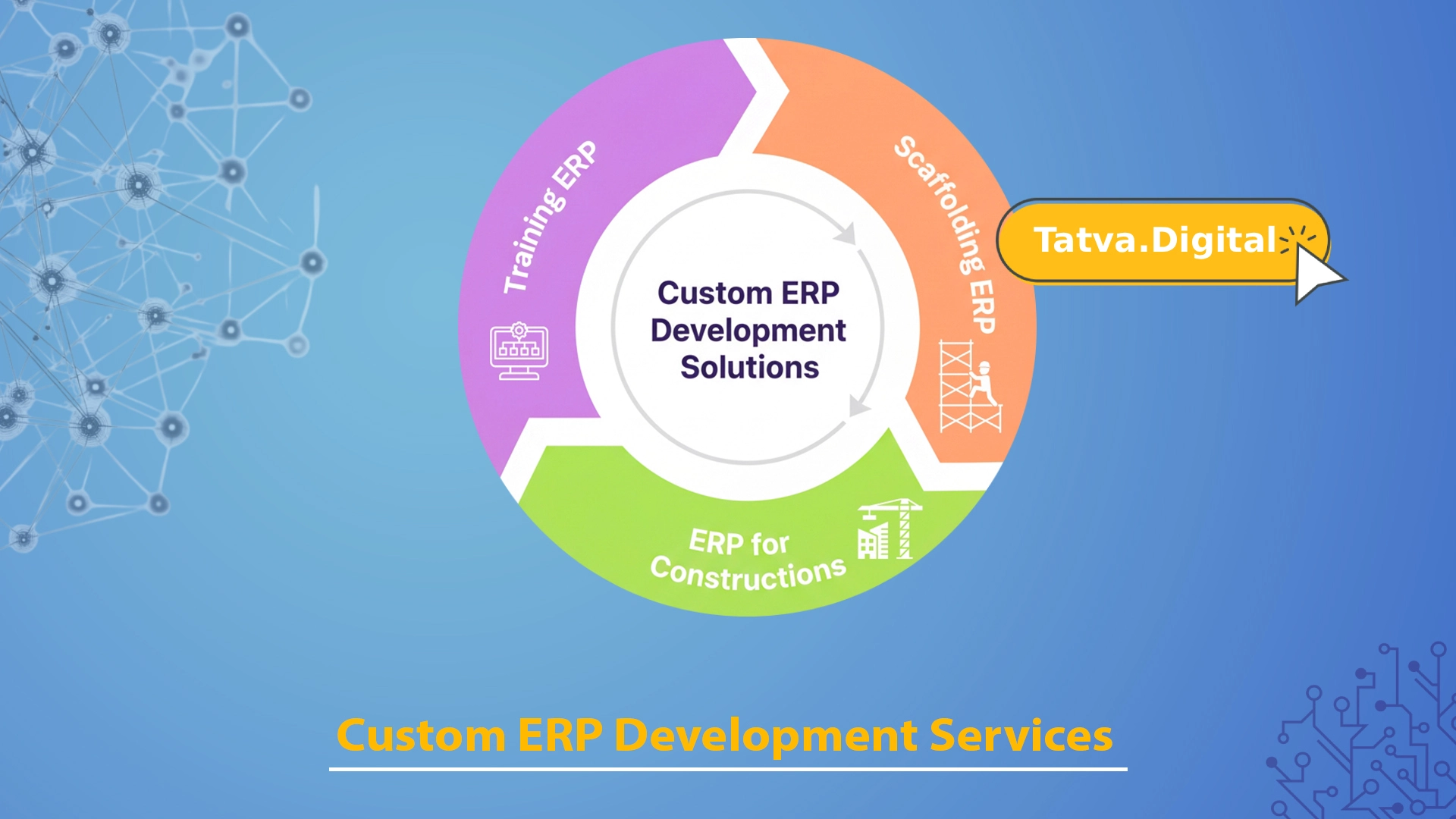
Introduction Custom ERP solutions are transforming how organizations operate in today’s data-driven business landscape. Companies are under constant pressure to improve efficiency and streamline operations. So, how can modern businesses stay competitive while managing complex workflows? The answer lies in custom ERP development services—scalable software solutions that integrate finance, HR, operations, inventory, and customer data into one platform. At Tatvatech Digital, we specialize in designing custom ERP solutions that empower businesses across industries—construction, manufacturing, scaffolding, and training—to automate tasks, enhance collaboration, and make faster, data-based decisions. What Is Custom ERP Development, and Why Does It Matter? What Exactly Is a Custom ERP System? A custom ERP (Enterprise Resource Planning) system is a business management platform tailored to your company’s unique processes. It connects every department—from accounting and HR to supply chain and customer management—into a unified digital hub. Unlike pre-built tools, custom ERP software adapts to your organization, ensuring every feature supports real-world workflows. Key advantages include: Personalized modules that match your operations Scalable architecture that grows with your business Seamless integrations with existing tools Enhanced data security and ownership By aligning technology with processes, Tatvatech Digital ensures your ERP becomes the operational backbone of your business. Why Do Businesses Choose Custom ERP Over Pre-Built Solutions? Prepackaged ERP systems often include unnecessary features or lack crucial industry-specific tools. Custom ERP development solves that by building exactly what your business needs. Top reasons companies choose custom ERP: Process automation and time savings Improved team collaboration Real-time analytics for decision-making Long-term cost efficiency compared to licensing models Businesses partnering with Tatvatech Digital benefit from tailor-made ERP platforms that eliminate redundancy, increase productivity, and scale seamlessly. How Are Custom ERP Solutions Transforming Construction, Scaffolding, and Training Industries?  How Does ERP Streamline Construction and Manufacturing? In sectors like construction and manufacturing, efficiency determines profitability. A custom ERP solution unifies project planning, inventory management, and supply chain tracking to improve accuracy and reduce downtime. Core benefits include: Project management dashboards with real-time visibility Automated inventory control and resource allocation Predictive maintenance to avoid delays Centralized cost tracking and compliance management With Tatvatech Digital’s ERP expertise, construction and manufacturing companies gain full control over operations—delivering projects faster and improving overall ROI.  How Can Scaffolding ERP Improve Project Accuracy and Safety? Scaffolding businesses manage numerous moving parts—equipment, labour, and safety standards. A Scaffolding ERP system brings everything together under one intelligent platform. Key features: Live inventory tracking for scaffolding materials and rentals Automated billing, quotations, and reports Workforce and safety compliance monitoring Project scheduling for setup and dismantling activities By offering real-time visibility, Scaffolding ERP helps avoid equipment losses, ensures regulatory compliance, and increases project accuracy. Tatvatech Digital develops dedicated scaffolding management modules to help companies maintain transparency, cut costs, and improve site safety.  How Does Training ERP Enhance Educational and Skill Management? Training institutes and learning centres require strong organization to manage students, trainers, and resources efficiently. A Training ERP system automates administrative processes and provides insight into academic performance. Core benefits: Centralized student and trainer management Automated attendance and performance tracking Streamlined course scheduling and payment workflows Integration with LMS and e-learning platforms With Tatvatech Digital Training ERP, institutions can monitor operations in real time, enhance learner engagement, and focus more on teaching quality rather than paperwork. How Can Businesses Successfully Implement a Custom ERP System? What Are the Key Stages of ERP Development? A successful ERP rollout follows a structured roadmap: Requirement analysis—Understanding your goals and challenges System design—Creating a modular and scalable framework Development and integration—coding, testing, and connecting modules Implementation and training—Deploying the system and onboarding users Maintenance and support—Ensuring long-term performance and upgrades Tatvatech Digital follows agile methodology to deliver ERP systems that adapt quickly to changing business needs.  How Do You Choose the Right ERP Development Partner? The right technology partner determines your ERP’s long-term success. When choosing an ERP developer, consider: Industry expertise (Construction, Scaffolding, Training) Proven experience in cloud ERP and mobile-ready solutions Post-launch support and maintenance reliability Transparent and flexible pricing models With Tatvatech Digital, clients gain a trusted partner offering end-to-end ERP development—from concept to support.  What Does the Future Hold for ERP Solutions? ERP systems are evolving with AI, IoT, and cloud computing, transforming how businesses analyze data and make predictions. Emerging ERP trends: AI-based forecasting for demand and inventory Mobile ERP apps for real-time access anywhere Cloud ERP solutions reducing infrastructure costs Sustainability analytics to monitor carbon and resource usage Tatvatech Digital helps enterprises embrace these innovations to stay future-ready and competitive. Frequently Asked Questions (FAQs) 1. What makes custom ERP development better than pre-built software? A custom ERP is built for your processes, ensuring flexibility, accuracy, and improved efficiency—unlike rigid off-the-shelf systems. 2. How long does ERP development take? Most custom ERP projects take 3–9 months, depending on features, integrations, and complexity. 3. Which industries benefit most from ERP systems? Construction, manufacturing, scaffolding, training, retail, healthcare, and real estate see major gains in productivity and transparency. 4. Can Scaffolding ERP and Training ERP integrate with other tools? Yes, both systems integrate with CRM, HR, accounting, and data analytics platforms, enabling seamless workflows. 5. Is cloud ERP better than on-premise ERP? Cloud ERP offers scalability and remote access, while on-premise ERP provides greater control over data. The right choice depends on your infrastructure and security needs. 6. How much does a custom ERP cost? Pricing varies by size and scope, but most businesses invest $20,000–$100,000 for a scalable, long-term ERP solution developed by Tatvatech Digital. Conclusion: Is Custom ERP the Future of Business Efficiency? Absolutely. From construction and manufacturing to scaffolding and training, custom ERP development services from Tatvatech Digital help organizations simplify operations, reduce manual work, and achieve digital excellence. As industries embrace automation, adopting a custom ERP system is no longer optional—it’s a strategic move that ensures your business remains efficient, data-driven, and ready for the future. About us: Business Name – Tatvatech digital private Limited Tatva Tech Digital Private Limited is an emerging eCommerce platform offering a wide range of products, … Read more

Top ERP Development Solutions Transforming Businesses: From Construction to Manufacturing

ERP Development Solution

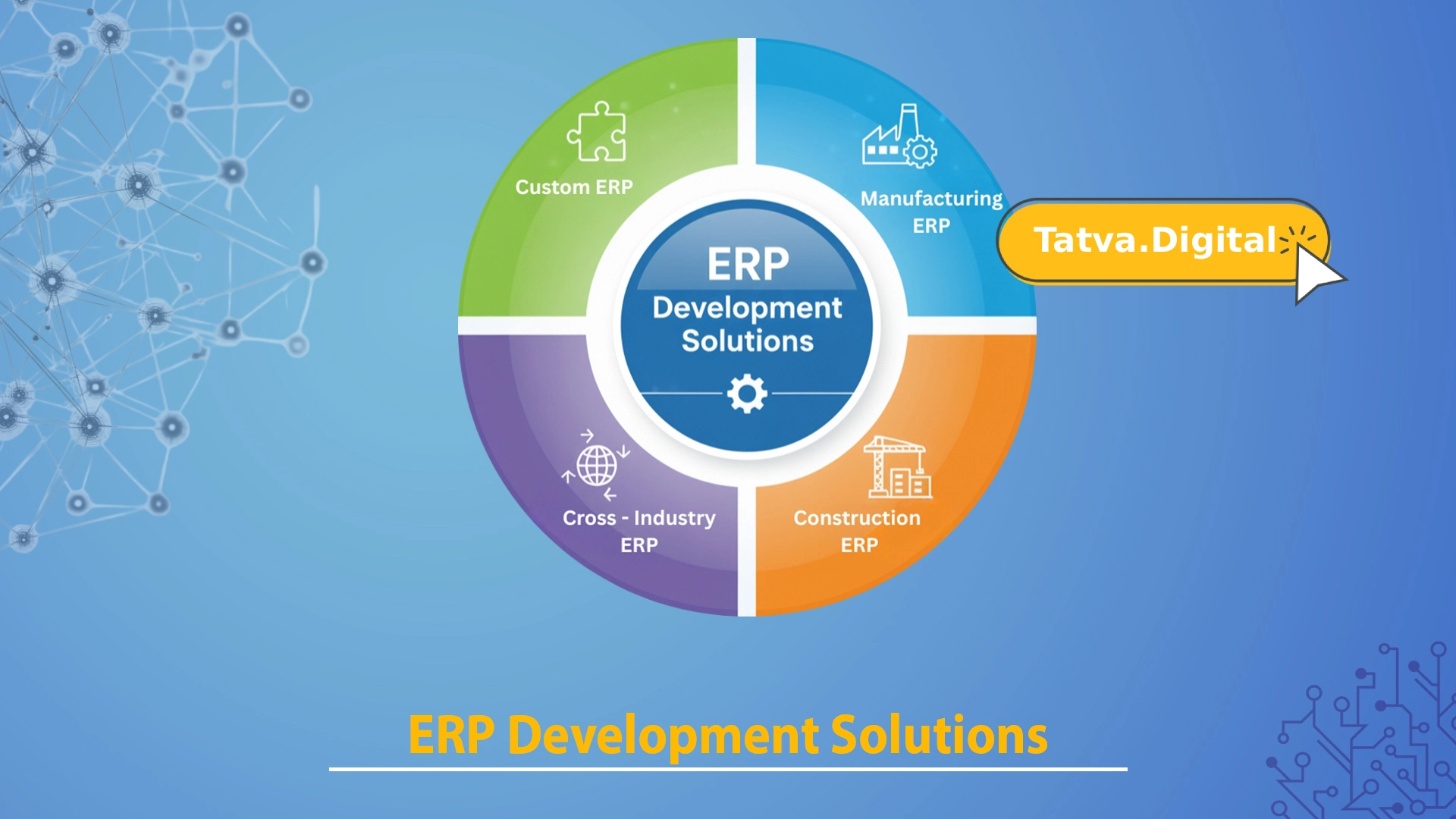
In today’s digital world, industries ranging from construction to manufacturing are revamping the way they operate, manage data, and scale up. What earlier used to be done via disparate spreadsheets and incongruous legacy systems has now been brought onto a single platform thanks to intelligent ERP development solutions that offer real-time visibility, automation, and scalability. We at Tatvatech Digital have witnessed how customised ERP systems have turned into the backbone for smart enterprises. These platforms enable an organisation to streamline workflows, improve cost efficiency, and drive faster, data-driven decisions while being flexible enough to adjust to future demands. ERP Development Solutions: The Core of Modern Digital Transformation Gone are the days of ‘one size fits all’ when it comes to enterprise software. Today’s development of ERP solutions is tailored, cloud-ready, and AI-powered, enabling seamless collaboration across departments, suppliers, and customers. The modern ERP ecosystem is built upon four core pillars: Integration means having one source of truth that ties departments such as finance, HR, operations, and procurement together to ensure everyone is working from the same data. Automation: Streamlined workflows reduce manual tasks, minimise the possibility of errors, and ensure higher efficiency. Scalability: Modular architectures make it easy to add new features or integrate emerging technologies. Intelligence: Includes built-in analytics and machine learning for actionable insights in better decision-making. Tatvatech Digital develops ERP systems with these principles in mind: deep domain expertise combined with next-generation technologies to help clients achieve operational excellence. Why Construction Companies Are Choosing Custom ERP Development Services for Building & Site Management Of all industries, construction is one of the most dynamic and complex to manage. Projects involve multiple contractors, fluctuating budgets, and strict timelines; therefore, visibility and coordination are key. That is why forward-looking construction companies are embracing custom ERP development for construction management in order to bring order and control into every project. 1. Real-Time Project Monitoring In custom ERP systems, the managers can track project progress, budgets, and workforce deployment through real-time dashboards. From procurement of materials to on-site safety, everything is noted down and can be found on a single platform. 2. Centralized Resource Management Through advanced scheduling and IoT integrations, ERP solutions optimise equipment usage and deployment of work. This minimises downtime and ensures effective usage of every resource on multiple job sites. 3. Financial Oversight and Compliance Construction ERP software provides businesses with detailed insight into project budgets, purchase orders, invoices, and compliance needs. This automates approval workflows to eliminate manual bottlenecks and ensure timely payments with cost transparency. 4. Enhanced Collaboration ERP systems integrate tools of communication and document management capabilities that enable contractors, engineers, and clients to share information with ease. Everybody is informed, hence reducing the probability of delays and miscommunication. 5. Cloud and Mobile Access For site managers, mobility is paramount. Cloud-enabled ERP platforms offer this capability, letting on-site staff update project data, upload images, or track materials in real time. Instant access increases accountability and accelerates the speed of decision-making. Tatvatech Digital designs and develops ERP systems specifically for construction companies to ensure seamless project execution, accurate budgeting, and better client satisfaction. Manufacturing ERP Solutions: How Custom ERP Development Optimizes Production & Inventory Manufacturing is all about precision, timing, and efficiency. In such an environment, manual coordination between departments can result in bottlenecks and delays in production. That’s why manufacturers are increasingly investing in manufacturing ERP solutions with custom development to gain complete control over production, supply chains, and inventory. 1. Intelligent Production Scheduling AI-powered ERP systems analyse demand patterns, production capacity, and resource availability to create optimised manufacturing schedules. This reduces idle time and keeps the production line moving efficiently. 2. Real-Time Inventory Control Custom ERP solutions bring inventory tracking together with the production information to automate reorder alerts, give visibility to stock, and coordinate with vendors. This minimises waste and prevents production stoppages due to material shortages. 3. Quality Control and Traceability From raw materials to finished goods, modern ERP systems record every step of production. Accordingly, manufacturers can track defects, monitor quality benchmarks, and ensure compliance with regulatory standards. 4. End-to-End Supply Chain Integration Custom ERP modules allow manufacturers to integrate suppliers, logistics partners, and distributors. It means a transparent supply chain that’s traceable in real time for better planning. 5. Energy Efficiency and Sustainability Sustainability is no longer optional. ERP platforms track energy usage and waste output, enabling manufacturers to reduce their environmental impact while sustaining profitability. Utilising Tatvatech Digital manufacturing ERP development experience, the companies can achieve leaner operations, high productivity, and smarter decisions using technology. Cross-Industry ERP Trends Shaping the Future The ERP technology is ever-changing, always upgrading according to changing market needs and technological advancements. The most major ERP development trends transforming businesses today will include: AI & Predictive Analytics: Converting data into foresight by identifying trends and predicting potential risks. Cloud ERP Adoption: Enabling remote access, scalability, and reduced infrastructure costs. IoT Integration: Capturing data directly from machines, sensors, and devices for real-time monitoring. Low-Code Customisation: This allows for faster deployment and easier updates without heavy coding. Data Security by Design: Protect sensitive information by encrypting it and using compliance frameworks. These innovations are setting the stage for future-ready ERP systems that grow with your business—not against it. Why Choose Tatvatech Digital for ERP Development Solutions Choosing the right ERP partner will make the difference between a system that merely manages the operations and one that drives real transformation. Tatvatech Digital provides end-to-end ERP development services customised to your industry, workflow, and strategic goals for long-term growth. We combine strategic consulting with hands-on technology expertise to provide flexible, scalable, and future-proof systems that meet your needs. Whether it’s a custom ERP for construction management, manufacturing automation, or a multi-vertical ERP integration, our experts design platforms that perfectly align with your business objectives. At Tatvatech Digital, we believe ERP development is not about software; it’s about creating intelligent business ecosystems to help you grow sustainably. Conclusion From construction sites to manufacturing floors, ERP systems are changing the way companies do business. … Read more

How Can Professional Hardware Services Transform Your Business?

Hardware Services

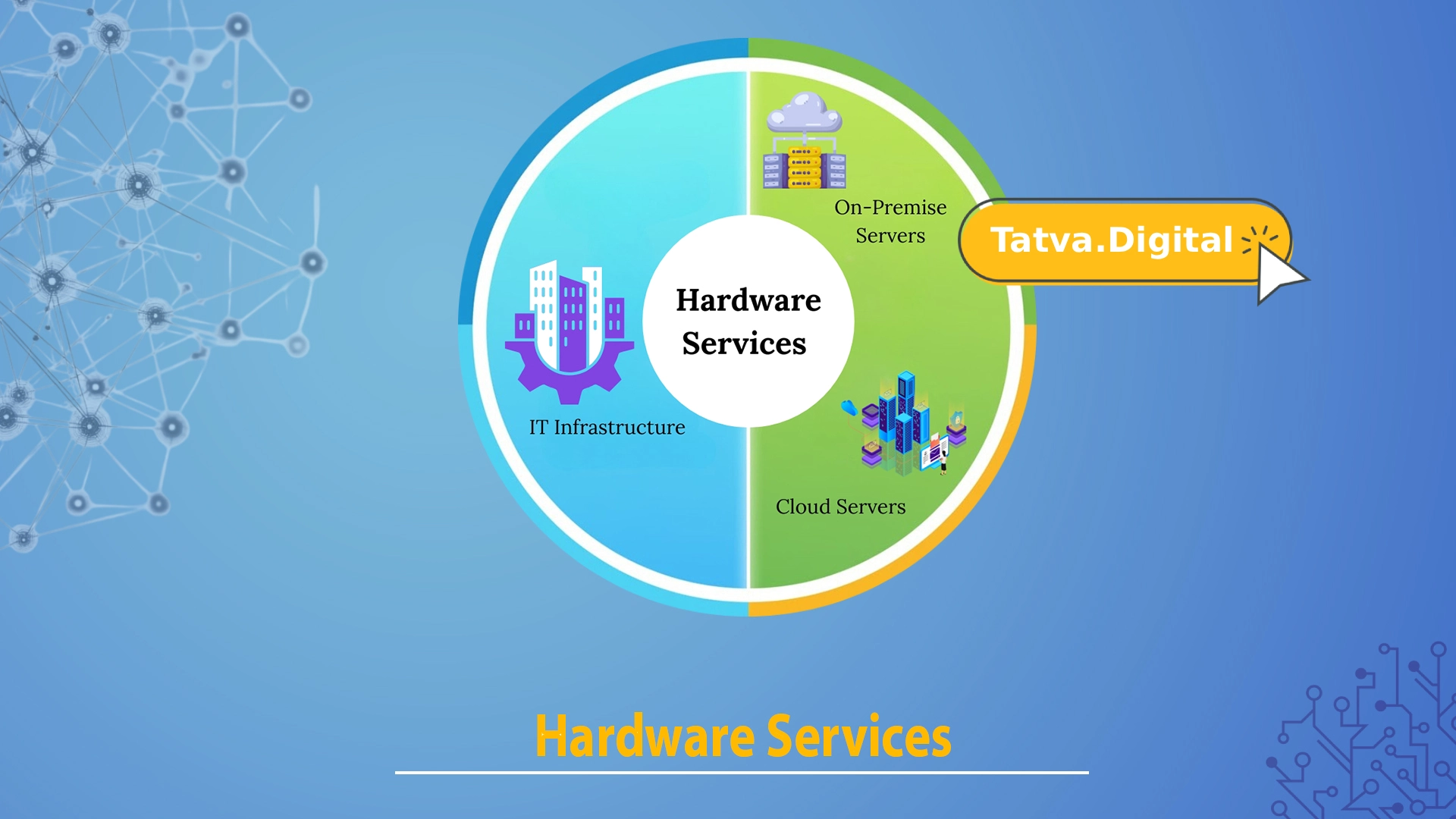
Hardware services form the backbone of every successful business in today’s fast-moving digital landscape. Be it a startup scaling up its operations or an established enterprise upgrading to newer technologies, the right hardware setup guarantees efficiency, security, and long-term growth. A reliable IT infrastructure is no longer optional; it’s a must-have. From workstations and servers to networking and cloud systems, every component contributes to productivity for your company. That is where Tatvatech Digital comes in with helping businesses design, deploy, and manage customized hardware solutions that fuel performance and innovation. Let’s explore how the right hardware solution can transform your business operations and give you that competitive edge you need. What Is the Essential Hardware for a Modern Office IT Infrastructure? Your office IT infrastructure defines how effectively your team collaborates and delivers on results. In modern workplaces, every process is underpinned by technology, from communication to data management. But what are the basic hardware components every business in 2025 and beyond needs? High-Performance Workstations and Laptops Your employees need powerful, reliable systems to perform their daily tasks. Spending in the right computers can directly improve productivity. Look for:   Solid-State Drives (SSDs) – for lightning-fast performance Multi-core processor – for handling complex workloads Sufficient RAM – for multitasking and large data sets Ergonomic peripherals – for comfort and health Tatvatech Digital provides personalized hardware services pertaining to sourcing, installation, and maintenance of workstations tailored to your needs for your industry, be it design, finance, education, or healthcare. Networking Equipment for Seamless Connectivity A fast and stable network is the heart of your IT environment. The necessary networking components include: Enterprise-grade routers and switches Secure firewalls – that ensure data is secured Wi-Fi 6 access points – for high-speed connectivity With the appropriate hardware for networking in place, your company secures smooth communication, faster data transmission, and unbroken access for remote teams. Servers and Storage Systems for Business Continuity Data is an organization’s lifeblood. Today’s organizations rely on servers and storage systems to maintain access to, and protection of, data. Choices include: Dedicated on-premise servers –  for full control NAS – Network Attached Storage –  for shared access Hybrid storage systems –  that combine local and cloud-based storage The hardware consulting experts at Tatvatech Digital will help you in selecting solutions according to your capacity, security, and scalability needs. Backup and Disaster Recovery Hardware Hardware failures and data breaches can be devastating. That is why disaster recovery systems are critical. Consider: Automated backup devices Redundant RAID configurations Hybrid cloud backups These tools ensure that your business can recover promptly from any disruption and protect both data and reputation. How Can You Choose the Right Hardware Services for Your Growing Business? The best hardware selection is not about brand comparisons; it’s about understanding your business needs, operational aspects, and scalability requirements. Assess Your Operational Needs Start by considering your workflow and the needs of your employees. For example, a design firm may have powerful GPU requirements, while an accounting firm places emphasis on secure storage and reliability. Tatvatech Digital provides hardware assessment services to help organizations identify performance gaps and future-proof the infrastructure. Focus on Scalability and Flexibility Your technology should grow with you. Choose scalable hardware systems that can easily expand without the need to overhaul your entire setup. Modular servers, upgradeable PCs, and flexible storage systems are all good choices for evolving organizations. Prioritize Security and Compliance In addition, cyber threats are on the increase, making secure hardware a necessity. Implement: Encryption of drives to secure sensitive information. Hardware-based authentication tools Secure routers and firewalls Tatvatech Digital makes sure that your business stays compliant and protected through the integration of superior hardware and robust cybersecurity strategies. Partner with a Trusted Hardware Provider Indeed, professional support makes all the difference. Partner with Tatvatech Digital for end-to-end expertise, from procurement and installation to maintenance and performance monitoring. Their team will make sure your IT systems are optimally performing, reliable, and future-proof. Cloud vs. On-Premise Servers: What’s Best for You? When it comes to server infrastructure, businesses often have a key decision: should you make the change to the cloud or stay with on-premise servers? What are the benefits of cloud servers? Cloud servers offer unparalleled flexibility, scalability, and cost control. Advantages include: Accessibility remotely Easy scalability Reduced hardware maintenance Pay-as-you-go pricing Cloud environments are ideal for growing businesses that need agility without heavy capital investment. What Are the Benefits of On-Premise Servers? With on-premise servers, full control over data and infrastructure is available. Advantages include: Improved security for sensitive information More flexible customization and configuration Long-term cost predictability They’re ideal for companies that have strong compliance requirements or internal IT. Why Consider a Hybrid Approach? A hybrid setup, combining on-premise servers for security with cloud servers for scalability, offers the best of both worlds. Tatvatech Digital specializes in designing hybrid IT infrastructures that balance control, performance, and flexibility. Why Are Hardware Services Important for Business Growth? Professional hardware services entail much more than just product installation. They ensure that your IT systems are: Optimized for performance and reliability Secured against cyber threats Regularly maintained and updated Scalable for future business expansion Tatvatech Digital provides comprehensive support, from hardware setup and network design to troubleshooting, monitoring, and performance tuning, thus helping your business run with zero downtime. FAQs About Hardware Services Q1. What do hardware services include? Hardware services include installation, configuration, maintenance, and performance optimization of IT equipment like servers, routers, and computers. Q2. How do I know what hardware my business needs? First and foremost, analyze your business size, operations, and data requirements. Sometimes, professional consultation with companies like Tatvatech Digital brings out the best solution. Q3. Which is better, cloud or on-premise servers? Cloud servers provide scalability and cost efficiency, while on-premise servers give the businesses control and security. Most companies use a hybrid model in practice. Q4. How frequently should hardware be upgraded? Every 3–5 years, depending upon performance and technology advancements. Regular maintenance increases lifespan and … Read more

What Are CMS Services, and Why Do They Matter?

What Are CMS Services, and Why Do They Matter?

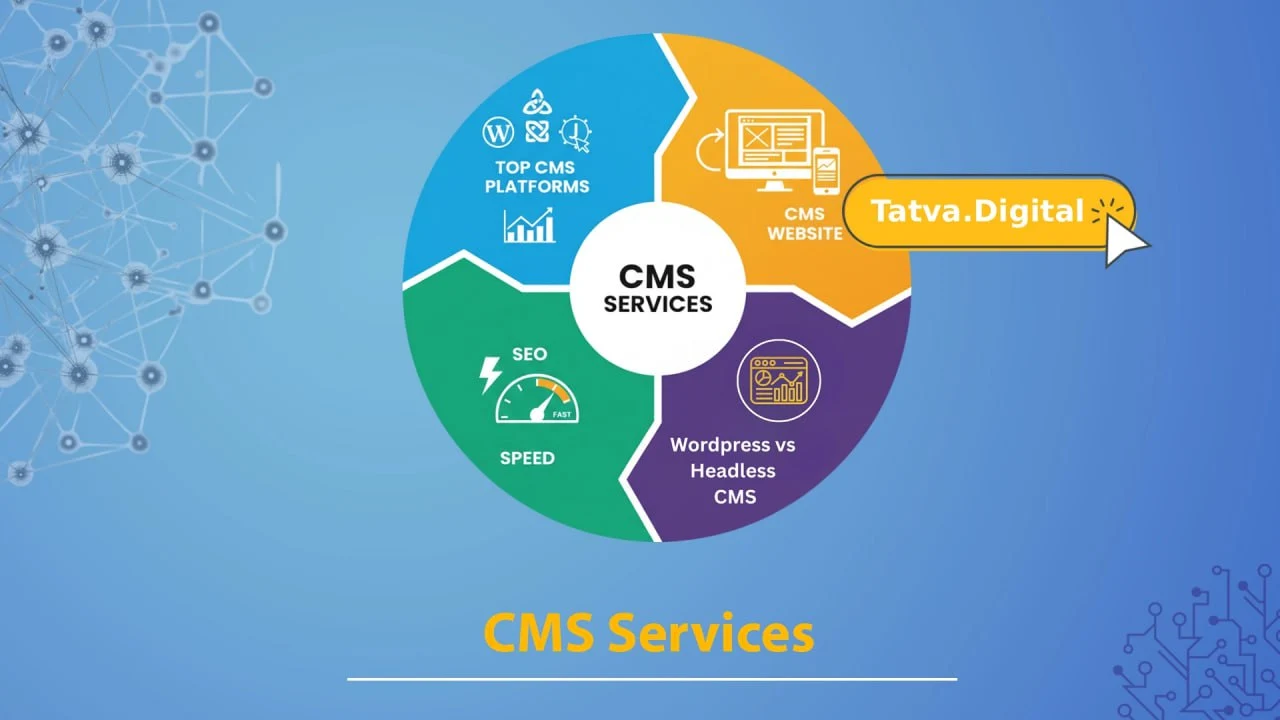
A strong website is not just a nice-to-have in today’s digital environment—it is a necessity. Businesses can effectively create, manage, and publish online content with the help of CMS services (Content Management System). The correct CMS is important whether you are a professional updating a corporate website, an entrepreneur starting a brand, or a business expanding. With the aid of a content management system (CMS), you can: Create pages without knowing a lot of coding Continue using the same branding and design. Make content search engine friendly (SEO) As your company expands, scale your website. By 2025, there will be a greater need than ever for CMS software that supports SEO best practices, speed, and multi-channel delivery. At this point, selecting the appropriate platform and services (such as those provided by Tatvatech Digital) becomes crucial. WordPress vs. Headless CMS: Which Is Better for SEO in 2025? When debating platforms, there are two major models that dominate: the traditional CMS, such as WordPress, and the “headless” CMS model. Let’s break them down from an SEO-first angle. What is WordPress? WordPress remains the most widely used CMS on the market today. It offers intuitive dashboards, thousands of themes, and plugins for almost any need. For many businesses, the power of its continued popularity is due to its ease of use and strong SEO plugin ecosystem. SEO strengths of WordPress: With dedicated plugins such as Yoast SEO or Rank Math, meta tags, sitemaps, and schema markup become achievable. Large community and frequent updates: helps keep site secure and compatible with search engine changes. Responsive and mobile-friendly themes and frameworks, since these are key ranking factors. What is a Headless CMS? Headless is a mode in which the backend content management is decoupled from the frontend display. You manage content once and deliver it through API to websites, apps, or even IoT devices. Examples include Strapi, Contentful, and Sanity (though we’ll stay high-level here). SEO and Performance Strengths of Headless CMS: Because front-end frameworks—which include React and Next.js—can deliver static pages or serve server-side rendered pages, speed and Core Web Vitals often improve Flexibility to deliver content across multiple channels → better omnichannel experience. Improved security with no public admin UI on the front end may reduce downtime or penalties from security leaks. Which is better for SEO in 2025? To most entrepreneurs and working professionals, if your goal is a website or blog with straightforward content and you want ease of use, WordPress remains strong. But if you’re building a content-heavy brand that spans web, mobile, and perhaps a PWA or app, and you can invest in development, a headless CMS gives you an edge in performance and future-proofing. If you partner with a service provider like Tatvatech Digital that has robust development, optimization, and performance services, you can get the benefit of a headless or hybrid CMS model without having to build everything from scratch. Bottom line: Choose WordPress for simplicity and speed to market; choose headless or hybrid if scalability, performance, and omnichannel delivery are priorities. Top CMS Platforms Compared: WordPress, Drupal, Joomla & More—Which Should You Choose? There’s no one-size-fits-all when it comes to CMS platforms. Below is a comparison of the major players you might consider, along with service implications. Platform Best For Key Strengths Considerations WordPress SMEs, entrepreneurs, blogs, eCommerce Massive plugin ecosystem, large talent pool, quick setup Can become slow if bloated, requires maintenance Drupal Large enterprises, high-complexity sites Highly customisable, strong security and permissions Requires expertise, steeper learning curve Joomla! Medium complexity sites, community portals Good multilingual support, flexible Smaller ecosystem, fewer plugins than WP Headless CMS (e.g., Contentful, Strapi) Multi-channel content, apps, performance-first sites Excellent for speed & scalability Needs more dev resources, higher cost CMS services + managed providers For businesses wanting outsourcing of maintenance, security, performance You’re freed to focus on content & business, not infrastructure You’ll pay for service; choosing provider matters Why choosing the right “cms services” partner matters Choosing the right CMS software is only the first step. You also need services for setup, customization, maintenance, speed optimization, security, and backups, besides SEO implementation. That’s where a digital agency, such as Tatvatech Digital, specializing in web applications and optimization, becomes important. Key decision factors for entrepreneurs & professionals How much content will you publish and update? Do you need multi-channel distribution: web, mobile, and app? What is your budget for ongoing maintenance and optimization? How Can You Optimize Your CMS Website for Speed & Performance? Website performance is no longer optional. Speed impacts user experience, conversions, and SEO. Here are actionable CMS website optimization and CMS speed optimization tips. Actionable Optimization Checklist  1.Use a quality hosting environment or managed CMS hosting: The foundation of performance  2. Enable caching: server-side + plugin. Reduces server load, improves page load time.  3. Optimize images and media: use the WebP format, lazy-load them, and compress them without quality loss. 4. Minify CSS, JS, and HTML: It reduces the size of the files and enhances the speed of rendering. 5. Use a Content Delivery Network (CDN)—Distribute assets globally to reduce latency. 6. Limit and audit plugins/modules/extensions—remove unused elements and keep things lean. 7. Use a lightweight, well-coded theme or frontend framework –  Avoid bloated themes that weigh you down. 8. Implement lazy loading and defer non-critical scripts – Prioritize above-the-fold content. 9. Monitor Core Web Vitals – Metrics to watch include Largest Contentful Paint (LCP), First Input Delay (FID), and Cumulative Layout Shift (CLS). 10. Regularly update CMS, plugins, and server stack—security and speed improvements come via updates. Why it matters for SEO & user experience Google focuses on page speed and user experience when ranking, as do other search engines. Slow loading sites equate to a high bounce rate, which indicates low engagement. For busy professionals and entrepreneurs looking for results, a performance-centric approach yields higher conversions and better search visibility. Role of professional CMS services Companies like Tatvatech Digital can handle most of these steps on your behalf: performance tuning, caching setup, integration of … Read more